

Understanding Advertising Costs in Today’s Marketing Landscape
Advertising costs are a critical part of any marketing budget, but many businesses struggle to know what to expect. Here’s a quick overview:
Quick Answer: What Do Advertising Costs Look Like?
- Digital Advertising: $100–$5,000 per month for most businesses
- Cost Per Click (CPC): $0.10–$4.00 on average (competitive industries like legal or insurance can reach $50+ per click)
- Cost Per Thousand Impressions (CPM): $3–$10 for online ads vs. $22+ for traditional media
- Small Business Budget: Typically 7–10% of gross revenue
- Platform-Specific Averages:
- Google Search: $2.70 per click
- Facebook: $0.44 per click, $14.40 CPM
- Instagram: $3.96 per click, $8.96 CPM

The advertising landscape has shifted dramatically. While traditional channels like TV and radio still have a place, digital advertising is now dominant. The average cost to reach 1,000 people with online advertising ranges from $3–$10, compared to $22 and up for traditional channels. This difference has reshaped how businesses allocate their marketing budgets.
However, lower costs don’t guarantee better results. Your advertising expenses fall under Selling, General, and Administrative (SG&A) expenses on financial statements, and managing them effectively is crucial for growth. The key is knowing where your money goes and what returns you’re generating.
Advertising costs vary wildly based on your industry, target audience, campaign goals, and chosen platforms. A local coffee shop will have vastly different expenses than a SaaS company targeting enterprise clients. Competitive industries like legal, insurance, and financial services regularly see cost-per-click rates exceeding $50. Understanding these variables is the first step to building a successful advertising strategy and making every dollar work for your business.
The Landscape of Digital Advertising Costs
Digital advertising allows you to target specific audiences, track interactions, and adjust your strategy in real-time. But this precision comes with a learning curve, especially regarding costs. Understanding the basics of digital advertising costs is key to investing your marketing dollars wisely.
Understanding Digital Ad Pricing: CPC vs. CPM
Two fundamental pricing models shape how you pay for ads online:
Cost Per Click (CPC) means you pay each time someone clicks your ad. It’s a performance-based model ideal for driving actions like website visits or sales. Typical CPC rates range from $1 to $3, though this varies by industry.
Cost Per Mille (CPM), or “Cost Per Thousand Impressions,” means you pay for every thousand times your ad is shown, regardless of clicks. The typical online CPM is $3 to $10, making it more affordable than traditional media for brand awareness campaigns. For a deeper dive, Investopedia’s explanation of CPM is a great resource.
We recommend CPC for action-oriented goals and CPM for brand awareness campaigns where the main objective is maximizing visibility.
Social Media Advertising Costs
Social media platforms use an auction system, so advertising costs fluctuate based on audience demand, competition, and ad quality.
- Facebook: A versatile platform with average costs around $0.44 per click and $14.40 CPM. Its advanced targeting can significantly improve results. For a broader market view, competitors like WordStream also provide detailed benchmarks.
- Instagram: A visual-first platform with costs between $0.20 and $2.00 per click and an average CPM of $6.70. Strong creative makes it highly cost-efficient for lifestyle and aesthetic-focused brands.
- TikTok: A major player with costs around $1 per click and $10 CPM. It requires minimum daily budgets ($50/campaign, $20/ad group), making it better for those with established ad spend.
- Pinterest: An affordable option for visual brands, with CPCs from $0.10 to $1.50 and CPMs between $2 and $5. It’s excellent for reaching users actively planning purchases.
- Twitter/X: Ads with links on this platform can achieve high click-through rates. Promoted tweets cost $0.50 to $2.00 per action, while promoted accounts run $2 to $4 per follow.
- LinkedIn: The premium choice for B2B marketing, with average costs of $5.26 per click. The higher investment is justified by the platform’s precision in targeting professionals and decision-makers.
Search & Display Advertising Costs
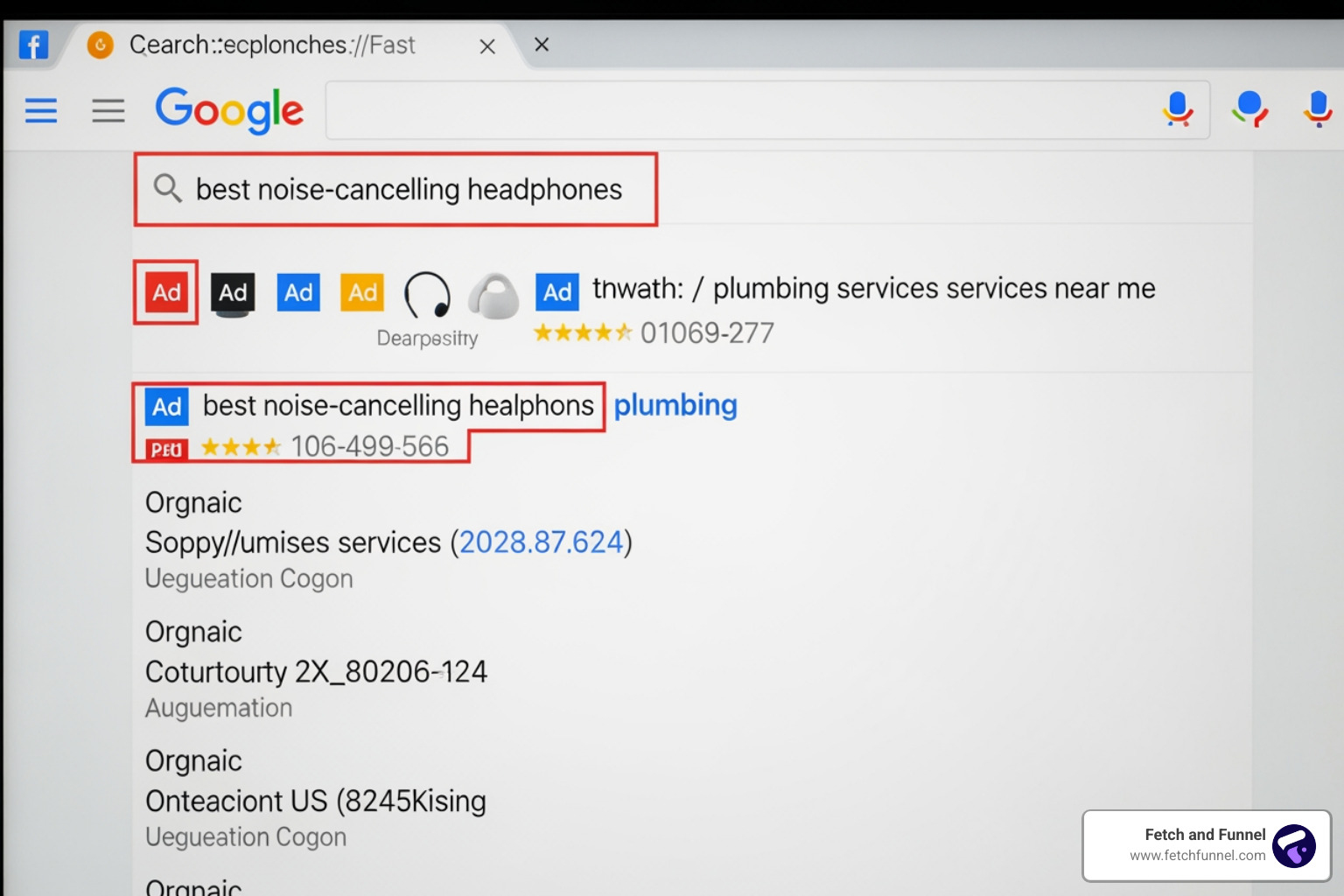
Google’s ad ecosystem captures the largest share of digital ad spending by reaching users at their moment of intent.
Google Search Ads are text ads that appear in search results, targeting users actively looking for what you offer. The average CPC is $2.70, but this can exceed $50 for competitive keywords in industries like legal or finance.
Google Display Network shows visual banner ads across millions of websites and apps. It excels at brand awareness and retargeting. The average CPC is much lower at $0.63.
Both platforms use a bidding auction model where Google evaluates not just your bid but also your ad’s relevance and quality via its Quality Score. A higher Quality Score can lower your advertising costs and improve your ad position, rewarding advertisers who create good user experiences. Strategic management is key to getting the most value from these powerful platforms.
A Look at Traditional Advertising Costs
While digital is our focus at Fetch and Funnel, traditional advertising channels still offer significant value, particularly for businesses seeking broad reach or strong local impact. Though advertising costs are higher and tracking is less precise, these channels can deliver impressive results when used strategically.
Broadcast Media: TV & Radio Advertising Costs
Broadcast media continues to capture massive audiences and command large advertising budgets.
TV Commercial Costs are a substantial investment, involving two main expenses: production (creating the commercial) and airtime (broadcasting it). A basic local spot can cost $3,000 to $25,000 to produce, while national productions run into the hundreds of thousands. Airtime costs vary based on the network, program popularity, and time of day. For example, a 30-second primetime spot on a major network can cost over $150,000. At the apex is the Super Bowl, where a 30-second slot costs between $6 million and $7 million, reaching over 100 million viewers. For detailed rates, the TV Ratings Guide’s Ad Rates Database offers a comprehensive look.
Radio advertising is a more accessible alternative, especially for local markets. Costs fluctuate based on market size and time slot. A 30-second spot can be as low as $65 in small markets or over $1,400 in major cities like Boston. Production costs are also much lower, typically starting around $2,000.
Print & Outdoor Media Costs

Traditional print and outdoor ads remain effective for reaching local audiences and making a bold statement.
- Magazine Advertising: National publications can be a major investment, with a CPM (cost to reach 1,000 readers) around $1,300. Niche or local magazines are more affordable and offer a targeted readership.
- Newspaper Advertising: Rates depend on circulation, ad size, and placement. Local papers in markets like Boston have rates reflecting their readership.
- Billboards: These offer 24/7 visibility. In a major city like Boston, traditional billboard advertising costs range from $1,000 to $10,000 per month, depending on location and traffic. Digital billboards cost more, typically $1,200 to $15,000 per month.
- Direct Mail: Sending physical ads to mailboxes can still be effective. The cost to reach 1,000 people (CPM) is typically $500 to $1,000, covering printing and postage. A tangible piece of marketing can be powerful for a well-defined audience.
Key Factors That Influence Your Advertising Costs
Your actual advertising costs are rarely a simple number. They are influenced by a complex mix of factors that can cause costs to vary significantly.
How industry and business size affect advertising costs
Your industry has a major impact on costs. A local bakery might pay $1-$3 per click, but competitive industries like legal services, insurance, and finance regularly see CPCs exceeding $50. This is due to fierce competition where a single customer can be worth thousands of dollars.
B2C and B2B spending also shapes your budget. B2C businesses often cast a wide net on social media, while B2B companies typically face higher per-click costs (especially on LinkedIn) to target a smaller, more qualified audience of decision-makers.
Business size also dictates budget. Small businesses with 1-50 employees often invest between $100 and $2,000 monthly on digital advertising. Medium businesses usually fall into the $2,000-$10,000 range, while large enterprises with 251+ employees commonly spend $15,000 or more each month.
Other Major Cost Influencers
Several dynamic factors constantly push your advertising costs up or down:
- Audience targeting precision: Narrowing your audience to reach the perfect customer may increase the cost per click, but it often improves ROI by eliminating wasted spend on irrelevant audiences.
- Ad placement and format: Premium placements—like the top of Google search or the first ad in a social feed—cost more. Video ads also typically have higher production and placement costs than static images but can deliver higher engagement.
- Ad creative quality: Platforms like Google and Facebook reward engaging ads with a better Quality Score, which can lower your CPC. As competitors like Search Engine Journal explain, a high Quality Score is essential for cost-efficiency. Poor creative forces you to pay more for less visibility.
- Seasonality: Competition and costs skyrocket during peak periods like Black Friday and the holiday season. CPCs and CPMs can double or triple as businesses fight for attention.
- Geographic location: Advertising in a dense urban area like Boston costs more than in a rural town due to higher competition and audience purchasing power.
- Campaign objectives: Your goals shape your cost structure. A brand awareness campaign optimized for impressions (CPM) will have a different cost profile than a lead generation campaign optimized for conversions (CPA). Conversion-focused campaigns have higher per-action costs but are designed for immediate ROI.
Maximizing Your ROI: How to Optimize and Measure Ad Spend
Spending money on ads is easy; spending it wisely is the challenge. Changing advertising costs from expenses into investments requires relentless optimization and rigorous measurement.
Strategies for Optimizing Your Advertising Spend
Optimization is an ongoing process of learning what works and adapting your strategy based on data.
- A/B testing: We use a scientific approach to improve performance by testing variations of ads and landing pages. Changing one element—a headline, image, or call-to-action—and measuring the results allows for incremental improvements that compound over time. For a comprehensive guide on the fundamentals, marketing leader HubSpot offers an excellent resource on A/B testing. Learn more about our process on our AB Testing Pricing page.
- Landing page optimization: A click is only half the battle. We ensure your landing page is fast, clear, and matches the ad’s promise to convert visitors into customers. A great landing page can dramatically improve conversion rates. Explore our services on our Conversion Rate Optimization Pricing page.
- Budget allocation: We don’t just divide your budget evenly. We constantly monitor performance and shift resources to the channels, campaigns, and ads delivering the highest return, ensuring your money is always working its hardest. The U.S. Small Business Administration offers great advice on maximizing your marketing budget, which aligns with our principles.
- Creative refresh: Ad fatigue is real. We regularly update ad creatives with fresh visuals and copy to keep campaigns engaging and prevent performance drops.
Measuring Effectiveness and Future Trends
You can’t optimize what you don’t measure. We focus on the metrics that matter:
- Return on Ad Spend (ROAS): How much revenue is generated for every dollar spent.
- Cost Per Acquisition (CPA): How much it costs to gain a new customer.
- Conversion rate: The percentage of users who take a desired action after clicking.
Looking ahead, the advertising landscape continues to evolve. Retail media (on platforms like Amazon and Walmart), Connected TV (CTV) (on streaming services like Hulu), and Artificial intelligence are reshaping campaign management and ad spend. These trends offer new ways to reach customers with greater precision. For more on these trends, eMarketer’s US Ad Spending 2024 report is an excellent resource.
Finally, for accounting purposes, most advertising costs are expensed as incurred under US GAAP, though some direct response costs can be capitalized. IFRS generally requires expensing all advertising costs as incurred.
Frequently Asked Questions about Advertising Costs
How much should a small business spend on advertising?
A good starting point for most small businesses is to allocate 7-10% of their gross revenue to marketing, which includes your advertising costs. If you’re just starting, you don’t need a large budget. A monthly budget of $100 to $500 on platforms like Facebook or Google Ads is an excellent way to test and learn. These platforms have low minimum daily spends, making them accessible to any business. The key is to start small, measure results, and scale your budget based on what proves to be effective. For more context, Small Business Trends has a helpful breakdown of how much small businesses spend on advertising.
Which advertising channel has the best ROI?
There is no single “best” channel for ROI, as the ideal choice depends on your specific industry, your target audience, and your business goals. What works for a fashion brand may not work for a B2B software company.
However, digital channels like search engine marketing and social media advertising tend to offer superior trackability. The ability to measure every click and conversion on platforms like Google, Facebook, and LinkedIn allows for rapid optimization and clear proof of ROI. For a detailed comparison of channel effectiveness, marketing expert Neil Patel offers his perspective on the best advertising channels.
Traditional channels like TV, radio, or billboards can be effective for building broad brand awareness and local credibility. While harder to track directly, they can create a powerful presence that supports your overall marketing efforts. Our job at Fetch and Funnel is to find the best channel mix for your unique business.
How long does it take to see results from advertising?
The timeline for results depends on the channel and your definition of “results.”
Digital advertising can show initial results—like clicks and impressions—within days. This rapid feedback is a major advantage, allowing for quick adjustments to optimize your advertising costs.
Traditional advertising campaigns typically require more patience, often taking a month or more to build meaningful brand awareness through repeated exposure.
As a rule of thumb, we recommend running any new campaign for at least 30 days before making major decisions. This provides enough data to identify trends, understand performance, and make informed optimizations.
Conclusion: Building a Profitable Advertising Strategy
Understanding advertising costs isn’t just about knowing the numbers—it’s about making those numbers work for you. Think of your ad spend as a strategic investment in your business’s growth.
Digital advertising has made marketing more accessible, allowing you to reach 1,000 people online for just $3 to $10. But lower costs don’t guarantee results. A poorly targeted ad can drain your budget regardless of its CPC. Success depends on understanding the key factors that influence your costs, from your industry and audience to seasonality and creative quality.
What separates successful advertising from wasted spend is a commitment to optimization and measurement. A/B testing, landing page optimization, and smart budget allocation are not optional—they are essential for turning clicks into customers. By focusing on metrics like ROAS and CPA, you can ensure your campaigns are driving real, profitable growth.
The future of advertising is already here, with retail media, Connected TV, and AI reshaping strategies and costs. Staying ahead of these trends is crucial for maintaining a competitive edge.
At Fetch and Funnel, we believe every advertising dollar should be a strategic investment. We combine data-driven insights with creative excellence to make advertising budgets work harder and deliver stronger returns. Our goal is to transform your advertising costs from an expense into your most powerful growth engine.
Align your spend with your goals, test relentlessly, measure everything, and optimize constantly. Your future customers are out there waiting. Let’s make sure they find you.
Ready to stop guessing and start growing? Partner with a data-driven Facebook Ads agency to maximize your ROI.


