

Why Retargeting Matters: Converting the 98% Who Leave
Best retargeting practices are essential for any e-commerce brand looking to maximize ROI and recover potential customers who didn’t convert on their first visit.
Quick Answer: Best Retargeting Practices
- Segment audiences based on behavior, intent, and funnel stage
- Set frequency caps (2-3 ads per day) to prevent ad fatigue
- Rotate creative regularly with clear CTAs aligned to audience intent
- Exclude converters using burn pixels and negative audience lists
- Match cookie duration to your sales cycle (typically 30-60 days)
- Personalize messaging based on specific pages viewed
- Implement cross-device tracking for consistent user experience
- Test multiple ad formats across relevant platforms
Consider this eye-opening fact: up to 98% of your website visitors leave without converting. That’s a staggering number of potential customers slipping away. But with strategic retargeting, you can bring them back and guide them toward conversion.
Retargeting (sometimes called remarketing) uses cookie-based technology to display custom ads to people who’ve already visited your website as they browse elsewhere online. Studies show retargeting campaigns can lead to a 1046% increase in branded search and a 726% lift in site visitation after just four weeks of exposure.
Unlike broad audience targeting, retargeting focuses exclusively on warm prospects who have already shown interest in your brand or products. This targeted approach delivers significantly higher ROI, with retargeting ads being 76% more likely to get clicks than standard display ads.
I’m Samir ElKamouny, founder of Fetch and Funnel, and I’ve implemented best retargeting practices for countless e-commerce brands, helping them transform abandoned carts and browsing sessions into completed purchases and loyal customers. Let’s explore how you can implement these strategies without annoying your audience.
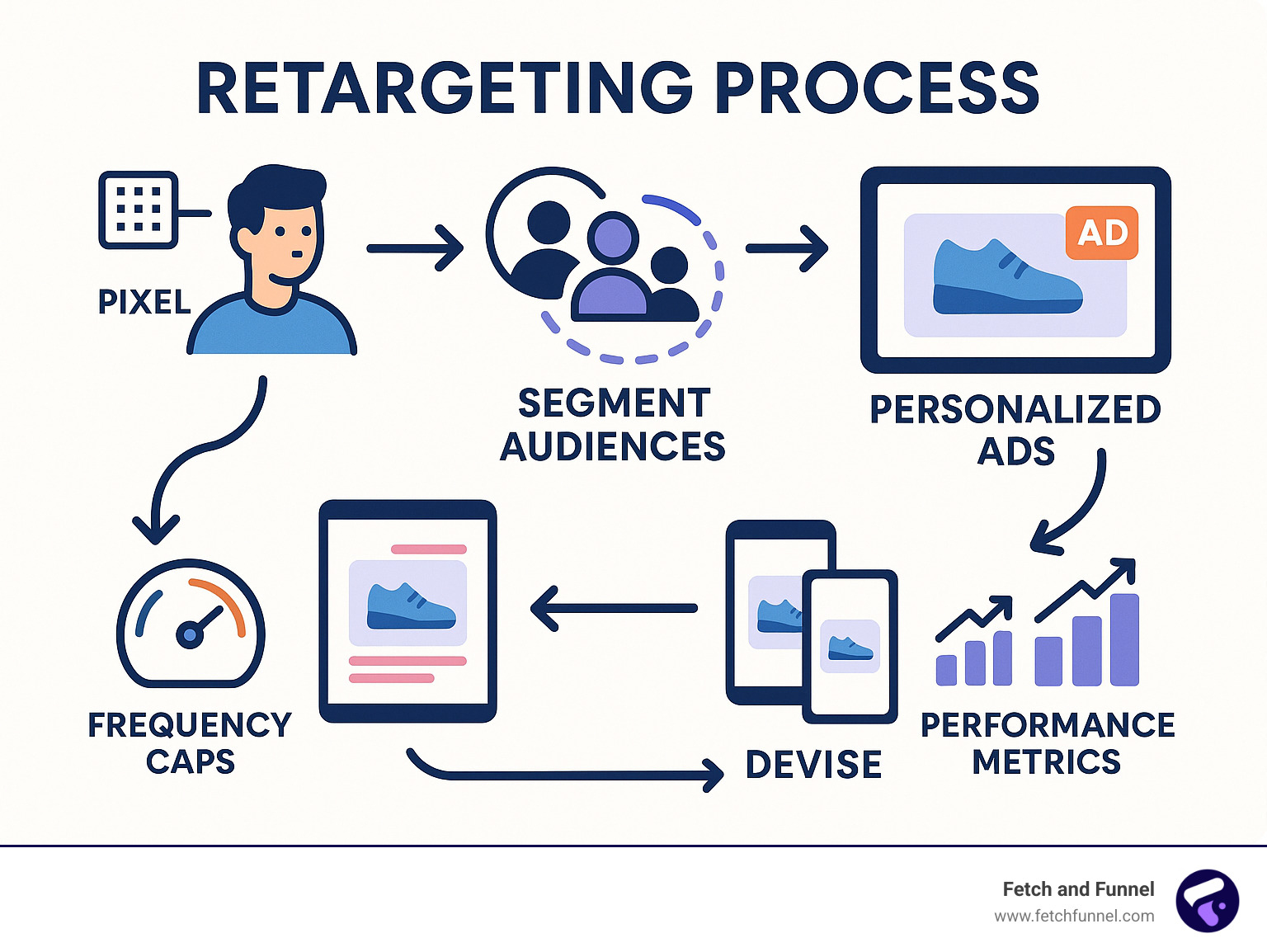
Best retargeting practices basics:
– best facebook retargeting strategy
– facebook remarketing ads
– what are 3 facebook retargeting strategies
Best Retargeting Practices #1: Laser-Focused Audience Segmentation
Let’s be honest – showing the same generic ad to everyone who’s visited your site is like using a bullhorn at a dinner party. Not exactly the personalized touch your potential customers are looking for!
According to the Data & Marketing Association, a whopping 77% of ROI comes from segmented, targeted, and triggered campaigns. This makes perfect sense when you think about it – different visitors have different needs and are at various stages in their buying journey.
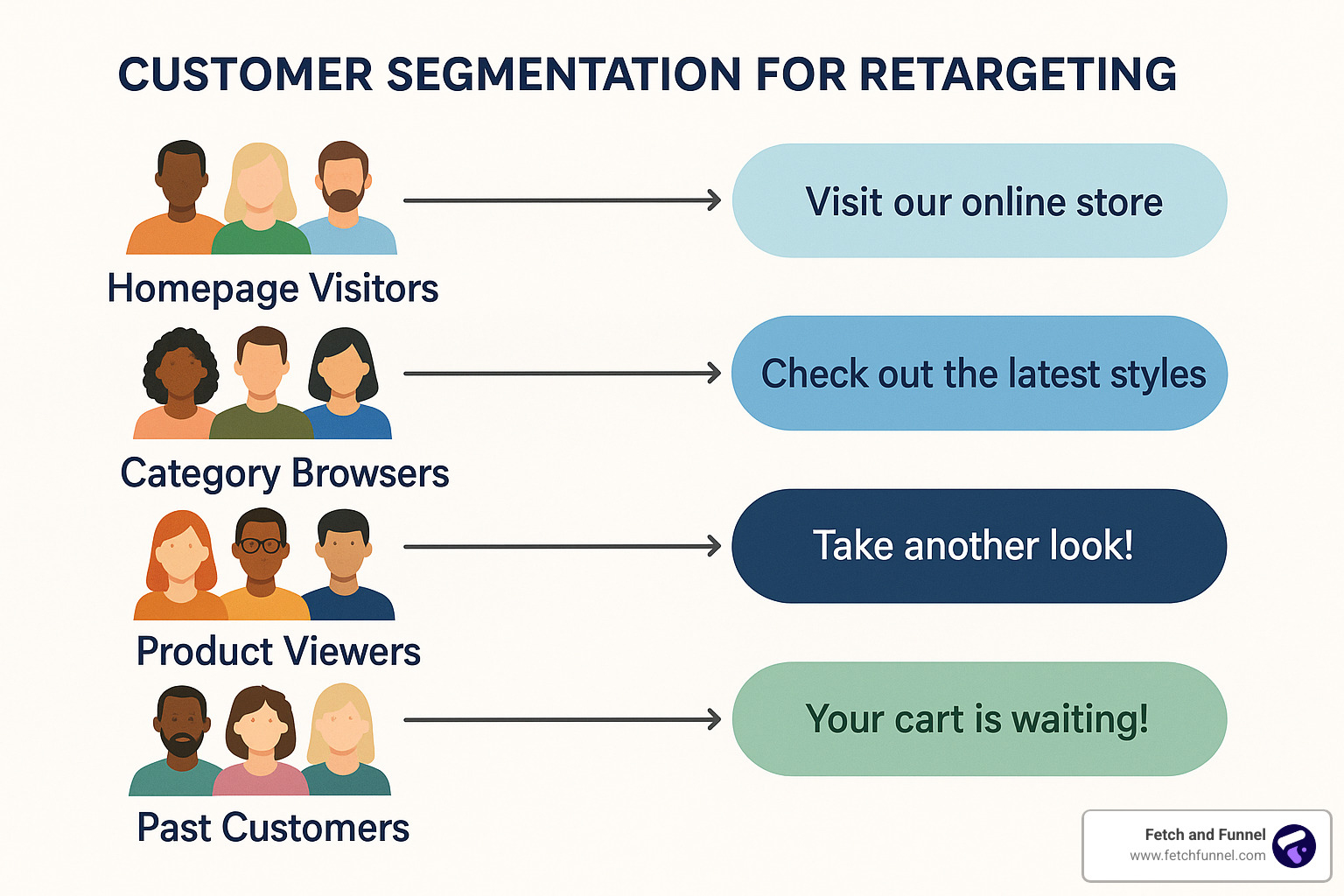
At Fetch and Funnel, we’ve finded that creating behavioral buckets forms the foundation of truly effective retargeting. Think of these segments as different conversation starters based on how someone has already interacted with you:
Homepage-only visitors are just getting to know you – they’re still in the browsing phase and need broader education about your brand.
Category browsers are warming up and showing specific interest areas – they’re ready for more detailed information about product types.
Product viewers have demonstrated clear interest in specific items – they’re comparing options and considering a purchase.
Cart abandoners have shown high purchase intent but something held them back – they might just need a gentle nudge or reassurance.
Past customers already know and trust you – they’re prime candidates for thoughtful upsells and repeat purchases.
Recency matters tremendously too. Someone who visited your site yesterday is typically much more valuable than someone who dropped by a month ago. We recommend creating time-based segments that acknowledge this reality:
Visitors from 1-3 days ago are your hottest prospects, while those from 4-7 days ago remain very warm. People who visited 8-14 days ago are still warm leads, but those from 15-30 days ago are cooling off, and the 31-60 day crowd has grown rather cold.
The RFM model (Recency, Frequency, Monetary value) can be a game-changer for prioritizing your retargeting budget. Simply put, visitors who come often, recently, and have spent more deserve a larger slice of your retargeting budget.
For B2B companies, we often suggest leveraging CRM lists to create custom audiences. This powerful approach allows you to retarget based on offline interactions, lead scores, or account status. LinkedIn’s matched audiences feature works particularly well for this strategy.
Don’t overlook the impact of geotargeting within your retargeting campaigns either. We’ve seen remarkable improvements in conversion rates when messaging is custom to location factors like urban vs. suburban settings or warm vs. cold climates.
Want to dig deeper into building powerful audiences? Our guide on Facebook Ads Audience Research has you covered.
Best retargeting practices for segment depth
Basic segmentation is just the starting point – diving deeper can transform your results. We’ve identified three key metrics that create much more sophisticated retargeting segments:
Time-on-site speaks volumes about engagement level. Visitors spending more than 4 minutes on your site are showing significantly higher interest than those who bounce after a few seconds. Outbrain research shows the average pre-conversion browsing time is about five minutes.
Consider segmenting visitors who spent under 10 seconds (likely accidental clicks) separately from those engaged for 10-60 seconds (brief interest), 1-4 minutes (moderate engagement), or 4+ minutes (high interest). Each deserves different messaging.
Visit count reveals purchase intent strength. Someone returning to your site multiple times is sending a clear signal of interest. First-time visitors need different handling than people making their second or third visit within a month. And those with 4+ visits in 30 days? They’re practically raising their hands for attention.
High-intent pages aren’t created equal. Someone checking your pricing page or return policy is typically much closer to purchasing than someone who only read your blog. Pages that signal serious purchase consideration include pricing information, product comparison tools, size guides, shipping details, and return policies.
When someone visits these high-intent pages, they’re essentially whispering, “I’m thinking about buying.” Your retargeting should acknowledge that level of consideration.
Best retargeting practices for exclusion of converters
One of the fastest ways to waste your retargeting budget (and annoy your new customers) is continuing to show product ads to people who’ve already made a purchase. At Fetch and Funnel, we implement three layers of protection against this common mistake:
Negative audiences work like a filter system. By creating audience segments of converters and explicitly excluding them from your acquisition-focused campaigns, you prevent awkward situations. In Facebook Ads Manager, this happens at the ad set level by selecting your converter audience under the “Exclude” section.
Burn pixels offer real-time protection. These special tracking pixels sit on thank-you or confirmation pages and automatically remove users from retargeting lists once triggered. They’re like instant off-switches for acquisition messaging.
Post-purchase upsell triggers take a smarter approach. Instead of excluding recent buyers from all retargeting, we move them to specialized post-purchase campaigns focused on complementary products, accessories, premium upgrades, or subscription options.
For example, when someone buys a coffee maker from one of our clients, we stop showing them coffee maker ads and start introducing them to premium coffee bean subscriptions or cleaning accessories instead. The goal isn’t to stop marketing to converters—it’s to ensure they receive messaging that makes sense for their new customer status.
By implementing these best retargeting practices for audience segmentation, you’ll create more relevant, personalized experiences that respect where each person stands in their journey with your brand. And that’s how you turn casual browsers into loyal customers.
Practice #2: Set Smart Frequency Caps & Prevent Ad Fatigue
Ever had that creepy feeling of being stalked by the same ad everywhere you go online? That’s what happens when retargeting goes wrong. And trust me, it can turn potential customers against your brand faster than you can say “ad fatigue.”
Frequency capping is your safety net here – it’s simply how you limit the number of times someone sees your ads in a given timeframe. Without these guardrails, you risk turning your warm prospects ice cold.
Here’s something that made us sit up and take notice at Fetch and Funnel: nearly 55% of consumers report being actively discouraged from making a purchase when bombarded with the same retargeting ads. That’s right – more than half of your potential customers might walk away if you overdo it.
For most of our clients, we start with these reasonable frequency guidelines:
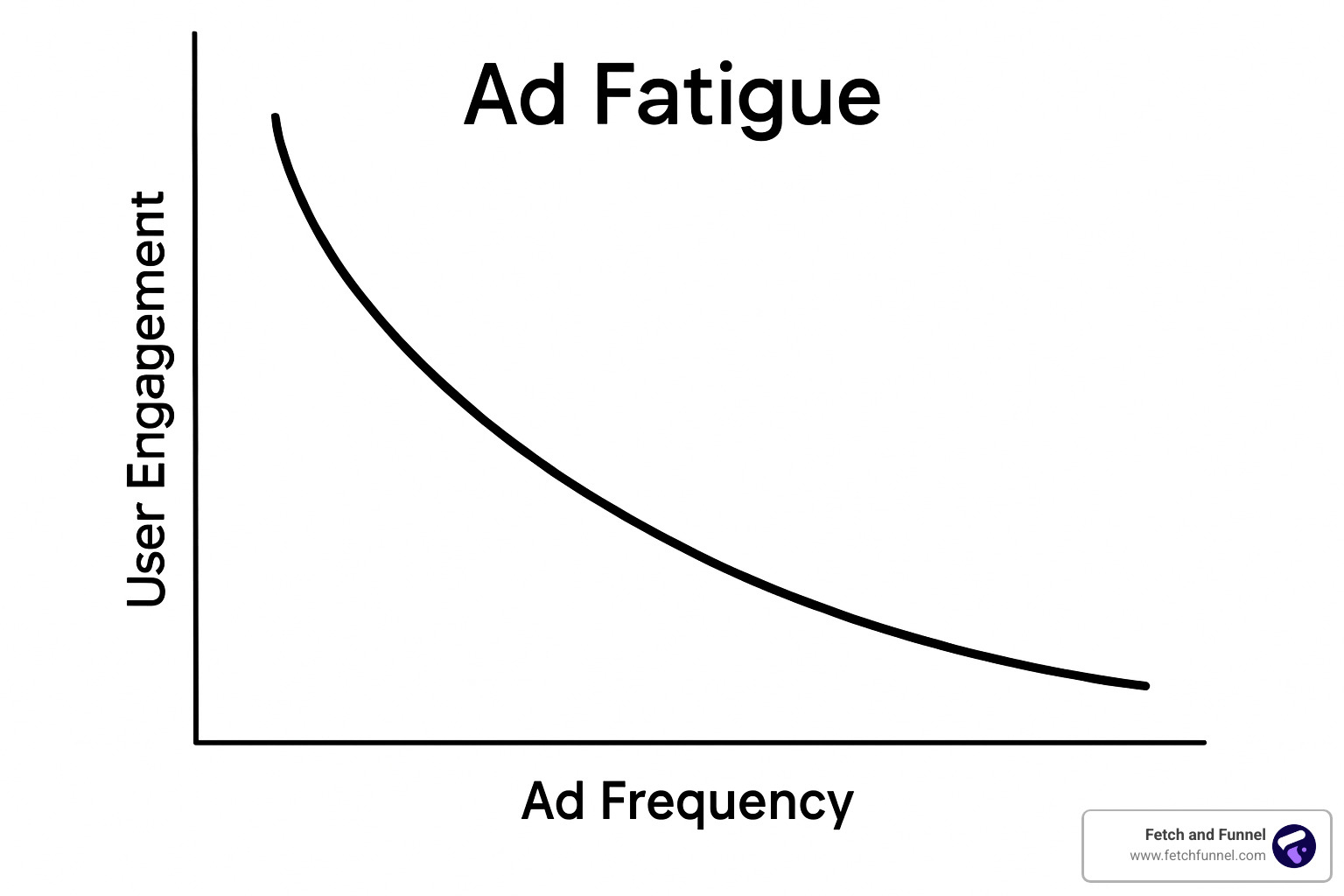
2-3 impressions per day feels like gentle reminding rather than stalking. 15-20 impressions weekly maintains visibility without overwhelming. And capping at 60-70 impressions monthly prevents long-term fatigue.
Of course, these aren’t one-size-fits-all numbers. Your optimal frequency will depend on several factors. Higher-priced products typically justify more touchpoints because the decision takes longer. Longer sales cycles might need more consistent reminders. During holiday seasons, people expect and tolerate more advertising. And if you have diverse, fresh creative, you can get away with higher frequencies without annoying people.
Setting these caps is straightforward in most platforms. In Google Ads, steer to Settings > Advanced Settings > Frequency Capping. For Facebook campaigns, you’ll find these controls at the Ad Set level under “Frequency Cap.”
The secret weapon against ad fatigue? Creative rotation. Instead of hammering people with identical ads, develop multiple versions with different headlines, visuals, calls-to-action, and value propositions. Then set your campaigns to rotate these evenly. This approach gives you the benefit of repeated exposure without the monotony that leads to banner blindness.
For the technical nitty-gritty on setting frequency limits in Google Ads, the Google AdWords limit guide has you covered.
Warning signs your frequency breaks best retargeting practices
How can you tell if you’re overdoing it? Watch for these red flags:
Your click-through rates start declining after the campaign has been running for a while – this is often the first sign of ad fatigue. Try pulling reports that show CTR by frequency to find your sweet spot.
When your costs start climbing (rising CPM or CPC) while performance stays flat or drops, it usually means people are tuning out your overexposed ads.
Pay attention to user feedback. If you’re seeing comments like “this ad is following me everywhere” or “please stop showing me this,” you’ve crossed the line.
An increase in negative engagement – like people hitting “Hide Ad” on Facebook or dismissing your ads at higher-than-normal rates – is a clear signal to dial things back.
At Fetch and Funnel, we don’t leave this to chance. We conduct weekly frequency audits for our clients, adjusting caps based on real performance data rather than assumptions. This methodical approach keeps your brand in that perfect visibility zone – present enough to be remembered, but never enough to become annoying.
Practice #3: Craft Irresistible Creative & Copy That Converts
Let’s face it – even perfect targeting and ideal frequency won’t save boring ads. Your retargeting creative needs to do three things in just seconds: grab attention, spark recognition, and inspire action.
One of the most powerful best retargeting practices I’ve seen work consistently is making your ads feel personally relevant. Those generic “Hey, come back to our site!” messages simply don’t cut it anymore. Your audience expects better – and they respond when they get it.
When we create retargeting campaigns at Fetch and Funnel, we focus on making each ad feel like it was made specifically for the person seeing it. This personal touch makes all the difference in turning browsers into buyers.
Best retargeting practices for dynamic product ads
Dynamic product ads are like digital salespeople who remember exactly what your customers were interested in. They automatically showcase the specific items someone viewed on your site, alongside complementary products they might like.
I’ve seen the power of this – one of our online retail clients saw orders jump by 29% after implementing Facebook Dynamic Product Ads. But getting these results requires more than just turning on the feature.
Product feed hygiene is absolutely essential. Think of your product catalog as the foundation everything else is built on. Make sure it includes crystal-clear images (multiple angles work best), benefit-focused descriptions that answer “what’s in it for me?”, accurate pricing that won’t surprise shoppers, and proper categorization so the system can make smart recommendations.
Real-time pricing updates are non-negotiable. Nothing kills trust faster than clicking an ad for a $49.99 product only to find it’s actually $59.99. Your feed should refresh prices frequently, especially during sales or when promotions are running.
Personalized recommendations take dynamic ads to the next level. Don’t just show the exact product they viewed – add complementary items that make sense together. If someone checked out a coffee maker, show them premium coffee beans or filters that work with that model.
Urgency elements can provide the gentle nudge needed to convert. Simple additions like “Only 3 left in stock” or “Sale ends in 24 hours” tap into powerful psychological triggers that can overcome hesitation.

At Fetch and Funnel, we consistently see dynamic ads outperform static ones by 30-50% for our e-commerce clients. The personalization just works.
Best retargeting practices for multi-format assets
The days of creating just one ad format are long gone. Different platforms and placements have unique requirements, and using the full spectrum of available formats gives you a serious competitive edge.
Here’s something interesting: industry data shows that 96% of ad impressions go to just three standard sizes (728×90, 300×250, 160×600), and 92% of campaigns only use those standard formats. By creating additional sizes, you can access less competitive inventory – often at lower costs.
For truly effective retargeting, prepare a variety of assets that maintain consistent branding while adapting to each specific context:
Display ads should include all standard IAB sizes plus at least 2-3 less common formats. This broader coverage helps you reach people across more websites and often at better rates.
Social media requires multiple aspect ratios – square (1:1) for Instagram feeds, landscape (1.91:1) for Facebook feeds, and vertical (4:5) for Stories. Each placement has its own viewing context and user expectations.
Video assets should include both attention-grabbing short clips (6-15 seconds) and more detailed longer versions (30-60 seconds) to match different platforms and user mindsets.
Email retargeting benefits from both static images and animated GIFs that work across various email clients. Some clients (like Outlook) don’t support animation, so your first frame needs to stand alone.
The key is maintaining visual consistency across all these formats while optimizing each for its specific context. Your brand should be instantly recognizable whether someone sees your ad on a smartphone, desktop, or tablet.
Ready to dive deeper into creating high-converting retargeting campaigns? Check out our complete guide on the Best Facebook Retargeting Strategy for more actionable insights.
Practice #4: Time, Sequence & Channel Mix for Full-Funnel Impact
Timing is everything in retargeting. The perfect ad shown at the wrong time or on the wrong channel is like whispering in an empty room – no matter how compelling your message, it won’t drive results.
Matching Cookie Duration to Sales Cycle
At Fetch and Funnel, we’ve found that aligning your cookie duration with your typical customer journey dramatically improves campaign performance. Think of it as setting the right expiration date for your digital memory:
For quick-decision products like fashion accessories or makeup, a 15-30 day cookie window usually suffices. These impulse purchases don’t need lengthy nurturing. But for that luxury sofa or enterprise software? You’ll want a 60-180 day window to stay present throughout their consideration phase.
The sweet spot we typically recommend:
– Short sales cycles (1-7 days): 15-30 day cookie window
– Medium sales cycles (1-4 weeks): 30-60 day cookie window
– Long sales cycles (1-6 months): 60-180 day cookie window
Day-parting – scheduling your ads to appear at specific times – can also work wonders. We recently helped a B2B client boost conversion rates by 23% simply by concentrating their ad spend during business hours when their decision-makers were actually at work. For consumer brands, evenings and weekends often deliver the strongest performance.
Cross-Channel Orchestration
Here’s something I tell all our clients at Fetch and Funnel: relying on a single channel for retargeting is like fishing with just one hook in a vast ocean. You might catch something, but you’re missing most of the opportunities.
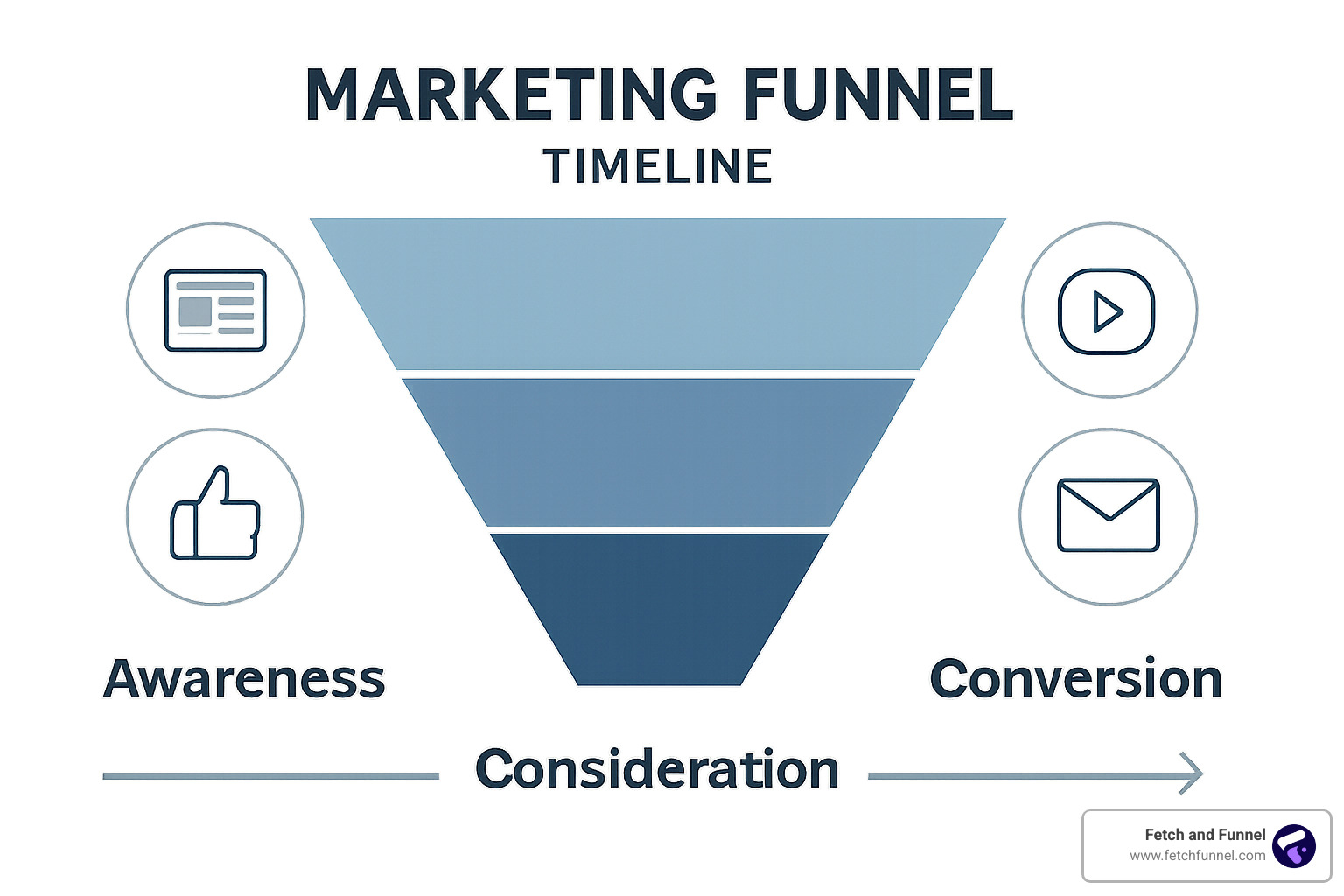
The magic happens when channels work together. Display ads build awareness, social platforms add emotional connection, emails deliver personalized messages, search captures active intent, and video tells your deeper story. Each channel plays its unique role in guiding prospects toward conversion.
This isn’t just our opinion – it’s backed by data. Research from comScore found that integrated multi-channel retargeting delivers significantly higher conversion lift than single-channel approaches. You can dig deeper into the findings in their scientific research on cross-channel lift.
Don’t forget about cross-device tracking. Your customers don’t live in a single-device world – they jump between phones, tablets, and laptops throughout their day. Implementing solutions that maintain consistent messaging across devices creates a seamless experience that builds trust rather than confusion.
Best retargeting practices for mid-funnel nurtures
The middle of the funnel is where relationships deepen – or die. This is where many retargeting campaigns fall flat by pushing too hard for immediate conversion when prospects need nurturing.
Content retargeting works brilliantly here. When someone reads your blog post about sustainable packaging, don’t immediately hit them with “BUY NOW!” messages. Instead, show them your in-depth sustainability guide or case study. We’ve seen engagement rates triple with this approach compared to direct product retargeting.
Webinar invites convert particularly well for complex products. For a SaaS client, we retargeted product page visitors with a “See It In Action” webinar invitation, resulting in a 34% registration rate from that segment – these became their highest-quality leads.
Lead magnets provide the perfect exchange of value. Offer that helpful template, checklist, or report in exchange for contact information, then nurture through both email and coordinated ads. One e-commerce client saw a 28% increase in eventual conversions after implementing this strategy.
For B2B companies, LinkedIn retargeting shines in this stage. Yes, it’s more expensive than Facebook or display networks, but the lead quality often justifies the investment. The platform’s professional context creates the perfect environment for building credibility through thought leadership content.
Best retargeting practices for bottom-funnel conversions
When prospects reach the decision stage, your best retargeting practices should focus on removing final purchase barriers and creating gentle urgency.
Cart abandonment recovery remains one of the highest-ROI tactics in digital marketing. The timing is crucial – we typically send the first email within 1-2 hours of abandonment when purchase intent is still warm. A friendly “Did you forget something?” with product images and a clear return path to checkout can recover 10-15% of otherwise lost sales.
Limited-time offers tap into our natural fear of missing out. One fashion client implemented countdown timers showing when sale prices would expire, boosting abandoned cart recovery by 27%. Just be sure your urgency is genuine – false scarcity damages trust.
Free shipping thresholds work like magic for the right products. When someone abandons a $45 cart and your free shipping kicks in at $50, a simple message like “Just $5 more for free shipping!” can be the perfect nudge. We’ve seen conversion rates increase by up to 40% with this approach.
Pay-per-conversion bidding lets you manage risk for these high-intent audiences. Google’s model only charges you when users actually convert, making it ideal for bottom-funnel campaigns where you’re confident in your messaging and landing pages.
The key is finding the balance between helpful reminders and pushy sales tactics. Your goal isn’t just to drive a one-time purchase but to create a positive experience that lays the foundation for long-term customer relationships.
Practice #5: Budget, Bids & Measurement That Maximize ROI
Strategic budget allocation and accurate measurement are what transform good retargeting into great retargeting. Let’s examine the best retargeting practices for maximizing your return on investment.
Setting the Right KPIs
Different retargeting campaigns require different success metrics. We’ve found that upper funnel campaigns should focus on engagement rate and video views, while mid-funnel efforts are better measured by lead form completions and content downloads. For bottom-funnel campaigns, we’re laser-focused on conversions, ROAS, and CPA.
For our e-commerce clients at Fetch and Funnel, ROAS is typically our north star metric. A healthy retargeting campaign should deliver at least 3-5x ROAS, though I’ve seen some bottom-funnel segments reach an impressive 8-10x or higher. When you’re getting $8-10 back for every dollar spent, you know you’ve hit retargeting gold!
Attribution Models
Proper attribution is crucial for retargeting, but it can be a bit of a puzzle. Last-click attribution credits the final touchpoint before conversion, which often undervalues retargeting’s contribution. First-click models do the opposite, overvaluing awareness campaigns while potentially ignoring the retargeting that sealed the deal.
We generally recommend either a position-based or time-decay model for most businesses. Position-based attribution gives 40% credit to both the first and last touchpoints, with the remaining 20% distributed among middle interactions – a balanced approach that recognizes retargeting’s closing power without ignoring awareness campaigns.
Here’s a pro tip: don’t overlook view-through conversions (when someone sees your ad but converts later without clicking). For display and video retargeting, these “saw it but didn’t click it” conversions often represent a significant portion of your campaign’s total value.
Bidding Strategies
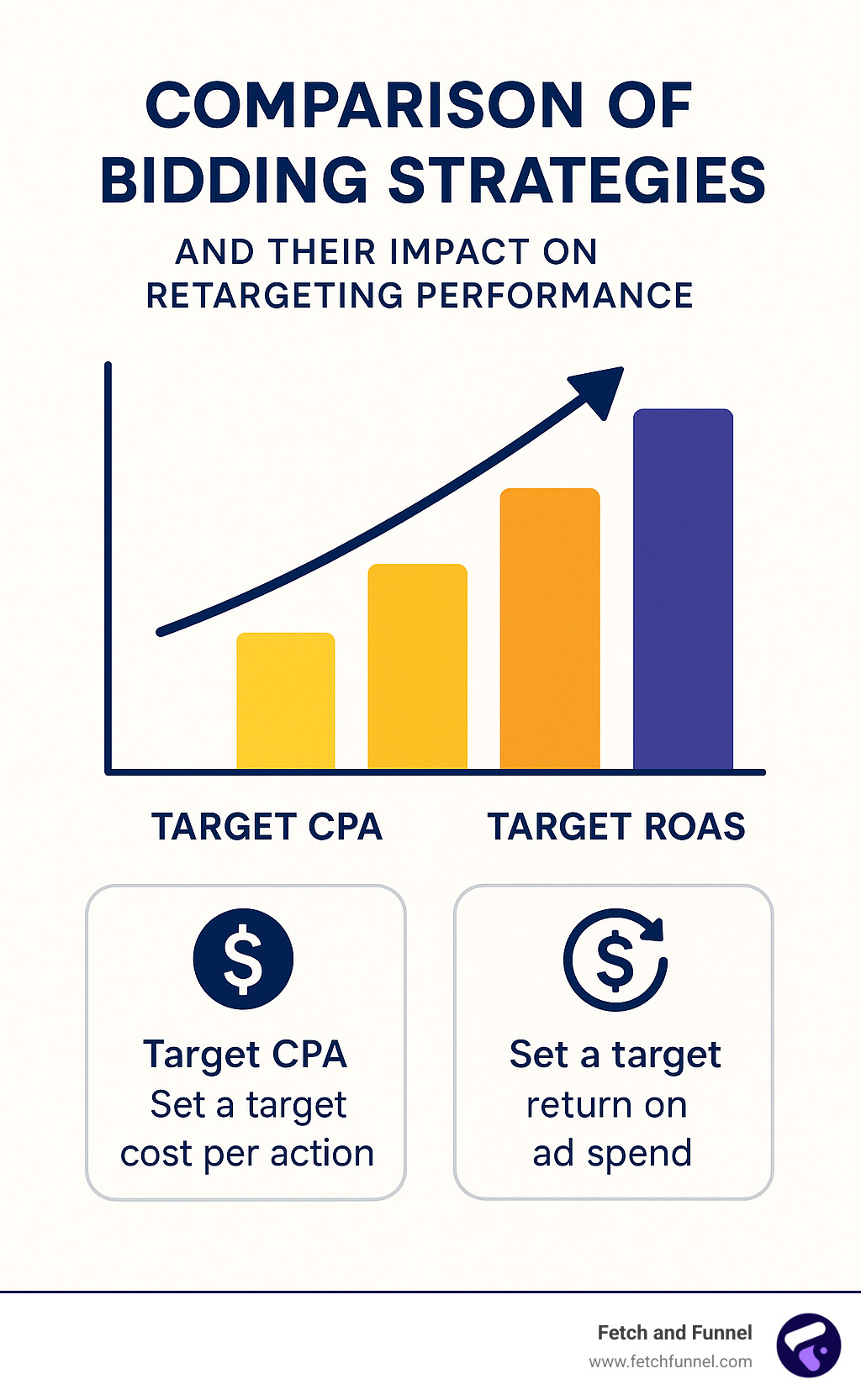
Today’s platforms offer some pretty sophisticated automated bidding options that take much of the guesswork out of retargeting. Target CPA lets you set your desired cost per acquisition and the algorithm works its magic. Target ROAS is my personal favorite – you specify your return goal and the system adjusts bids accordingly.
For most retargeting campaigns, we typically recommend Target ROAS or Target CPA bidding, but only once you have sufficient conversion data (at least 15-30 conversions per month). Without that baseline data, the algorithms are essentially flying blind.
Don’t forget about lookback windows, which affect both bidding and measurement. Most platforms default to a 28-30 day click-through window and a 1-7 day view-through window. These settings are worth adjusting based on your unique sales cycle and attribution preferences.
For more insights on maximizing conversion value, check out our guide on Facebook Ads for Lead Generation.
Best retargeting practices for budgeting phases
Retargeting budgets should evolve through distinct phases, much like a relationship. The early testing phase is like dating – you’re exploring options without fully committing. During this 1-4 week period, allocate about 10-15% of your total ad budget, split evenly across key segments and platforms. I recommend a minimum daily spend of $10-20 per segment to gather meaningful data.
The optimization phase (1-3 months) is where the relationship gets more serious. Increase your retargeting investment to 15-25% of your total ad budget, but be selective. Reallocate based on initial performance data, cutting underperforming segments while doubling down on winners.
Finally, the scaling phase is the long-term commitment. Here you’ll typically stabilize at 20-30% of your total ad budget, implement more granular segmentation, and continuously test new creative approaches.
One word of caution: retargeting audience pools are limited by your site traffic. As you exhaust your retargetable audience, returns may diminish unless you simultaneously invest in top-of-funnel campaigns to fill the pipeline. It’s a delicate balance!
Best retargeting practices for analytics & optimization
Proper tracking is the foundation of retargeting optimization, and it starts with consistent UTM parameters. Add these tags to all your retargeting ads to track performance in Google Analytics. At minimum, include the platform (facebook, google, linkedin), “retargeting” as the medium, your campaign objective, and the specific creative version.
Conversion tracking is equally important. Implement platform-specific conversion pixels and configure them to track both major conversions (purchases) and micro conversions (add-to-cart, signup). These smaller actions provide early indicators of campaign performance.
We’ve found that creating and analyzing audience segments in Google Analytics helps identify new retargeting opportunities that might otherwise go unnoticed. At Fetch and Funnel, we’ve built custom dashboards that blend data from multiple platforms to provide a unified view of retargeting performance across the entire customer journey.
Establish a regular cadence for performance reviews – weekly check-ins for tactical adjustments and monthly deep dives for strategic reassessment. Retargeting is never “set it and forget it” – it’s an ongoing conversation with your audience that requires constant refinement.
Frequently Asked Questions about Best Retargeting Practices
How soon after a visit should I start retargeting?
Timing is everything in retargeting. Our data consistently shows that the golden window for reconnecting with visitors is within the first 24-48 hours after they leave your site without converting. This is when their interest is still warm and your brand remains fresh in their mind.
“Strike while the iron is hot” isn’t just an old saying—it’s a retargeting best practice backed by conversion data. However, I’ve found that certain situations call for a more nuanced approach:
For complex B2B products with longer sales cycles, a slight delay of 1-3 days can actually be beneficial. This gives your prospects time to research competitors, making them more receptive to comparative messaging when you re-engage them.
Luxury brands often benefit from a more subtle cadence. If you’re selling high-end watches or designer fashion, immediately bombarding visitors with ads might feel inconsistent with your brand’s exclusive positioning.
The key is alignment—match your retargeting timing to your customer’s natural decision-making rhythm. A $20 impulse purchase deserves different timing than a $20,000 enterprise software solution.
What is a safe frequency cap per user?
“How often is too often?” is probably the question I get asked most about best retargeting practices. While our starting recommendation is typically 2-3 impressions per day, the truth is that “safe” varies significantly depending on several factors.
Industry context matters enormously. B2B services can generally sustain higher frequencies than consumer products before fatigue sets in. I’ve seen B2B campaigns maintain engagement with 4-5 daily impressions, while some consumer brands start seeing diminishing returns after just 2-3.
Your visitor’s position in the funnel should also influence your frequency decisions. Someone who abandoned a cart with $300 of products can receive more frequent reminders than someone who merely glanced at your homepage. Their demonstrated interest level justifies the increased touchpoints.
Creative diversity is your secret weapon against frequency fatigue. If you’re rotating 5-6 different ad versions with varied visuals and messaging, you can push frequency limits higher without annoying your audience. One client of ours maintains a 5/day frequency cap but rotates through 8 different creative concepts, keeping the experience fresh.
The most reliable approach? Test different caps, watch your metrics closely, and listen to your audience. When engagement drops or negative comments increase, you’ve found your ceiling.
How do I stay compliant with GDPR/CCPA while retargeting?
Privacy regulations have dramatically changed the retargeting landscape, but compliance doesn’t have to mean compromising effectiveness. At Fetch and Funnel, we’ve developed a straightforward approach to privacy-first retargeting:
First, update your privacy policy to specifically mention retargeting practices. Be transparent about which platforms you use and what data you collect. Vague policies no longer cut it in today’s regulatory environment.
Implement proper consent mechanisms before placing tracking cookies. This is particularly crucial for European audiences under GDPR, where implied consent isn’t sufficient. Clear, specific opt-in language is now the standard.
Being responsive to opt-out requests isn’t just good ethics—it’s good business. When someone asks to be removed from your retargeting, honor that request promptly across all platforms. The tools make this relatively easy, but you need processes to ensure it happens consistently.
Data security becomes especially important when using first-party lists for retargeting. CRM data should be handled with appropriate safeguards, and access should be limited to team members who truly need it.
Finally, implement reasonable data retention limits aligned with your sales cycle. There’s rarely a business justification for keeping someone in a retargeting audience for years—and privacy laws increasingly require you to define and enforce these limits.
Most major platforms have built privacy compliance features into their systems, but remember: the ultimate responsibility falls on your business to implement them correctly. When in doubt, consult with a privacy professional—the cost of compliance is far less than the potential penalties and reputation damage of violations.
At Fetch and Funnel, we’ve helped dozens of brands transition to privacy-first retargeting strategies that balance regulatory requirements with marketing effectiveness. The good news? We’ve found that more respectful, transparent approaches often perform better in the long run anyway.
Conclusion
Embracing best retargeting practices isn’t just about chasing after abandoned carts or lost visitors—it’s about building a thoughtful, helpful journey that gently leads people back to you when they’re ready. When done right, retargeting feels less like digital déjà vu and more like a friendly nudge from a brand that gets you.
The real magic happens when you apply the fundamentals: laser-focused audience segmentation, just-right frequency caps, engaging creative custom to each step of the funnel, and cross-channel consistency—all backed by data (and a dash of creative flair). By weaving these best retargeting practices into your campaigns, you’ll see a noticeable boost in ROI, but more importantly, your audience will thank you for respecting their experience along the way.
At Fetch and Funnel, we believe in blending art and science. Our creative-first, full-funnel approach turns these strategies into steady, predictable growth for brands in Boston and beyond. We know that what works today might need a tweak tomorrow—so we never “set it and forget it.” Testing, learning, and refining is part of the journey, and we’re right there with you, every step of the way.
No two audiences are alike. Use these best practices as your starting point, but don’t be afraid to experiment and find what truly clicks for your business. With the right mix of creativity and data, you can turn warm prospects into loyal customers—and maybe even fans.
Curious how Fetch and Funnel can help you create retargeting campaigns that actually work (without driving people crazy)? Explore our approach to Facebook Retargeting Strategies, or reach out for a friendly chat about how we can help your brand master the art and science of best retargeting practices.
Keep testing, keep learning, and watch your results grow. Your perfect customer is just a click (or a well-timed reminder) away.


