

Why Understanding Geofencing Costs Matters for Your Business
The cost of geofencing varies widely based on your campaign goals, targeting, and chosen platforms. Here’s a quick overview of what to expect:
Quick Cost Overview:
- Monthly budgets: $1,500 to $32,000+ for most businesses
- CPM pricing: $3.50-$15 for mobile/desktop, $20-$50 for Connected TV
- Setup costs: $200-$2,000 one-time fee
- Small business packages: Starting around $270/month
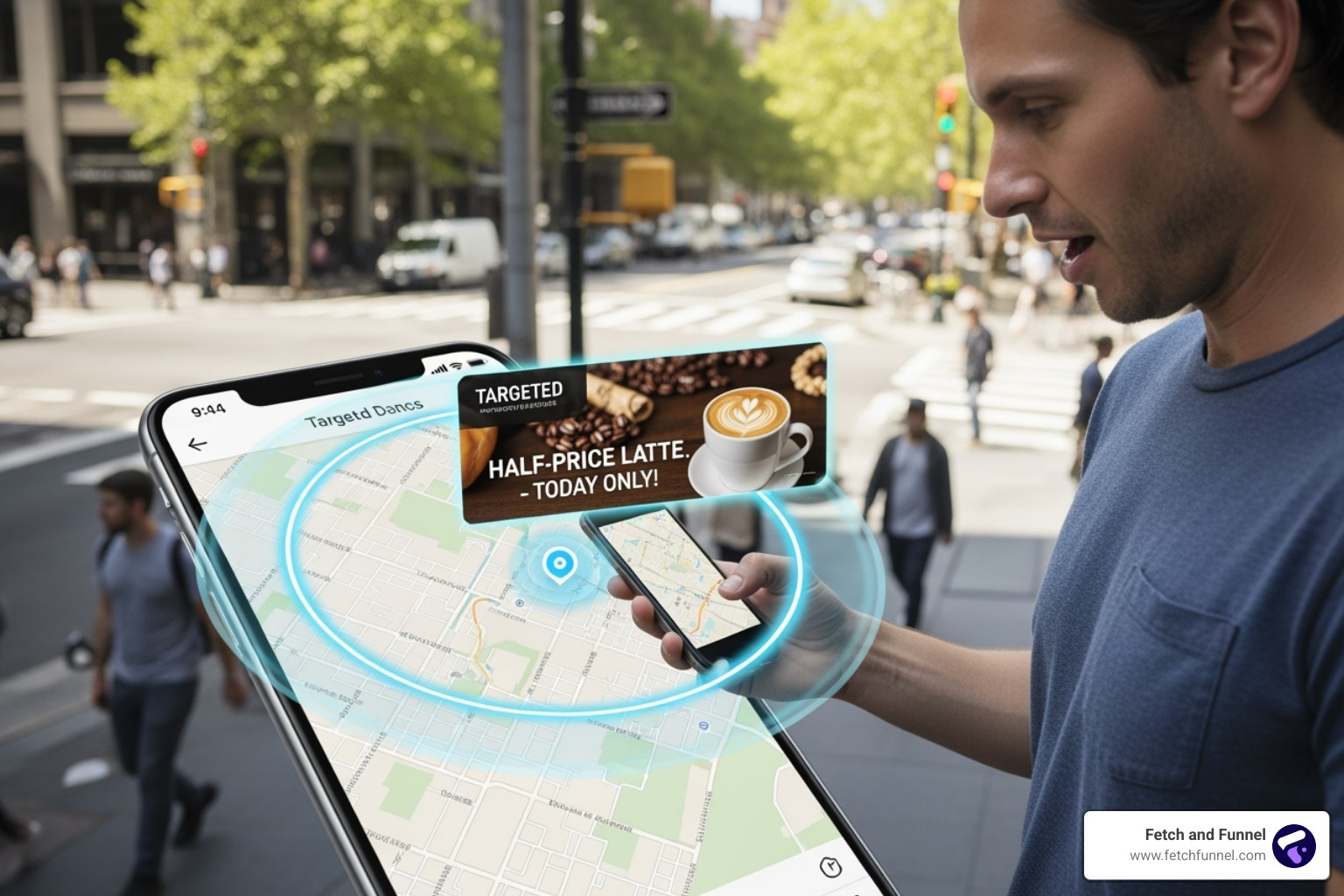
Location-based marketing is essential for reaching customers at the right place and time. Geofencing lets you create virtual boundaries that trigger ads when potential customers enter specific areas, perfect for targeting competitor locations or driving foot traffic. However, geofencing costs can spiral without a clear understanding of the pricing models and factors involved.
Businesses spend anywhere from a few hundred to tens of thousands per month on these campaigns, with costs per 1,000 impressions ranging from $5 to over $25 for premium placements. The difference often comes down to strategy, not just budget size.
I’m Samir ElKamouny, and at Fetch & Funnel, I’ve helped businesses optimize cost of geofencing campaigns for maximum ROI. I’ve seen how understanding these costs upfront is critical to the success of any location-based marketing campaign.
The Primary Geofencing Pricing Models Explained
Understanding how you’ll pay for geofencing is crucial, as the right model aligns your spending with your campaign goals. The cost of geofencing isn’t a flat rate; it’s based on different models that charge for specific outcomes, from brand awareness to direct store visits. Your primary goal—whether it’s broad exposure or driving foot traffic—will determine the best pricing model for your geofencing advertising campaign.

CPM (Cost Per Mille)
CPM (Cost Per Mille) is the most common model, where you pay for every 1,000 times your ad is shown (impressions), regardless of clicks. This model is ideal for brand awareness campaigns and top-of-the-funnel marketing, where the main goal is visibility.
Here’s what to expect for CPM pricing:
- Mobile and Desktop Campaigns typically run between $3.50-$15 CPM. For most video campaigns, budget around $7-$12 CPM. For short-term events, expect to pay $10-$15 CPM for rapid delivery.
- Connected TV (CTV) and Over-The-Top (OTT) campaigns command higher prices, usually $20-$50 CPM. This premium cost of geofencing reflects the high-impact placement on home TV screens and includes more sophisticated targeting.
Factors like narrower targeting, video ads (around $15-$25 CPM), and short, intense campaigns can increase your CPM.
CPV (Cost Per Visit)
With the CPV (Cost Per Visit) performance-based model, you only pay when someone physically enters your location after seeing your ad. This model, championed by platforms like GroundTruth, is that simple.
This model is perfect for driving foot traffic, as it provides direct accountability for your ad spend. Instead of hoping impressions lead to visits, you pay for the desired outcome. CPV shifts the risk from you to your advertising partner, making it an excellent choice for businesses where in-store traffic is the ultimate measure of success. This model shows how geofencing in location-based marketing can directly translate digital ads into customers.
Other Models (CPC/CPA)
While CPM and CPV are dominant, other models are used, especially in broader strategies.
- Cost-per-click (CPC) charges you for each ad click. It’s effective for conversion-focused campaigns driving users to a webpage or app. You can learn more about understanding cost-per-click (CPC).
- Cost-per-acquisition (CPA) is the most performance-driven, as you only pay for a specific action like a purchase or signup. While less common for pure geofencing, CPA is often the end goal of a complete marketing funnel.
The pricing model you choose will significantly impact your overall cost of geofencing and how your budget is optimized.
Key Factors That Determine the Total Cost of Geofencing
Beyond the pricing model, several key variables shape your final investment. Understanding these factors helps you make smarter budget decisions for your geofencing ad targeting efforts. Think of them as dials to fine-tune your campaign, balancing cost with precision.
Campaign Scope: Size, Number of Fences, and Duration
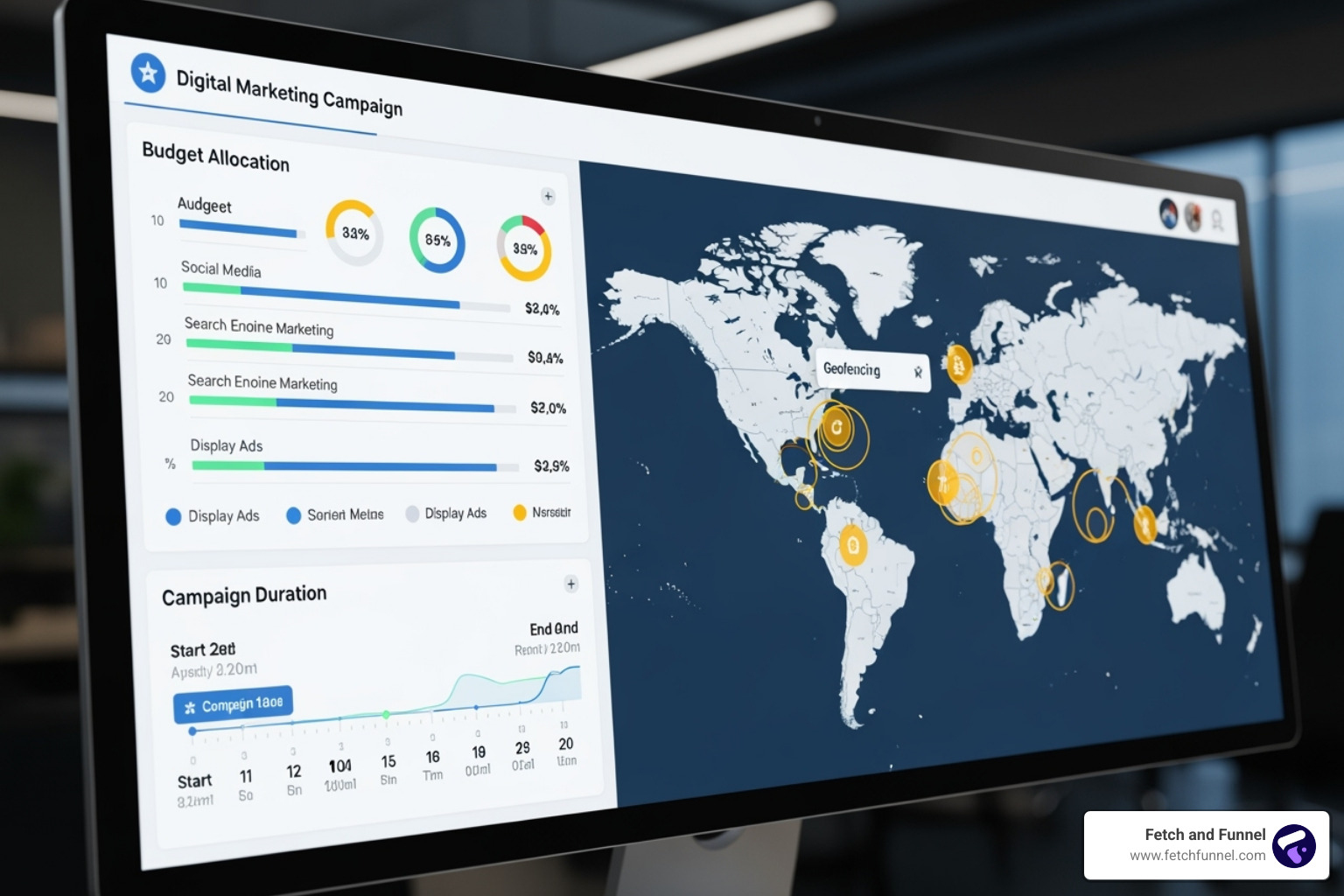
The physical scope of your campaign is the biggest cost driver.
- Geofence size: Tighter fences (e.g., a 4-5 minute walk/drive) are often more effective and reduce wasted impressions on people too far away to visit.
- Number of locations: Costs scale directly with the number of geofences you manage. Targeting five locations is cheaper than targeting fifty. Some platforms, like Snapchat, charge based on area (e.g., $5 per 20,000 sq. ft.), directly linking size and quantity to price.
- Campaign duration: Short, high-intensity campaigns for events require higher daily budgets, while longer campaigns spread costs over time but have a higher total investment.
Platform and Ad Format
Where and how your ads appear dramatically influences the cost of geofencing. Different providers, such as Simpli.fi, offer a range of platform options that affect these costs.
- Mobile ads are the core of geofencing, with CPMs from $3.50-$15. Geofencing mobile ads are effective because they reach people on the go.
- Desktop campaigns have similar CPMs but are better for reaching people in offices or for broader brand awareness.
- Connected TV (CTV) and OTT are premium options, with CPMs from $25 to $50+, reflecting the high-impact experience of a TV screen ad.
- Video vs. static display: Video ads are more engaging and command higher CPMs ($15-$25), while static ads are more budget-friendly ($5-$12 CPM).
- Social media platforms like Facebook offer geofencing capabilities at their standard ad rates, which vary based on audience competition.
Targeting Complexity and Strategy
Sophisticated targeting can increase costs but usually improves results and ROI.
- Behavioral targeting (reaching users based on past online actions) and audience segmentation allow for highly personalized messaging but require more data and management.
- Dayparting (scheduling ads for specific times) optimizes spend by showing ads only when your audience is most receptive, like a restaurant running ads only during lunch hours.
- Advanced strategies like addressable geo-fencing combine location with household data for incredible precision, which may have additional data costs but deliver superior ROI.
The Monthly Cost of Geofencing: A Full Breakdown
Your total monthly investment consists of three components:
- Setup fees ($200 – $2,000): A one-time cost for initial strategy, research, and campaign configuration.
- Platform management costs: This covers ongoing optimization and reporting. It can be an agency’s monthly fee (hundreds to thousands) or DIY software subscriptions ($50-$500/month) plus your time.
- Ad spend: The core budget for impressions or clicks, ranging from hundreds to tens of thousands monthly.
Combining these, most businesses should expect to invest $1,500 to $32,000+ per month. This wide range shows geofencing’s scalability. Understanding how to set up geofencing marketing ensures your investment is used effectively.
DIY vs. Agency: Comparing Costs and Capabilities
One of the biggest decisions is whether to manage geofencing yourself or hire a professional service. Both approaches have distinct cost of geofencing implications, and the cheaper option on paper isn’t always the most cost-effective in practice.

The DIY Approach
Going the DIY route seems budget-friendly by avoiding agency fees, but hidden costs can add up.
- Software and tool costs: Monthly subscriptions for geofencing platforms range from $50 to $500. Basic plans often lack the advanced analytics needed for optimization.
- Learning curve & time commitment: Mastering geofencing takes significant time away from your core business. Mistakes made during this learning process result in wasted ad spend.
- Limited data and insights: DIY platforms provide basic analytics but lack the deep, proprietary data that agencies use to drive superior results.
DIY geofencing marketing can work for simple campaigns, but the hidden costs of time, learning, and suboptimal performance often outweigh the initial savings.
Hiring a Professional Service
Engaging a professional agency, whether it’s Fetch & Funnel or another specialist like Propellant Media, often justifies the investment through better results and efficiency.
- Expertise and premium tools: Agencies provide strategic expertise and access to enterprise-level platforms that are too expensive for most individual businesses. This includes sophisticated audience insights, competitive intelligence, and optimization algorithms.
- Comprehensive services: Fees typically cover strategy, creative services for designing compelling ads, and dedicated account management. This saves you the significant cost and effort of building these capabilities in-house.
- Advanced reporting and analysis: Agencies provide detailed performance insights, identify optimization opportunities, and continuously refine campaigns to maximize your return on investment.
For businesses serious about scalable, high-performing campaigns, professional geo-fencing solutions are often the most cost-effective long-term choice.
Comparing DIY vs. Professional Geofencing
| Feature | DIY Geofencing | Professional Service |
|---|---|---|
| Cost | Lower upfront (software subs + ad spend) | Higher (agency fees + ad spend) |
| Time Investment | High (research, setup, management, learning) | Low (agency handles most tasks) |
| Required Expertise | High (digital marketing, analytics, creative) | Low (rely on agency’s specialized knowledge) |
| Access to Technology | Basic/mid-tier platforms & data | Premium platforms, advanced tools, proprietary data |
| Potential for ROI | Variable (depends on internal capability) | Higher (optimized campaigns, expert insights) |
The choice depends on your resources and goals. DIY may work for small tests, but for scaling and maximizing investment, professional management typically delivers superior results.
Justifying the Spend: Benefits and ROI of Geofencing
The cost of geofencing is an investment, not an expense. When done right, it delivers measurable results that transform how you connect with customers. Data from successful geofencing case studies and examples from other providers like Reveal Mobile shows a compelling ROI that justifies the initial spend.
The Tangible Benefits That Justify the Cost
Geofencing delivers real, tangible outcomes for your business:
- Increased foot traffic: The immediacy of location-based offers drives customers to your door.
- Hyper-targeted advertising: Your ad dollars work harder by reaching people in the right place at the right time, reducing waste.
- Improved customer engagement: Timely, relevant messages feel helpful, not intrusive, creating a stronger connection.
- Competitive advantage: Target customers at your competitor’s location, a bold and effective strategy.
- Personalized experiences: Deliver relevant content based on a customer’s location, like a gym sending workout tips to a nearby member.
- Valuable data insights: Learn about customer movement patterns, peak visit times, and which locations drive traffic. A Think with Google study found that 76% of people who make a local search on their phone visit a related business within a day.
Real-World ROI Examples
Numbers speak louder than promises. Here’s how the cost of geofencing translates to results:
- Retail Store Campaign: A fashion boutique invested $6,000 monthly to geofence its store and competitor locations. The campaign drove a 25% increase in foot traffic and generated $12,000 in additional monthly revenue—a 2x return on investment.
- Event Promotion: A music festival spent $13,500 targeting concert venues and college campuses. The campaign resulted in 500 direct ticket sales at $75 each, generating $37,500 in revenue and a nearly 3x ROI.
These examples from companies using geofencing show how strategic targeting turns ad spend into measurable growth.
How to Optimize Your Budget for Maximum Return
Getting the best ROI requires smart strategy, not just a bigger budget.
- Start with a pilot campaign: Test different geofences, creatives, and targeting on a smaller budget to learn what works.
- A/B test your creatives: Continuously test headlines, visuals, and calls-to-action to improve performance.
- Monitor key metrics: Focus on what matters—foot traffic, conversions, and sales—not just impressions and clicks.
- Refine targeting: Adjust your strategy based on data, allocating budget to the segments and locations that deliver the best results.
- Focus on high-value locations: Quality trumps quantity. A smaller, more relevant geofence is often more effective than a larger, broader one.
The cost of geofencing becomes highly reasonable with consistent optimization. Our geofence marketing campaigns are designed to perform, delivering returns that justify the investment.
Frequently Asked Questions about Geofencing Costs
The cost of geofencing can seem mysterious at first. Here are answers to the most common questions we hear from business owners.
How much does a small business typically spend on geofencing?
While some niche packages exist for as low as $270/month, most small businesses should plan for a starting point of $1,000 to $2,500 per month. This range typically covers basic ad spend and campaign management, allowing for meaningful tests and results.
Be aware that minimum spend requirements vary widely. Some providers, like Location3, work with various budget sizes, while others require $10,000 or more. It’s better to start with a budget you can sustain long enough to gather meaningful data and scale up once the concept is proven.
Can you do geofencing for free?
The short answer is no, not for results that will meaningfully impact your business.
While social media platforms like Facebook include location-targeting features in their ad systems, you are still paying to run the ads. The targeting feature may be “included,” but reaching an audience always costs money. The cost of geofencing always involves ad spend.
Dedicated geofencing platforms offer more sophisticated targeting and analytics than basic social media tools, and these services come with setup fees, subscriptions, and ad spend.
How is geofencing ROI calculated?
The basic formula is: (Revenue Generated – Campaign Cost) / Campaign Cost. For example, if a $2,000 campaign generates $3,000 in revenue, your ROI is ($3,000 – $2,000) / $2,000 = 50%.
The challenge is tracking the right metrics. We focus on Key Performance Indicators (KPIs) to measure success:
- Foot traffic increases: Using attribution technology, we track how many ad viewers visit your physical location.
- Conversion lift: We compare the conversion rate of the geofenced audience to a control group to determine the campaign’s direct impact.
- Customer Lifetime Value (LTV): We consider the long-term value of a new customer. A $40 acquisition cost is easily justified if that customer is worth $200 over their lifetime.
Proper tracking from day one is essential to prove that your geofencing investment is paying off.
Conclusion
Planning for the cost of geofencing is about investing in a powerful tool to connect with customers. As we’ve covered, costs vary widely—from $1,500 to $32,000+ monthly—depending on your goals, scope, and strategy. These are not fixed prices but flexible investments that scale with your business.
What makes geofencing so valuable is its accountability. You can track actual store visits and calculate a concrete ROI, turning advertising into a measurable cause of business growth. The choice between DIY and professional management also impacts your true cost. While DIY saves on fees, the hidden costs of time, mistakes, and missed opportunities can be significant.
At Fetch & Funnel, we believe in a strategic approach. Success isn’t about the biggest budget; it’s about understanding your customers and refining your campaigns based on real data. When executed thoughtfully, geofencing creates meaningful connections at the perfect moment.
Ready to explore how geofencing can work for your business? Our team specializes in creating data-driven strategies that maximize your return on investment. To partner with an expert team that can maximize your geofencing ROI, explore our geofencing marketing company services. We’re here to help you steer the complexities and open up the full potential of location-based advertising for your business in Boston, MA, and beyond.


