The Power of Proximity Marketing
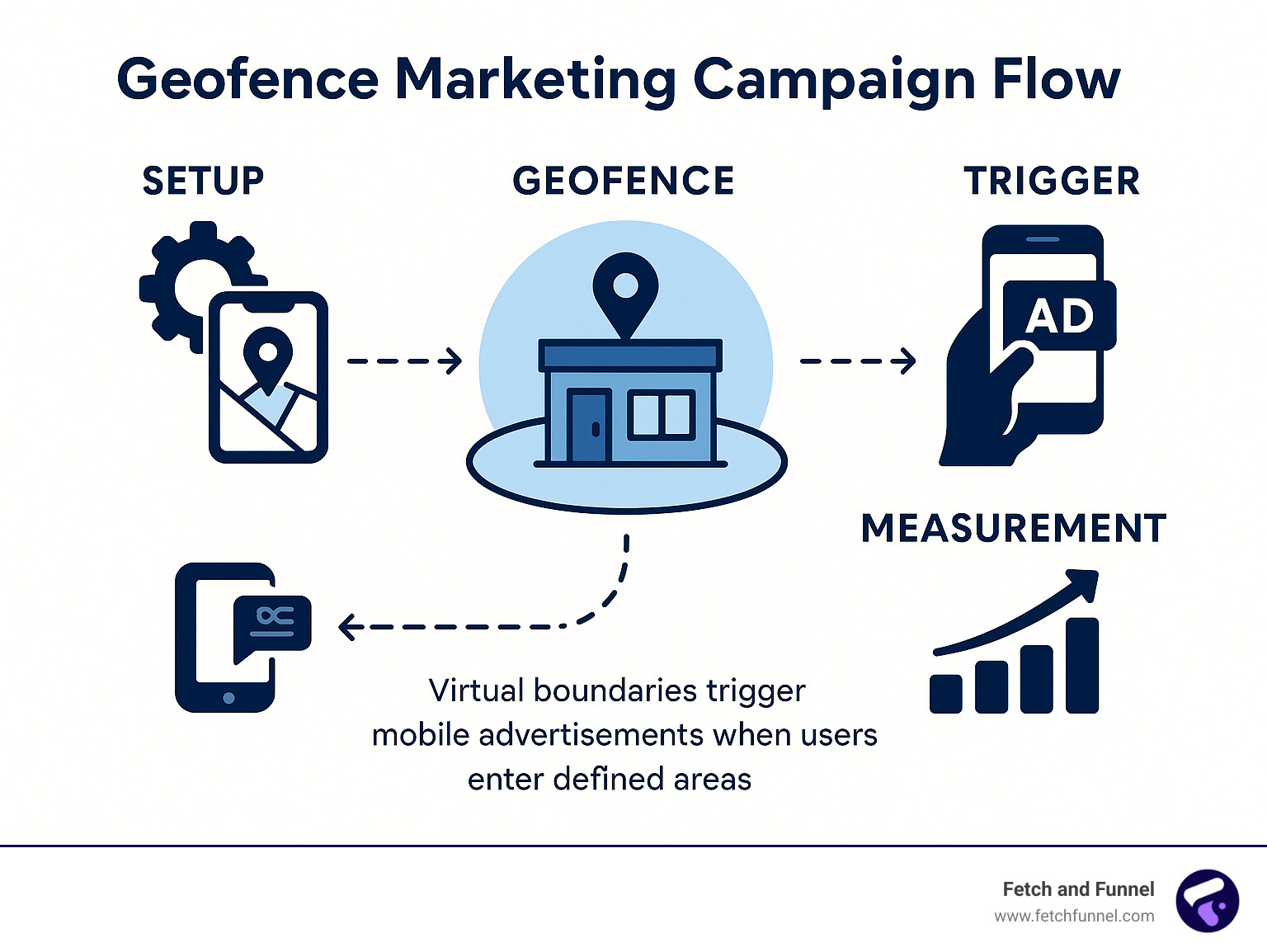
Geofence marketing campaigns are location-based marketing strategies that use virtual boundaries (geofences) around physical locations to trigger targeted ads or notifications when users enter, dwell in, or exit those defined areas.
What You Need to Know About Geofence Marketing Campaigns:
– Definition: Virtual perimeters that trigger mobile ads or notifications based on user location
– Technology: Uses GPS, Wi-Fi, and cellular data to detect device presence
– Primary Uses: Drive foot traffic, boost sales, target competitor customers, gather location intelligence
– Campaign Types: Promotional offers, competitor conquesting, audience nurturing, event marketing
– Benefits: Hyper-targeted reach, increased conversions, real-time engagement, improved ROI
Imagine walking past your favorite coffee shop and receiving a notification offering 20% off your next purchase. That’s geofencing in action – delivering the right message to the right person at the right place and time.
Geofencing bridges the digital and physical worlds by creating invisible boundaries around specific locations. When a customer’s device crosses that boundary, it triggers predetermined marketing actions like push notifications, text messages, app alerts, or targeted digital ads.
What makes geofence marketing campaigns so powerful is their precision. Rather than broadcasting messages to everyone in a zip code, you’re specifically targeting people who are physically present near your business or a competitor’s location. This dramatically improves relevance and reduces wasted ad spend.
Consider Burger King’s famous “Whopper Detour” campaign, which geofenced McDonald’s locations nationwide. When app users came within 600 feet of a McDonald’s, they received an offer for a 1¢ Whopper – but only if they left McDonald’s and headed to a Burger King instead. The result? Over 1 million app downloads in just a few days.
I’m Samir ElKamouny, founder of Fetch and Funnel, and I’ve helped countless businesses implement successful geofence marketing campaigns that dramatically increased foot traffic and conversions. My expertise in location-based targeting has enabled brands to achieve up to 5x higher engagement rates compared to traditional digital advertising.
Geofence marketing campaigns further reading:
– geofencing in location-based marketing
– geofencing mobile ads
– how to set up geofencing marketing
Geofencing 101: Definitions & Technology
Before you get caught up in drawing digital boundaries and dreaming of a rush of eager new customers, let’s pause and break down what actually powers geofence marketing campaigns. Understanding the basics will set you up for real results—no tech degree required!
First, a few key terms you’ll want to know:
Geofencing is all about drawing invisible boundaries—using latitude, longitude, and a radius—around real-world spots like your storefront, a competitor’s location, or even an event venue. When someone’s mobile device enters, lingers, or exits your chosen area, it can trigger a marketing action, like a push notification or a timely ad.
Geotargeting works a little differently. Instead of sharp boundaries, it shows ads based on a user’s real-time location, but usually at a much broader level—think city, zip code, or even DMA (designated market area). Geotargeting typically doesn’t track where you’ve been—just where you are right now.
Geolocation is the tech magic that pinpoints a device’s spot on the planet. It uses tools like GPS, Wi-Fi, cellular networks, and Bluetooth to figure out exactly where someone is.
The technology behind geofence marketing campaigns isn’t one-size-fits-all. Here’s what’s happening under the hood:
- GPS brings the highest precision, sometimes as sharp as 5–10 meters outdoors. It’s perfect for catching people near your front door—but it does use more battery.
- Wi-Fi helps out in places where GPS can struggle, like inside malls or airports. It’s great for indoor accuracy.
- Bluetooth guides (think guides) can pinpoint a phone’s location within just a few feet, making them awesome for inside stores, conferences, or events.
- RFID (Radio Frequency Identification) is less common in mobile marketing, but useful for ultra-close-range detection—like tracking inventory or badges at a trade show.
There are always trade-offs. GPS is precise but power-hungry. Wi-Fi and Bluetooth are ideal for micro-targeting indoors, while RFID is super-specific but not widely used for general consumer campaigns.
How Geofencing Works Under the Hood
Let’s make it real: Imagine you want to draw a virtual circle—maybe 500 feet around your shop. You use a mapping tool to set the exact latitude, longitude, and radius. Then you pick what moment should trigger your message: is it when someone enters, hangs around (dwell), or exits the area?
- An entry trigger sends a “welcome” offer when someone steps into your zone.
- A dwell trigger waits until they’ve hung around for several minutes—perfect for folks lingering at an event or browsing in-store.
- An exit trigger catches them just as they leave, with a reminder or a thank you.
Modern geofencing platforms are pretty clever. They use triangulation—combining GPS, Wi-Fi, and sometimes Bluetooth—to nail down a user’s location. Marketers use easy-to-learn software platforms or SDKs (software development kits) to set, tweak, and monitor their fences, no computer science degree required.
Curious about the technical nitty-gritty? Check out this scientific research on GPS geofences or Google’s Android geofencing documentation for a deeper dive.
Geofencing vs Geotargeting vs Geolocation
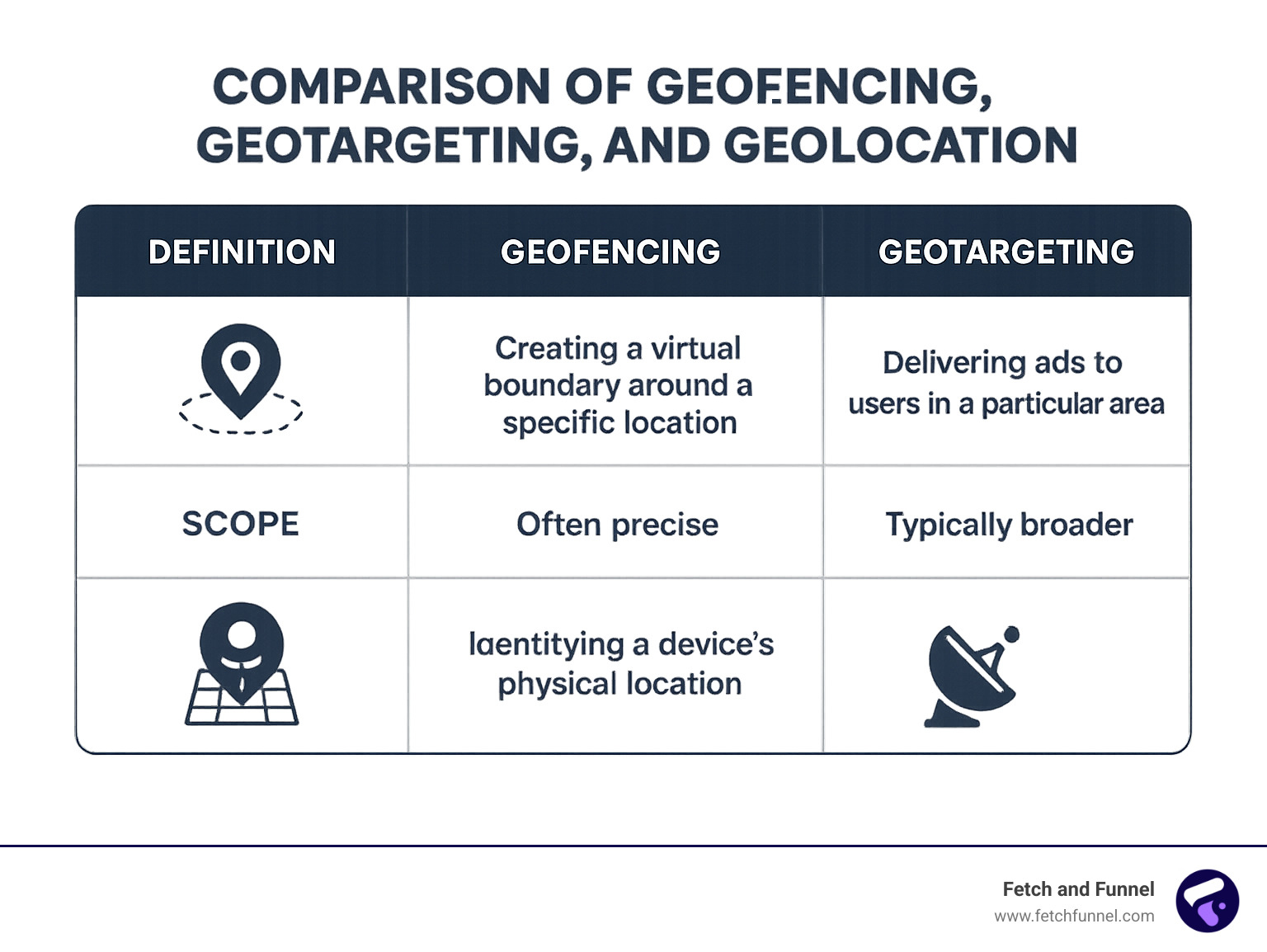
It’s easy to mix up these terms, so let’s clear it up. Geofencing is precise—it targets people when they cross a specific boundary. Geotargeting is broader, focusing on larger areas like cities or zip codes (great for awareness, not so much for foot traffic). Geolocation is simply the act of figuring out exactly where someone is, usually via coordinates.
| Feature | Geofencing | Geotargeting | Geolocation |
|---|---|---|---|
| Scope | Defined perimeter (e.g., 500ft around a store) | Broad area (city, zip code) | Point-based (coordinates) |
| Data History | Can store visit/dwell data | Typically no history | Just current location |
| Precision | High (down to feet/meters) | Medium (blocks, neighborhoods) | Highest (exact coordinates) |
| Use-Cases | Store walk-ins, competitor conquesting, event engagement | City-wide sales, awareness | Navigation, app features |
Want to see how these strategies work in the real world? Head over to our deep dive on Geofencing Ad Targeting for more examples.
By understanding these basics, you’re now ready to start planning geofence marketing campaigns that are smart, effective, and custom to your business goals.
Geofence Marketing Campaigns: Benefits, Industries & Case Studies
What’s the secret sauce behind geofence marketing campaigns? In one word: relevance. When your message pops up for someone in the perfect place, at the perfect moment, you’re not just catching their attention—you’re getting real results. Let’s dive into why brands are obsessed with this approach, which industries are cashing in, and some eye-popping success stories.
Why Brands Love Geofence Marketing Campaigns
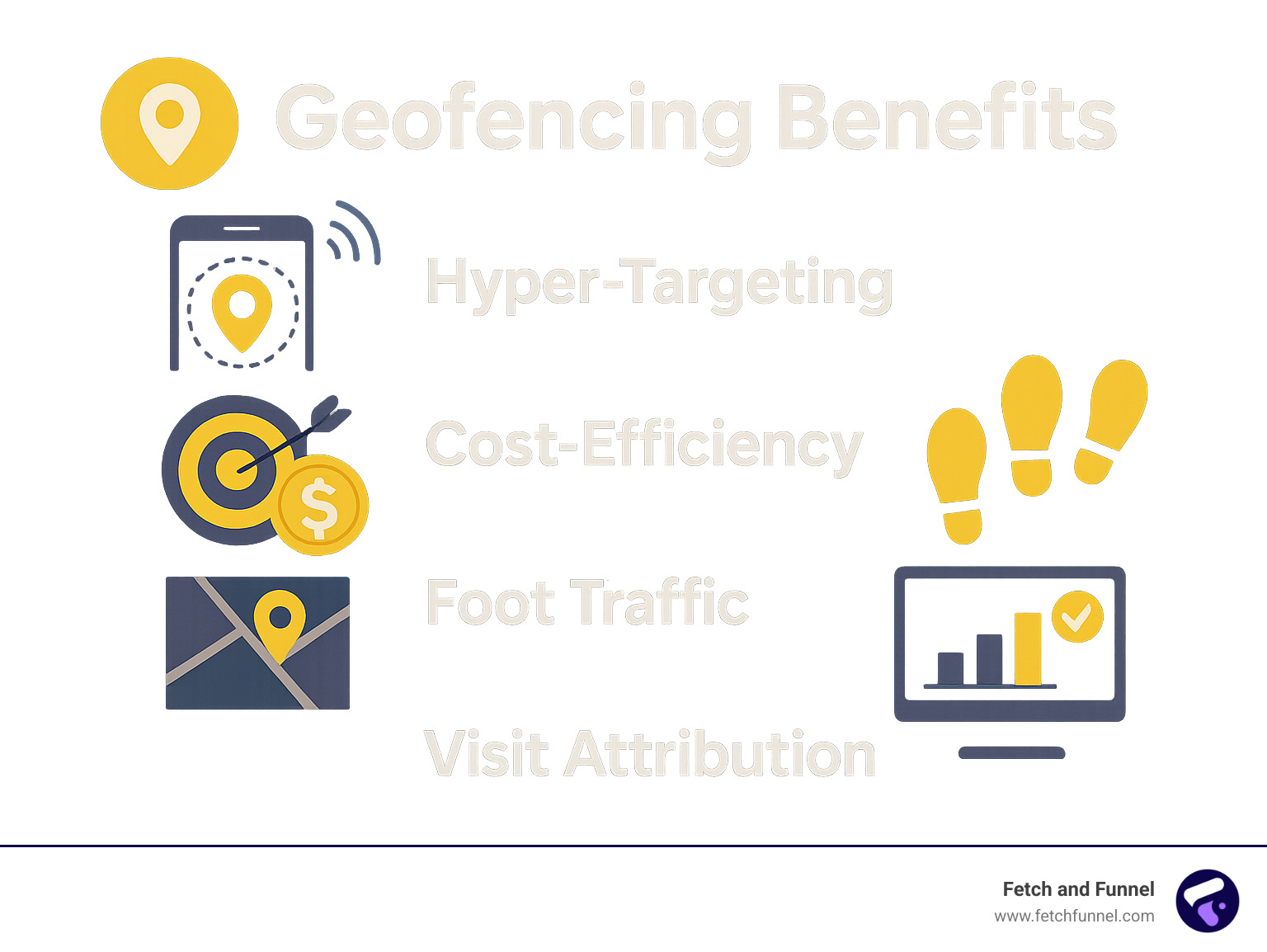
Brands flock to geofence marketing campaigns because they deliver hyper-targeted messaging. Your ads or offers are seen only by people who are actually near your store, event, or even a competitor’s location—no more tossing ads into the wind and hoping for the best.
This precision means serious cost-efficiency. Every dollar you spend is focused on the right audience—no wasted impressions. The magic doesn’t stop there: these campaigns are proven to boost foot traffic and conversions, letting you track how your digital ads create real-world visits and purchases. You can even run “geo-conquesting” campaigns to win over customers from rival businesses, giving you a powerful competitive edge.
And let’s not forget about first-party data. Each visit or engagement is a treasure trove for future retargeting, and robust visit attribution lets you finally connect your digital spend to physical results.
You’ll find geofence marketing campaigns making a measurable impact in all kinds of industries. Retailers and QSRs (quick service restaurants) use them to bring more people in the door (and to the curbside for pickup). Tourism and hospitality brands reach travelers at just the right moment, whether they’re at an airport, hotel, or a must-see attraction. Healthcare providers can recruit staff or connect with patients nearby, while recruiters geofence offices, hospitals, and job fairs to find new talent. Even real estate agents use geofencing to send property info to house-hunters as they drive through neighborhoods. And at events? It’s a direct line to attendees for instant alerts and offers.
Real-World Wins: Whole Foods, Burger King & Beyond
The numbers speak for themselves. Take Whole Foods—their geofencing campaign drove a whopping 4.69% post-click conversion rate, which is three times the typical retail average. In digital, that’s a massive leap.
Florida Tourism also saw impressive results. With a geofencing strategy, they racked up a 0.30% click-through rate—more than triple the tourism industry norm, according to this case study.
You’ve probably heard about Burger King’s “Whopper Detour.” By geofencing McDonald’s locations nationwide, they pulled off a legendary “geo-conquest,” resulting in over 1 million app downloads in just a few days and sending their app soaring to #1 in the App Store.
Healthcare is getting in on the action, too. One regional senior care center geofenced local hospitals and ERs, leading to 60 walk-ins and facility tours in a single month. And in fitness and recruitment, the wins keep coming—a gym gained 73 new members (that’s about $38,000 in revenue!), and a hotel’s geofencing campaign brought in 60 new job applicants, increasing staff capacity by 20%.
Curious for more? We have a growing library of Geofencing Case Studies to spark your imagination.
Geofence marketing campaigns deliver where it matters most: right place, right time, real-world results. If you’re ready for measurable impact, you’re in the right spot.
Launching Geofence Marketing Campaigns Step-by-Step
So, you’re ready to dive in and try geofence marketing campaigns for yourself? Fantastic! At Fetch & Funnel, we believe success starts with a thoughtful, step-by-step approach. Let’s walk through exactly how to set up your first campaign and make every impression count.
Step 1: Define Objectives & KPIs
Begin with clear, specific goals—think SMART (Specific, Measurable, Achievable, Relevant, Time-bound). Are you hoping to drive 500 new store visits in a month? Maybe you want to boost app downloads by 25% with a special in-store offer, or keep your cost-per-visit under $2.00?
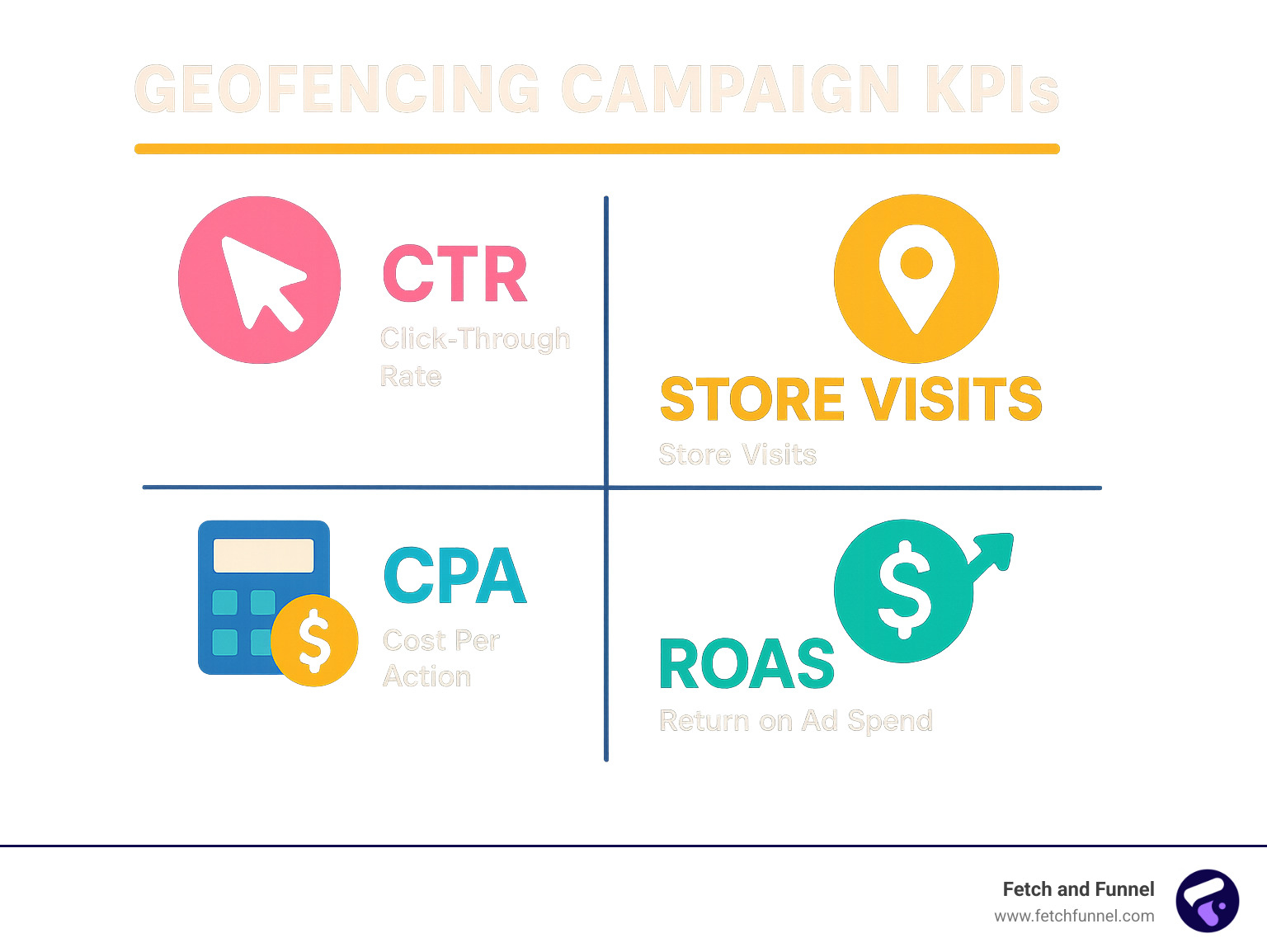
Whatever your aim, set a target and know how you’ll measure it. The most important metrics for geofence marketing campaigns include:
- Click-Through Rate (CTR): How many people click on your ad or notification.
- Conversion Rate: The percentage who take action—like making a purchase or downloading an app.
- Store Visits/Walk-ins: Actual foot traffic you can attribute to your campaign.
- Cost Per Action (CPA): How much you spend per visit, download, or sale.
- Return on Ad Spend (ROAS): The revenue you generate for every dollar spent.
With the right KPIs in place, you’ll know exactly what’s working—and where to optimize for even better results.
Step 2: Draw Your Fence
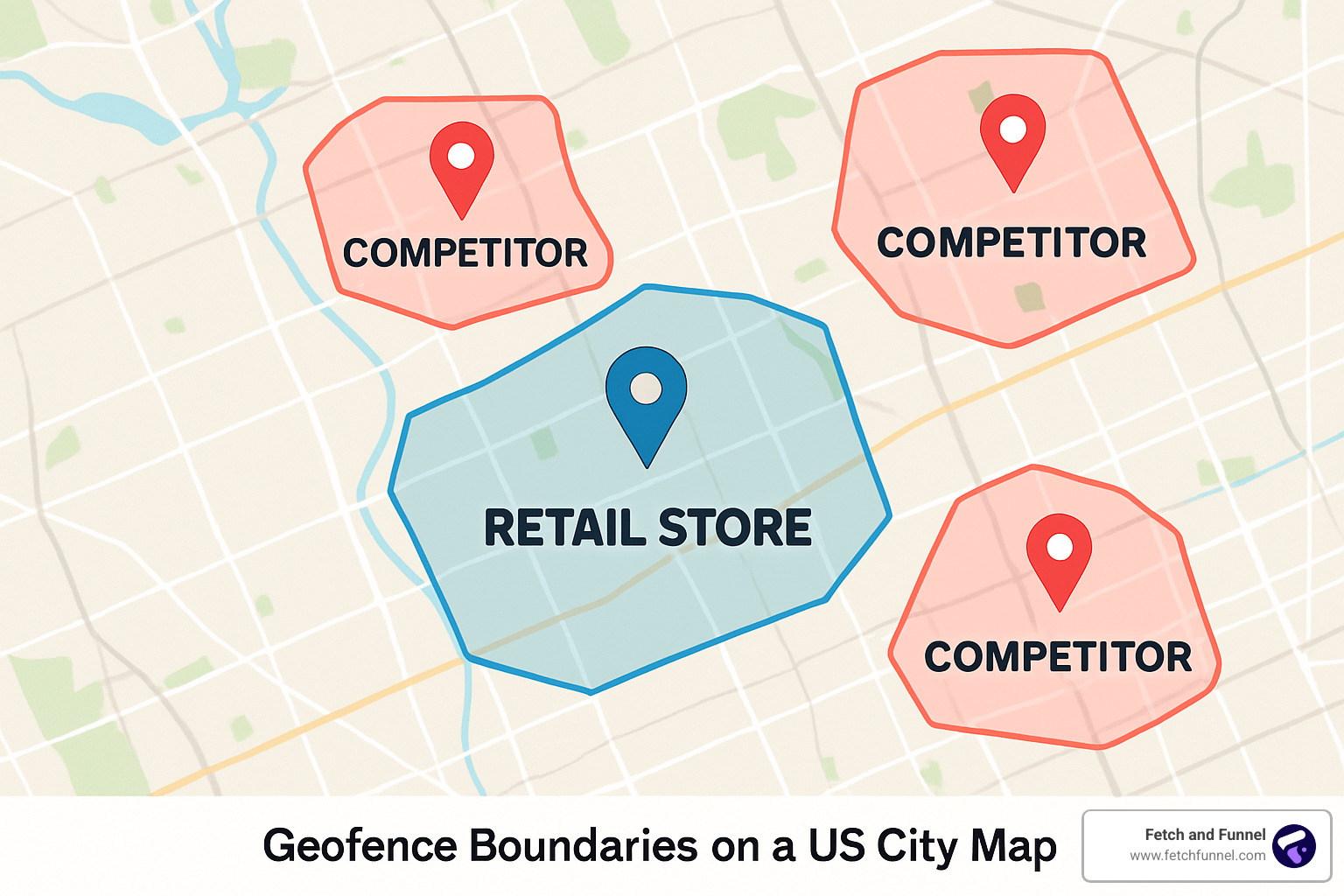
Now, it’s time to design your virtual perimeter. Using mapping tools, you can create a geofence that’s just the right size—usually about a 4-5 minute walk or drive from your location, which often means a radius of 300 to 1,000 feet for city stores.
For more advanced geofence marketing campaigns, draw custom shapes or “polygons” to outline competitor stores, busy event venues, or even airport terminals. Precision really pays off here: too large, and your message loses relevance; too small, and you might miss out on potential customers.
Step 3: Craft Triggered Experiences
Here’s where geofence marketing campaigns truly shine: delivering the right message at the perfect moment. Decide what will happen when someone steps into your fence. Maybe a push notification welcomes shoppers with a 10% discount. Or perhaps you serve up a personalized display ad, or even send an SMS (with opt-in, of course) for a limited-time deal.
Make use of dwell-time and location history for even more personalized offers. For example, a real estate app can send local home listings as someone enters a neighborhood, or a restaurant can trigger a happy hour alert right at 4 pm. The key is a well-timed, relevant, and engaging experience.
Step 4: Launch, Monitor & Optimize
You’ve set your goals, drawn your fence, and planned your messaging—now it’s go-time! Choose the right platform for your needs, whether it’s a self-serve ad dashboard, a trusted agency partner (hint: like Fetch & Funnel!), or a custom app integration.
Once your campaign is live, keep a close eye on the data. Use real-time dashboards to monitor performance, and don’t be afraid to experiment. A/B test different messages or offers to see what resonates best. Track not just who enters your fence, but how long they stay and what actions they take. Dwell analytics and retro-fencing (targeting users who visited in the past) can turn missed opportunities into new conversions.
The magic of geofence marketing campaigns is in the details. Optimize constantly, learn from the data, and your results will show it.
For an in-depth walkthrough, check out our complete guide: How to Set Up Geofencing Marketing.
Ready to see the power of proximity in action? Reach out to Fetch & Funnel and let’s create a campaign that brings customers right to your door.
Optimization, Measurement, Compliance & Future Trends
Launching geofence marketing campaigns is just the beginning—the real magic happens when you keep sharpening your strategy, watch your data, and stay ahead of the curve.
Key KPIs for Geofence Marketing Campaigns
Let’s talk results. You want to know your campaign is working, right? Here’s how to measure it:
Start with your Click-Through Rate (CTR). For most industries, a 0.08%–0.9% CTR is standard, but geofencing can easily triple that average when done well. Next up: store visits—using location analytics, you can track exactly how many people actually step inside your store after seeing your ad. Conversion rate tells you what percent of people not only noticed your offer but acted on it (think redeeming a coupon or making a purchase).
Keep an eye on your Cost Per Visit/Action (CPA). The best campaigns often bring this down to as little as $2.23 per in-store visit. And don’t forget about Return on Ad Spend (ROAS)—the golden number. If you’re over 1, you’re in the green, but top-performing geofence campaigns are seeing ROAS of 10 or higher.
All these numbers help you tweak your creative, adjust your fences, and focus your budget where it matters most.
Privacy & Consent Checklist
Location data is a superpower, but it comes with real responsibility. With regulations like GDPR, CCPA, and Apple’s privacy requirements, respecting your users’ boundaries is just as important as setting your virtual ones.
Always ask for explicit opt-in before tracking location. Make it easy to understand and show the benefit—“Get local deals!” is a lot friendlier than “We want to know where you are.” Only collect the data you truly need for your campaign, and be transparent about how it will be used. Store it securely and never track outside your campaign’s scope.
Make it simple for people to opt out or revoke permissions whenever they want. Keeping trust high means more people will say “yes” in the first place!
What’s Next: AI, AR & Predictive Geofencing
The future of geofence marketing campaigns is already knocking at the door. AI-powered geofencing can now adjust boundaries in real time, reacting to how people actually move, shop, or hang out. Imagine your campaign getting smarter every day, optimizing itself for higher conversions.
Contextual signals are the next big thing—combining location with weather, local events, or even previous visits, so your offer is always relevant. Thanks to IoT and 5G, geofencing isn’t just for smartphones anymore. Smartwatches, connected cars, and even home devices are joining in.
And if you want to really wow your audience? Augmented reality (AR) can trigger unique digital experiences as soon as someone steps inside your geofence. Imagine turning your store into an interactive trip!
Want to dive deeper? Check out our research on geofencing pros & cons and insider tips on mobile geofencing ads.
Fast Answers: Geofence Marketing Campaigns FAQs
How big should my geofence be?
A good rule of thumb is to cover a 4–5 minute walk or drive—typically 300–1,000 feet for city locations. Too wide, and your message loses its punch; too tight, and you might miss your customers entirely.
Do I need an app for geofence marketing campaigns?
Not necessarily! Having an app opens up cool features like push notifications and advanced analytics, but many platforms let you use geofence marketing campaigns via mobile web or SMS—no app required.
Which ad platforms support geofence targeting?
Most major platforms now support geofencing—think Google, Facebook, Instagram, and a handful of specialized programmatic networks. If you want a team that handles the strategy, creative, and optimization, Fetch & Funnel has you covered.
By continuously optimizing, respecting privacy, and staying ahead of trends, your geofence marketing campaigns will not only stay compliant—they’ll keep delivering results that make your competition jealous.
Conclusion
If you’ve made it this far, you can see why geofence marketing campaigns are such a game-changer for brands—big or small. By connecting the online and offline worlds, geofencing lets you deliver just the right message, right when and where it matters. Whether you want to drive foot traffic, boost in-store sales, outmaneuver the competition, or collect that all-important first-party data, geofencing puts precision marketing at your fingertips.
Getting started doesn’t have to be complicated. The real magic comes from a few simple steps: set clear goals, be thoughtful about your fence locations, and make your offers too tempting to ignore. Relevance always beats reach—people respond best when your message feels timely and personal.
Don’t forget the most important part: keep an eye on your data and be ready to adjust. With geofence marketing campaigns, every walk-in, click, or new customer helps you fine-tune your approach and increase your ROI.
At Fetch and Funnel, we’re passionate about helping brands open up the full potential of location-based marketing. From creative ideas to full campaign management and in-depth reporting, our Boston-based team is here to make geofencing easy, effective, and—dare we say—fun. With our mix of creative smarts and data-driven strategy, we help you deliver the experiences customers love and the results your business needs.
If you’re ready to see how geofencing can help you scale profitably (or just want to see some more great examples), visit our geofencing solutions page.
Want to dive deeper? Try these resources:
– Geofencing in location-based marketing
– Geofencing mobile ads
– How to set up geofencing marketing
– Geofencing case studies
Fetch and Funnel – Boston, MA
Delivering high-converting creative, data-driven strategy, and location-based customer experiences that scale profitably.