

Geofencing ad targeting is an innovative strategy that is changing digital marketing. By using digital perimeters around specific locations, businesses can connect with potential customers when they are nearby. This approach leverages technologies like GPS and mobile networks to offer timely and relevant ads, enhancing the chances of customer engagement. Here’s a quick look at why geofencing ad targeting matters:
- Precise Targeting: Reach customers who are near your store or event.
- Personalized Promotions: Offer location-specific deals to entice purchases.
- Better Engagement: Interact with users based on their location in real-time.
As the founder of Fetch & Funnel and a seasoned marketing strategist, I, Samir ElKamouny, have helped numerous businesses leverage geofencing ad targeting to boost ROI and refine their ad strategies. Let’s explore this powerful tool further.

Understanding Geofencing Ad Targeting
Geofencing ad targeting is a cutting-edge technique that uses virtual boundaries to send ads to people based on their physical location. Imagine a digital fence around your favorite store that sends you a discount notification as you walk by. That’s geofencing in action!
How Does It Work?
Geofencing ad targeting relies on several technologies to define these virtual boundaries:
GPS (Global Positioning System): Uses satellite data to pinpoint a user’s exact location. This is the backbone of geofencing, allowing for high accuracy.
Bluetooth: Works with nearby devices to detect when someone enters or leaves a geofenced area. It’s often used for more precise, short-range targeting.
Wi-Fi: Helps identify a user’s location by connecting to nearby networks. This is useful in densely populated areas where GPS signals may be weak.
RFID (Radio-Frequency Identification): Uses radio waves to communicate with nearby devices. It’s commonly seen in retail environments to track customer movements.
Why Use Geofencing?
Geofencing ad targeting is all about precision and personalization. By setting up these virtual boundaries, businesses can send custom messages to potential customers who are physically near their location. This means ads are not only timely but also highly relevant.
For example, a coffee shop can send a “50% off your next coffee” notification to people walking by. This not only draws in foot traffic but also improves customer engagement by providing immediate value.
Geofencing is compatible with most smartphones, making it a versatile tool for reaching a wide audience. In fact, about 92% of smartphones support this technology, ensuring your message reaches the right people at the right time.
In the next section, we’ll dive deeper into how geofencing ad targeting works and how it can transform your marketing strategy.
How Geofencing Ad Targeting Works
Geofencing ad targeting is a game-changer in the field of location-based marketing. It enables businesses to engage with potential customers right where they are, using their mobile devices. Let’s break down how this sophisticated technology operates.
Location-Based Marketing
At its core, geofencing ad targeting is a form of location-based marketing. It sets up virtual boundaries, or “geofences,” around specific areas. When a mobile device enters this boundary, it triggers a set of pre-defined actions. This could be anything from sending a push notification to displaying an in-app advertisement.
Why is this important? Because it allows brands to connect with customers at the perfect moment—when they are nearby and potentially in a buying mood.
Mobile Devices: The Key Players
Mobile devices are at the heart of geofencing ad targeting. With smartphones in nearly every pocket, businesses have a direct line to their audience. Here’s how mobile devices contribute to the process:
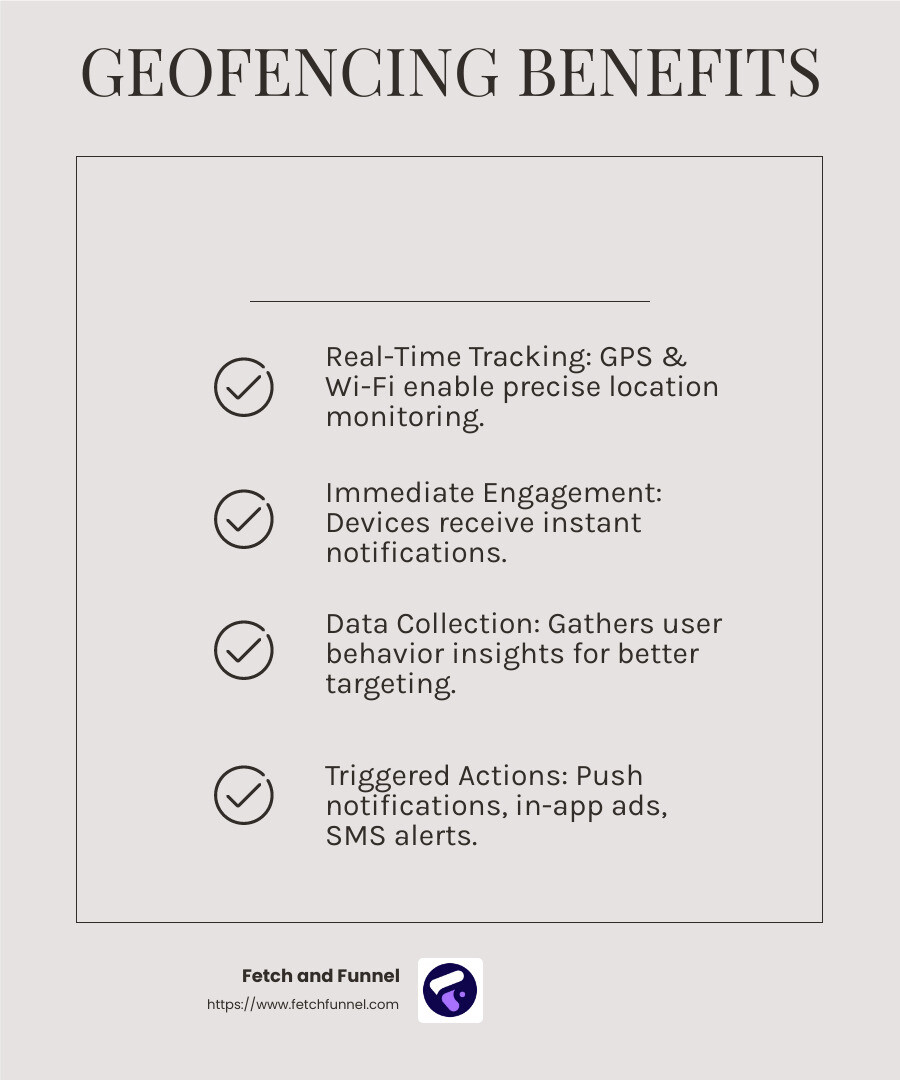
Real-Time Location Tracking: Thanks to technologies like GPS and Wi-Fi, mobile devices can be accurately tracked as they move in and out of geofenced areas.
Immediate Engagement: Once a device enters a geofence, it can immediately receive targeted ads or notifications. This immediacy increases the chances of customer engagement.
Data Collection: Mobile devices help gather valuable data, such as user behavior and preferences, which can be used to refine marketing strategies.
Triggered Actions: Engaging the Audience
The magic of geofencing lies in its ability to trigger actions based on a user’s location. Here are some common actions that can be triggered:
Push Notifications: A popular choice for businesses. For instance, a restaurant might send a lunch special offer to people nearby during lunchtime.
In-App Ads: These ads appear within apps that users are already engaging with, making them less intrusive and more likely to be noticed.
SMS Alerts: Text messages can be sent to users entering the geofence, offering them exclusive deals or information.
Real-World Examples
Consider the case of H&M, which used geofencing to promote its David Beckham Bodywear line. By geo-fencing store locations, they achieved a click-through rate of 2.3%—significantly higher than the industry average. The campaign not only drove foot traffic but also improved customer participation in a mobile sweepstakes program.
Geofencing ad targeting is not just about reaching customers; it’s about reaching them at the right time and place, making every interaction meaningful.
In the following section, we’ll explore the benefits of geofencing ad targeting and how it can lift your marketing efforts.
Benefits of Geofencing Ad Targeting
Geofencing ad targeting offers numerous advantages that can transform your marketing strategy. Let’s explore the key benefits: precise targeting, personalization, customer engagement, and increased ROI.
Precise Targeting
Geofencing allows businesses to define exact locations where they want their ads to appear. This means you can target customers who are near your store, a competitor, or any other relevant location.
For example, a local coffee shop can set a geofence around a nearby university. When students enter the area, they might receive an ad for a discount on coffee. This level of precision ensures that your ads reach the right people at the right time.
Personalization
One of the standout features of geofencing ad targeting is its ability to deliver highly personalized content. By collecting data on user preferences and behaviors, businesses can tailor their ads to fit the unique interests of each customer.
Imagine a clothing retailer who notices that a customer frequently visits athletic stores. They could use this data to send personalized ads featuring their latest sportswear collection. This personalized approach not only captures attention but also builds a stronger connection with the audience.
Customer Engagement
Geofencing ad targeting boosts customer engagement by reaching audiences when they’re most likely to act. By sending timely and relevant messages, businesses can capture the attention of potential customers who are already nearby.
Consider a restaurant that sends a push notification about its lunch specials to people in the area around noon. This real-time engagement can draw customers in, increasing foot traffic and encouraging immediate action.
Increased ROI
With precise targeting and personalized messaging, geofencing ad targeting often leads to a higher return on investment (ROI). By focusing your marketing efforts on those most likely to convert, you avoid wasting resources on uninterested audiences.
A case study from the research highlights a nurse practitioner recruiter who saw a significant increase in responses after implementing geofencing. By targeting specific zones, they achieved more effective and cost-efficient campaigns compared to traditional methods.
In summary, geofencing ad targeting not only improves the precision and personalization of your marketing efforts but also drives greater customer engagement and ROI. In the next section, we’ll dig into the best practices for maximizing the impact of your geofencing campaigns.
Best Practices for Geofencing Ad Targeting
To make the most of geofencing ad targeting, follow some best practices. These tips will help ensure your campaign is effective and reaches the right audience.
Target the Right Place
Choosing the correct location for your geofence is crucial. Your geofence should be placed where your potential customers are, not just where you want them to be. For instance, if you’re promoting a coffee shop, it might be wise to set your geofence around nearby office buildings or universities where potential customers are likely to be during the day.
A key takeaway from the research is to keep the geofence within five minutes of travel time from your location. This ensures that your message remains relevant and actionable.
Find the Right Audience Size
The size of your geofence matters. If it’s too small, you might miss out on potential customers. If it’s too large, you could waste resources on people who are too far away to visit your location.
A balanced approach is to start with a smaller geofence to test effectiveness and expand as needed. This method allows you to gather data and make informed decisions about widening or narrowing your geofence.
Use Behavioral Targeting
Not everyone who enters your geofence will be your ideal customer. By layering behavioral data with location data, you can target the right people more effectively. For example, if your business sells sports gear, target individuals who frequently visit gyms or sporting events. This ensures your ads reach those most likely to be interested in your products.
Craft an Inspiring CTA
A compelling call-to-action (CTA) is vital for driving engagement. Generic CTAs like “Click Here” or “Learn More” might not capture attention. Instead, use specific and action-oriented CTAs like “Claim Your Discount Now!” or “Get 20% Off Today!” These can inspire immediate action and draw customers to your location.
Incorporating these best practices into your geofencing strategy can significantly improve your campaign’s effectiveness. By targeting the right place, finding the optimal audience size, using behavioral insights, and crafting inspiring CTAs, you’ll be well on your way to running successful geofencing ad campaigns.
Next, we’ll explore the various platforms that support geofencing ad targeting and how to leverage them for your marketing efforts.
Platforms Supporting Geofencing Ad Targeting
Geofencing ad targeting isn’t limited to just one or two platforms. There are several major platforms where you can effectively use geofencing to reach your audience. Let’s take a look at some of the most popular ones:
Social Media
Social media platforms are a natural fit for geofencing ad targeting. Most major platforms, including Facebook, Instagram, Snapchat, LinkedIn, and Twitter, offer geofencing capabilities.
Facebook and Instagram: Both platforms allow advertisers to create location-based ads using their powerful Ads Manager. You can set up geofences around specific locations and target users who frequent those areas. This is perfect for businesses looking to reach local customers.
Snapchat: Known for its younger audience, Snapchat offers geofilters and location-based ads that can engage users in a fun and interactive way. If your target demographic includes teens and young adults, Snapchat might be a great choice.
Google Ads
Google Ads is another powerful platform for geofencing. It supports location targeting across different types of ads:
Search Ads: You can target users who are searching for specific keywords within your defined geofence. This is ideal for businesses looking to capture local search traffic.
Display Ads: Display ads can be shown to users visiting websites within your geofenced area. This helps increase brand visibility among local audiences.
YouTube: Video ads on YouTube can also be geofenced, allowing you to reach viewers in specific locations. This is particularly useful for brands aiming to engage users with rich media content.
OTT/CTV
Over-the-top (OTT) and connected TV (CTV) platforms are increasingly popular for geofencing ad targeting. These platforms allow you to reach audiences on both large and small screens:
Roku, Amazon Fire TV, and more: By targeting users on streaming devices, you can run geofenced video ads that capture the attention of viewers in specific areas. This is a great way to reach potential customers who prefer streaming over traditional TV.
Gaming Consoles: Platforms like Xbox and PlayStation also support geofencing. If your audience includes gamers, consider targeting these devices to deliver engaging ads.
By leveraging these platforms, you can effectively implement geofencing ad targeting in your marketing strategy. Whether it’s through social media, Google Ads, or OTT/CTV, each platform offers unique opportunities to connect with your audience based on their location.
Next, we’ll address some frequently asked questions about geofencing ad targeting to help you better understand this powerful marketing tool.
Frequently Asked Questions about Geofencing Ad Targeting
What is geofencing targeting?
Geofencing targeting involves creating virtual boundaries around a specific area to deliver ads to mobile devices within that space. Imagine drawing an invisible line around a location, like a store or event. When a person with a smartphone enters this area, they can receive targeted ads or notifications. This approach uses technologies like GPS, Bluetooth, Wi-Fi, and RFID to pinpoint a user’s location and trigger relevant marketing messages.
How to geofence for ads?
To effectively geofence for ads, follow these steps:
Define Your Goals: Start by understanding what you want to achieve. Are you looking to increase foot traffic, promote a sale, or boost brand awareness? Clear goals will guide your geofencing strategy.
Select Locations: Choose the areas where you want to set up your geofences. These could be your business locations, competitor sites, or places where your target audience gathers, like events or malls. The key is to pick locations that align with your goals.
Triggered Actions: Decide what happens when someone enters your geofenced area. Will they receive a push notification, see a display ad, or get a special offer? The action should be compelling enough to encourage engagement.
Is geofencing marketing legal?
Geofencing marketing is legal, but it’s important to be aware of privacy concerns and state laws. Here are some key points to consider:
Privacy Concerns: Users value their privacy, so transparency is crucial. Ensure that users opt-in to receive location-based ads and clearly communicate how their data will be used.
State Laws: Different states may have varying regulations regarding location-based marketing. It’s essential to stay informed about these laws to ensure compliance and avoid potential legal issues.
By understanding these aspects, you can use geofencing ad targeting effectively while respecting user privacy and adhering to legal requirements. This approach helps create a personalized marketing experience that can boost customer engagement and drive results.
In the following section, we’ll conclude with how Fetch and Funnel can help you leverage geofencing to improve your digital marketing efforts.
Conclusion
Geofencing ad targeting is a powerful tool that can transform your digital marketing strategy. It allows you to engage with customers in real-time, delivering personalized messages based on their location. But to truly harness its potential, you need the right partner. That’s where Fetch and Funnel comes in.
Based in Boston, MA, we specialize in digital marketing, offering a unique blend of high-converting creative and data-driven strategies. Our approach is designed to improve customer experiences and increase ROI. We understand that every brand is different, and we tailor our solutions to fit your specific needs.
With our expertise, we’ll help you set up effective geofencing campaigns that align with your business goals. Whether you’re looking to increase foot traffic, promote a sale, or boost brand awareness, we’ve got you covered. Our team will work with you to choose the right locations, craft compelling messages, and ensure your ads reach the right audience at the right time.
Don’t leave your marketing to chance. Let us help you leverage the power of geofencing to drive conversions and improve your bottom line.
Learn more about our geofencing services and see how Fetch and Funnel can lift your digital marketing strategy today.


