

Geofencing case studies are changing the way businesses approach digital marketing. These practical examples showcase how creating virtual boundaries can help brands target specific audiences with precision, leading to improved conversion rates and improved customer engagement. Companies like Dunkin’, Uber, and Johns Hopkins have effectively used geofencing strategies to drive customer interactions, whether it’s pushing a promotion, guiding transportation options, or recruiting talent. In each case, geofencing has provided a route to reaching the right audience at the right moment.
Here are some quick insights:
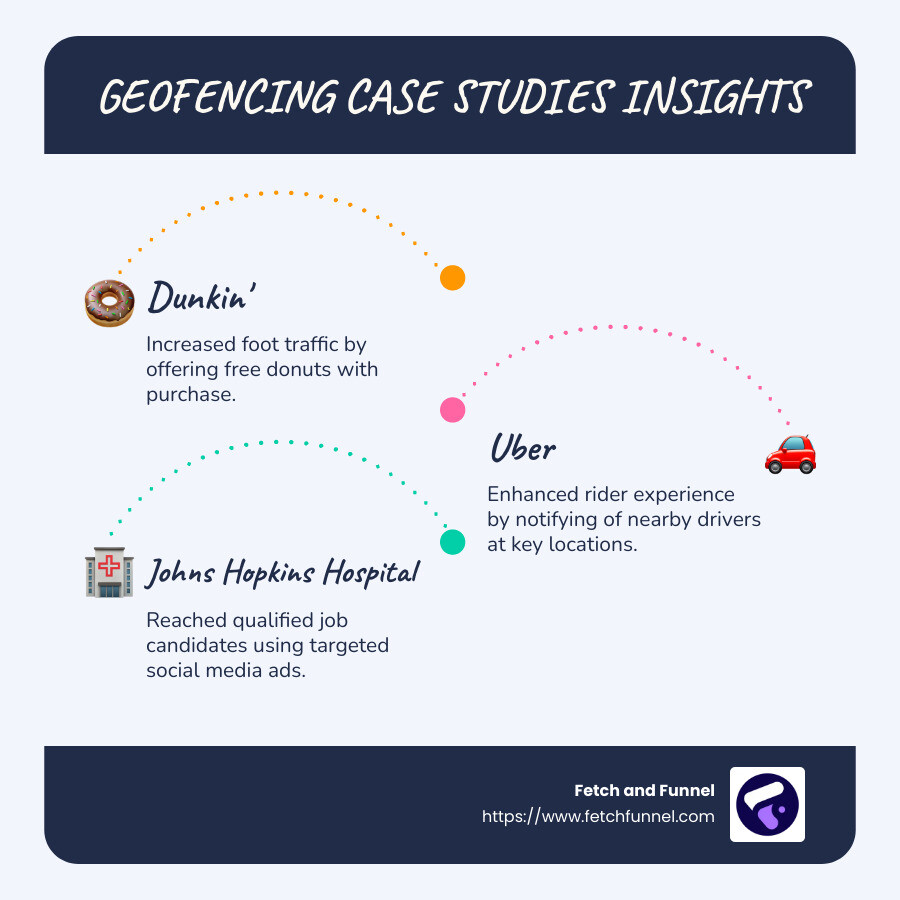
- Dunkin’ leveraged geofencing to drive foot traffic by offering free donuts with a purchase.
- Uber uses geofencing to notify potential riders of nearby drivers at airports and popular venues.
- Johns Hopkins Hospital tapped into geofencing to reach qualified job candidates through targeted social media ads.
I’m Samir ElKamouny, founder of Fetch and Funnel, your go-to resource for digital marketing solutions. With experience in implementing and evaluating geofencing case studies, I have witnessed how these strategies can improve market presence, optimize ad spend, and significantly boost ROI.
Handy geofencing case studies terms:
– geofencing ads google
– geofencing facebook ads
– how does geofencing advertising work
Understanding Geofencing
Geofencing is a powerful tool in digital marketing. It uses virtual barriers to define specific geographic areas where targeted ads can be sent to mobile devices. This strategy allows businesses to connect with potential customers as they enter, linger in, or leave a particular location.
How does it work?
Imagine drawing an invisible line around your store, a competitor’s location, or an event venue. When someone crosses this line, they enter your geofence. This triggers the delivery of targeted ads, creating opportunities for location-based marketing.
Geofencing is all about timing and relevance. By sending ads to people in specific areas, businesses can deliver personalized experiences that are more likely to engage and convert. For example, a coffee shop might send a special offer to people nearby during the morning rush.
Key Components of Geofencing
Virtual Barriers: These are the invisible lines you set up around a location. They define where your geofencing campaign will be active.
Targeted Ads: Once someone enters the geofenced area, they receive ads custom to their location. This could be a notification about a sale, a special event, or a new product launch.
Location-Based Marketing: This strategy focuses on engaging customers based on their physical location. It’s a way to reach people who are already close to making a purchase decision.
Geofencing is not just about reaching more people; it’s about reaching the right people at the right time. By leveraging location data, businesses can create compelling offers that drive foot traffic and increase sales.

In the next section, we’ll explore geofencing case studies that demonstrate how this technology is being used effectively by various companies.
Geofencing Case Studies
Geofencing is changing the way businesses connect with their customers. Let’s explore some geofencing case studies that show how companies are using this technology to boost engagement and sales.
Starbucks
Starbucks, always a pioneer in customer experience, uses geofencing to engage with customers in a unique way. When a customer with the Starbucks app enters a geofenced area near a store, they receive personalized notifications. These might include special offers or loyalty rewards. This strategy not only increases store visits but also strengthens customer loyalty by delivering timely, relevant messages.
Dunkin’
Dunkin’ has mastered the art of attracting foot traffic using geofencing. They implemented a campaign offering a free donut with any purchase to customers who came within a certain distance of their stores. This simple yet effective use of geofencing helped drive customers into their locations, boosting sales and enhancing customer satisfaction.
Uber
Uber uses geofencing extensively to optimize its services. By setting up geofences around busy locations like airports and entertainment venues, Uber ensures that potential riders are aware of nearby drivers ready to take them to their destination. This not only increases ride bookings but also improves the convenience factor for users. The result? More fares for drivers and a seamless experience for riders.
Johns Hopkins Hospital
Johns Hopkins Hospital took a different approach by leveraging geofencing for recruitment. By targeting specific locations where qualified healthcare professionals might be, such as medical conferences or competitor hospitals, they advertised open positions on social media platforms. This strategy allowed them to reach and attract top talent efficiently, filling crucial roles with skilled candidates.
C.R. England
C.R. England, a trucking company, used geofencing to target potential truck drivers. By placing ads at strategic locations like truck stops, they attracted drivers with enticing offers such as increased pay and more rest days. This geofencing campaign successfully increased their pool of job applicants, demonstrating the power of precise, location-based advertising in recruitment.
These geofencing case studies highlight how diverse industries can benefit from this technology. Whether it’s driving foot traffic, boosting sales, or recruiting talent, geofencing offers a versatile solution for businesses looking to connect with their audience in meaningful ways.
Next, we’ll look into successful geofencing campaigns from other well-known brands.
Successful Geofencing Campaigns
Geofencing isn’t just a tool for niche markets; it’s a powerhouse strategy for some of the world’s largest brands. Let’s explore how companies like Buffalo Wild Wings, NatWest, H&M, Bank of America, and Citi have successfully harnessed geofencing to improve their marketing efforts.
Buffalo Wild Wings
Buffalo Wild Wings has ingeniously integrated geofencing into their mobile advertising strategy. By using real-time location data, they can tailor their banner ads to match the excitement of events like March Madness. When a customer is near a Buffalo Wild Wings location, they receive a notification about ongoing games and any special promotions. This approach not only boosts in-store visits but also heightens engagement by tapping into the thrill of live sports events.
NatWest
NatWest, a leading UK bank, employs geofencing to provide personalized customer experiences. By identifying when customers are near a branch, NatWest can send notifications about exclusive offers or financial advice sessions. This strategy not only improves customer service but also strengthens the bank’s relationship with its clientele by providing timely and relevant information.
H&M
The fashion giant H&M uses geofencing to craft custom shopping experiences. When customers enter a geofenced area near an H&M store, they receive alerts about special discounts or new arrivals. This method not only drives foot traffic but also encourages impulse purchases by offering timely incentives.
Bank of America
Bank of America leverages geofencing to provide location-based financial services. By detecting when a customer is near a branch or ATM, they can send notifications about personalized financial products or services. This approach not only improves customer engagement but also ensures that Bank of America remains top-of-mind when customers need financial assistance.
Citi
Citi uses geofencing to improve its customer loyalty programs. By targeting customers near partner retailers, Citi can offer special promotions or rewards for using Citi cards. This strategy encourages card usage and boosts customer loyalty by providing added value through timely offers.
These campaigns illustrate how geofencing can be a game-changer for businesses. By delivering the right message at the right time, companies can significantly improve customer engagement and drive business results.
Next, we’ll dig into best practices for implementing geofencing effectively.
Best Practices for Geofencing
Geofencing can be a powerful tool when used correctly. Here are some best practices to help you make the most of this technology.
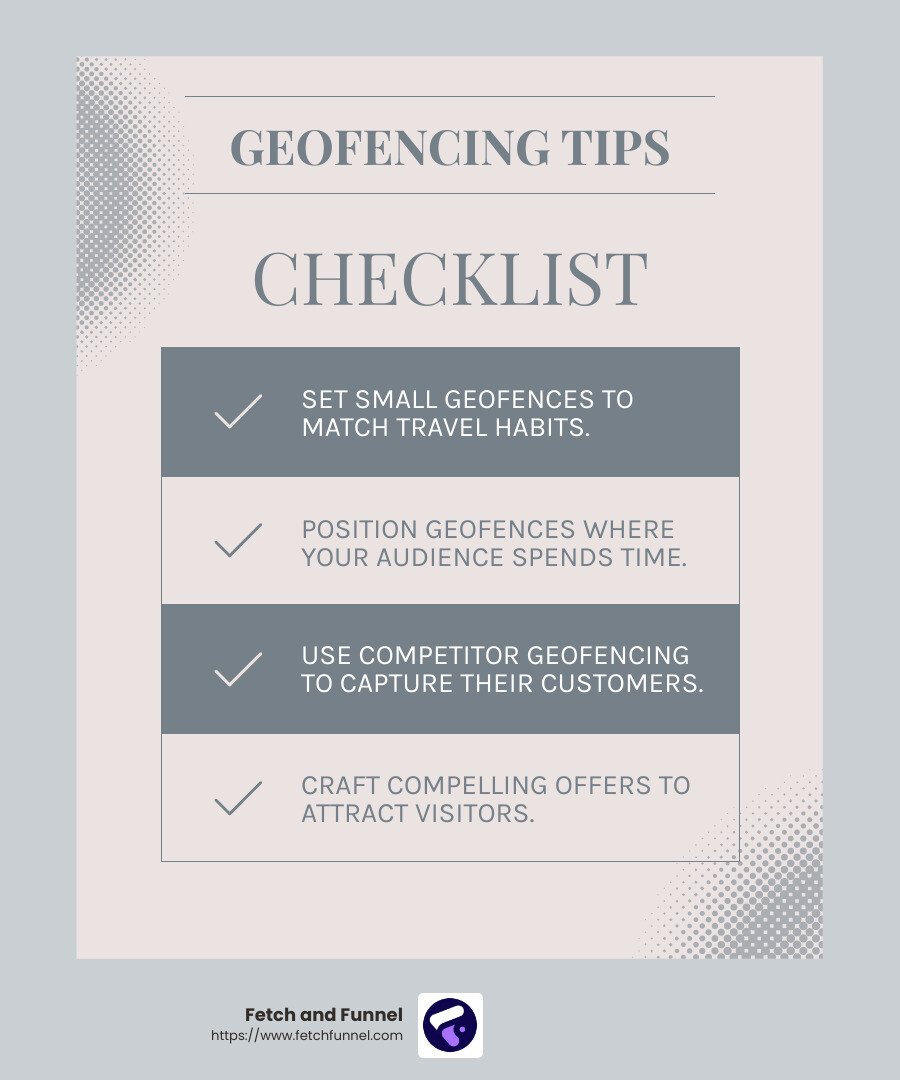
Keep Your Fences Small
One of the biggest mistakes businesses make is setting up geofences that are too large. A massive geofence can dilute your efforts and target people who are too far away to visit your business.
Aim for a radius that matches how people typically travel to your business. If they usually walk, keep the geofence to a four or five-minute walk. If they drive, extend it to a four or five-minute drive. This focused approach increases the likelihood of attracting visitors.
Set Up Fences Where Your Audience Spends Time
It’s crucial to position your geofences in locations where your audience is likely to be. Don’t just circle your business; instead, think about where your potential customers spend their time.
A popular strategy is competitor geofencing advertising. By setting up geofences around competitor locations, you can attract their customers with enticing offers. This method can be particularly effective if you have a compelling value proposition.
Craft Compelling Offers
Once you’ve got your geofence in place, the next step is to craft offers that are too good to resist. Whether it’s a discount, a special event, or an exclusive product, make sure your offer stands out.
For example, Dunkin’ successfully drove foot traffic by offering a free donut with a purchase. This simple yet effective promotion encouraged visits and increased sales.
The key is to create offers that are relevant and timely, giving people a reason to choose your business over others.
By following these best practices, you can leverage geofencing to its full potential and drive more customers to your business. In the next section, we’ll tackle some frequently asked questions about geofencing to help you steer this powerful marketing tool.
Frequently Asked Questions about Geofencing
How does geofencing advertising work?
Geofencing advertising works by creating virtual boundaries around a specific location. When someone enters this area with a smartphone or other device, they can receive targeted ads. This process uses GPS or RFID technology to identify when a device crosses the virtual boundary.
For example, Uber effectively uses geofencing at airports and hotels. These are places where people often need rides, so Uber targets these locations to reach potential customers at the right moment. This approach ensures that ads are relevant and timely, increasing the likelihood of conversions.
What are the uses of geofencing?
Geofencing has many uses beyond just sending ads. It can create personalized experiences for users based on their location. Here are some common uses:
- Retail Promotions: Stores like Starbucks use geofencing to offer promotions to nearby customers, like a buy-one-get-one offer on drinks.
- Event Marketing: Brands can set up geofences around event venues to engage attendees with special offers or information.
- Competitor Targeting: Businesses can place geofences around competitor locations to attract their customers with better deals.
- Data Collection: Geofencing can gather location data to understand customer behavior and improve marketing strategies.
How can geofencing improve ROI?
Geofencing can significantly boost your return on investment (ROI) by enhancing audience targeting and providing measurable conversion metrics.
- Precise Targeting: By focusing on specific locations, you can reach people who are more likely to be interested in your products or services. This targeted approach reduces wasted ad spend.
- Actionable Metrics: Geofencing provides data on how many people entered the geofenced area and interacted with your ad. This information helps you measure the effectiveness of your campaigns and adjust strategies for better results.
For instance, H&M saw a click-through rate of 2.3% by geofencing stores in major cities like San Francisco and New York. This targeted approach drove foot traffic and increased participation in their promotions, demonstrating the power of geofencing to improve marketing ROI.
In the next section, we’ll wrap up our discussion by exploring how Fetch and Funnel can help you harness the full potential of geofencing in your digital marketing strategies.
Conclusion
Geofencing has proven to be a powerful tool in the digital marketing landscape. By creating virtual boundaries and delivering targeted ads, businesses can connect with their audience in a more personalized and timely manner. This approach not only improves customer experience but also drives higher conversions and improves ROI.
At Fetch and Funnel, we specialize in leveraging geofencing to craft effective digital marketing strategies. Our goal is to help brands scale profitably through high-converting creative and data-driven techniques. By focusing on precise audience targeting and actionable metrics, we ensure that your marketing efforts are both efficient and impactful.
With geofencing, you can reach your ideal customers exactly when and where they need your products or services. Whether it’s driving foot traffic to a retail store like H&M did, or engaging potential job candidates as seen with Johns Hopkins Hospital, the applications are vast and varied.
We invite you to explore how our geofencing services can transform your marketing strategy. Find the potential of location-based marketing and how it can lift your brand’s reach and effectiveness.
Ready to take your digital marketing to the next level? Learn more about our geofencing services and see how we can help you achieve your business goals.


