

Why Geofencing Marketing is Revolutionizing Local Advertising
What is geofencing marketing? It’s a powerful location-based advertising strategy that creates virtual boundaries around specific geographic areas. When a potential customer with a smartphone enters or exits these zones, it triggers a personalized ad or offer, delivered in real-time. This allows for precise mobile targeting with relevant messaging, all while collecting valuable performance data.
The results are compelling: 53% of shoppers visited a retailer after receiving a location-based message, and geofencing campaigns can deliver twice the click-through rate of traditional digital advertising. With the global geofencing market projected to grow from $2.65 billion in 2024 to $12.23 billion by 2032, it’s a key strategy for modern marketers.
Think of geofencing as a sniper rifle versus a shotgun. Instead of broadcasting generic ads, you’re delivering the right message to the right person at the right moment—when they’re physically near your business or a competitor’s.
I’m Samir ElKamouny, and at Fetch and Funnel, I’ve seen how geofencing transforms local advertising for e-commerce and brick-and-mortar businesses. This guide will show you how to launch successful campaigns that drive real foot traffic and deliver measurable ROI.
What is Geofencing Marketing and How It Works?
At its core, geofencing is a location-based strategy that creates invisible boundaries around real-world places. When a smartphone user crosses these digital “fences,” they can receive targeted messages, ads, or offers. This technology bridges the gap between digital campaigns and physical locations, turning foot traffic into engaged prospects. Learn more about Geofencing in Location-Based Marketing.
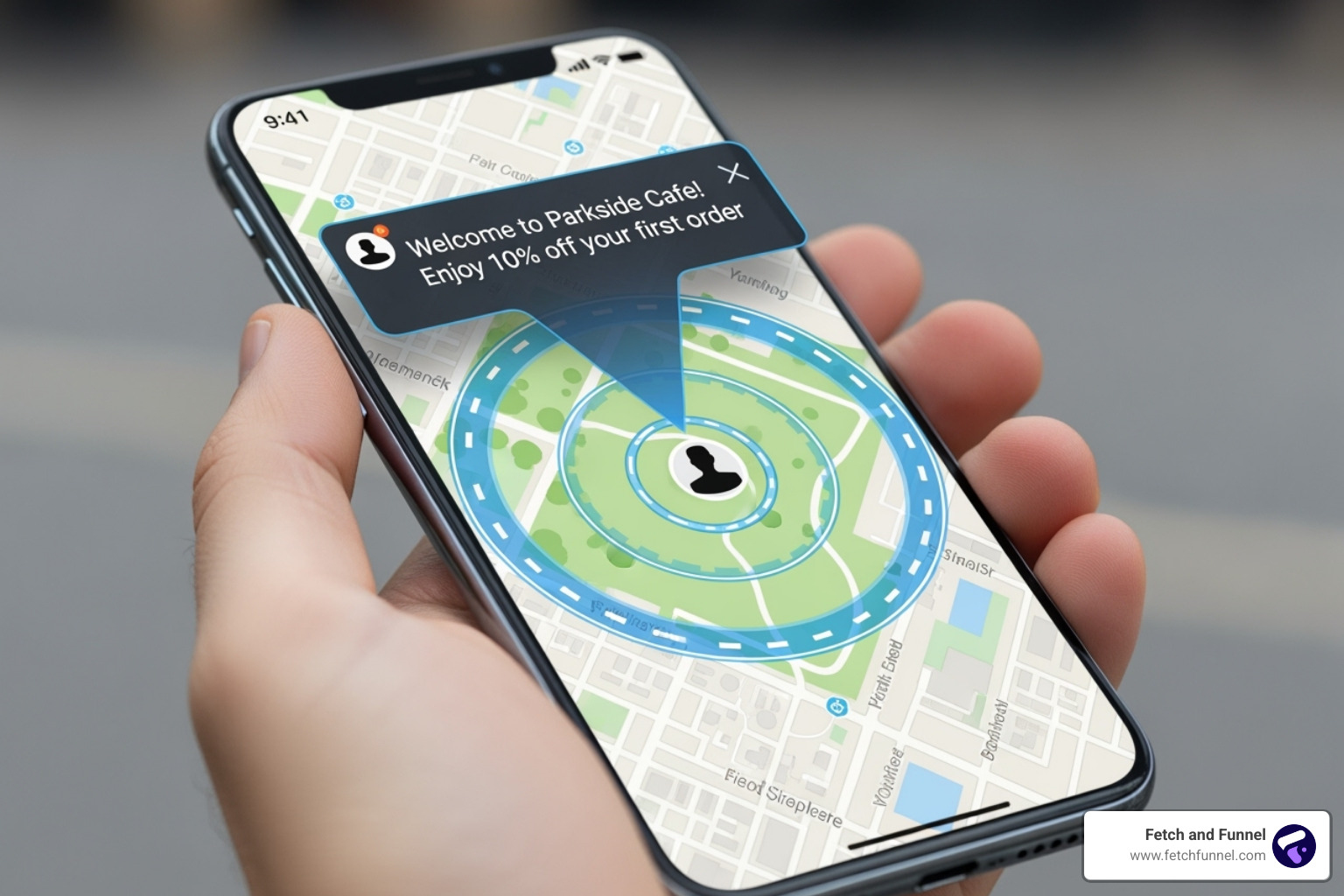
The Technology Behind the Fence
Geofencing works by combining several technologies to pinpoint a device’s location:
- GPS (Global Positioning System): The foundation for outdoor location tracking.
- Cellular Data: Uses cell tower triangulation to refine location, especially in dense urban areas.
- Wi-Fi Networks: Improves indoor accuracy by detecting nearby Wi-Fi access points.
- Bluetooth technology: Guides use Bluetooth Low Energy (BLE) for hyper-local targeting, perfect for in-store promotions. The guide technology market is projected to reach $56.6 billion by 2026.
- RFID (Radio Frequency Identification): A short-range option for tracking within specific, contained areas.
- Mobile SDKs (Software Development Kits): Code integrated into apps that allows them to monitor location and trigger geofence-based actions.

The Step-by-Step Process
A geofencing campaign follows a clear process:
- Define the Boundary: Use a geofencing platform, such as GroundTruth, to draw a virtual perimeter around a location, like a store or event.
- User Enters/Exits: The system detects when a device with location services enabled crosses the boundary.
- Device ID Capture: The device’s anonymous advertising ID is captured for targeting.
- Trigger Action: The entry or exit triggers a pre-programmed action, like sending a push notification or an ad.
- Ad Delivery: The user receives the targeted message. You can also continue Advertising to Devices in a Geofence for a set period after they leave.
- Data Collection: Track impressions, clicks, conversions, and foot traffic to optimize future campaigns.
Geofencing vs. Geotargeting: What’s the Difference?
While often used interchangeably, geofencing and geotargeting are distinct. Geofencing is reactive, triggering ads based on real-time movement across a precise boundary. Geotargeting is proactive, delivering ads to a broader audience within a larger area (like a city or zip code) based on demographics and behavior.
| Feature | Geofencing | Geotargeting |
|---|---|---|
| Trigger Method | Real-time location crossing | Audience demographics + location |
| Precision Level | Sniper rifle accuracy | Broader area coverage |
| Timing | Instant when boundary crossed | Based on general location data |
| Best For | Immediate action campaigns | Broader awareness building |
| Data Used | Precise GPS coordinates | ZIP codes, cities, regions |
| Campaign Style | Reactive and immediate | Proactive and planned |
Smart marketers use both: geotargeting to build broad awareness and geofencing to capture high-intent prospects at the perfect moment.
Why Geofencing Marketing is Revolutionizing Local Advertising
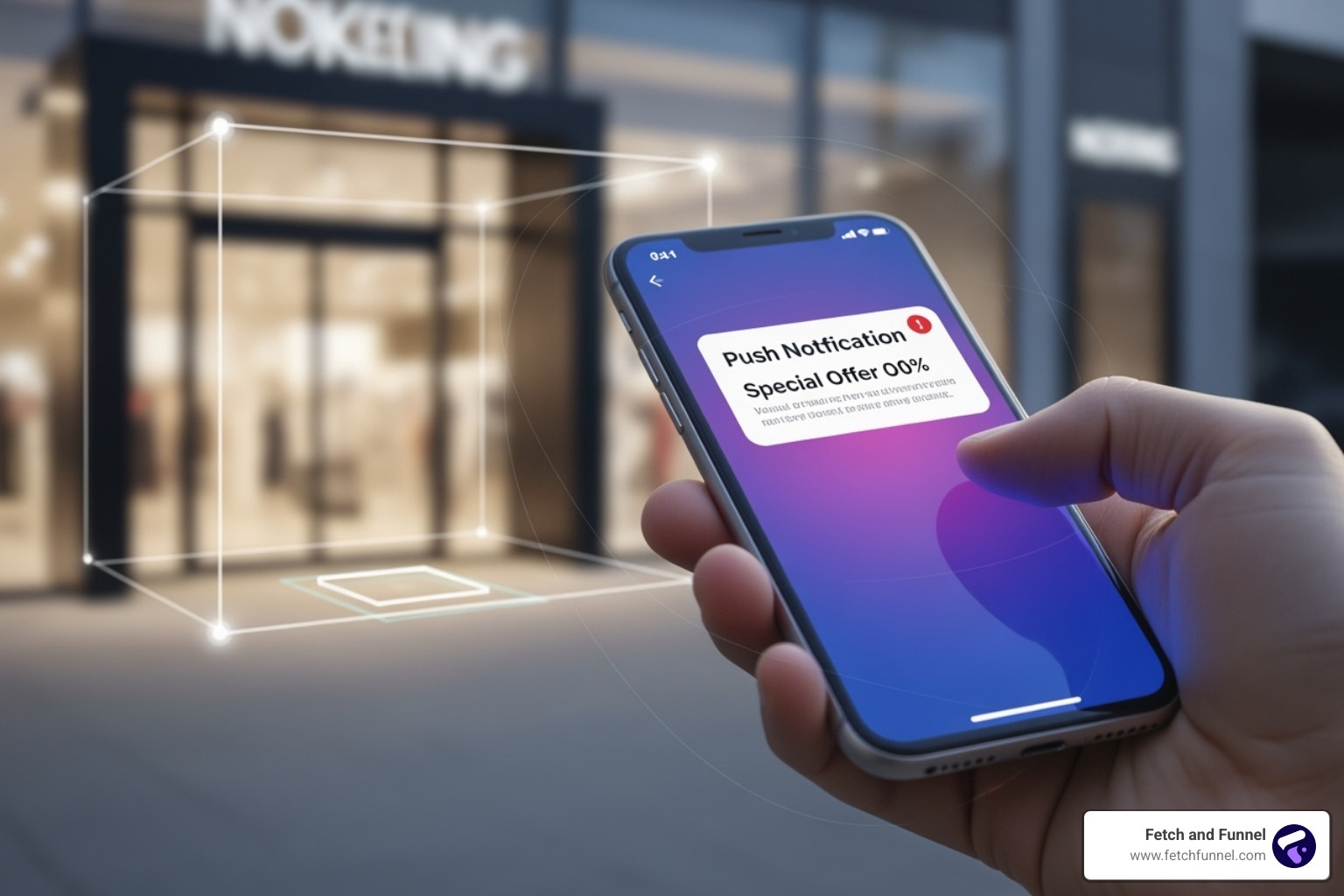
Picture this: you walk past a coffee shop and your phone buzzes with 20% off a latte. That timely nudge is what is geofencing marketing in action.
Geofencing creates invisible boundaries around real-world locations and triggers mobile ads or offers the moment someone enters or leaves them. Powered by GPS, Wi‑Fi, cellular data, and Bluetooth, it delivers right-place, right-time messaging that bridges digital ads with real-world behavior.
Why it matters: 53% of shoppers visited a retailer after receiving a location-based message, and many campaigns see roughly double the click-through rate of traditional digital ads. For local businesses, that means more foot traffic, higher engagement, and less wasted spend.
Bottom line: geofencing turns proximity into performance—getting your message to nearby, high-intent customers at the exact moment they’re most likely to act.
Why Geofencing Marketing is Revolutionizing Local Advertising
What is geofencing marketing? It’s a location-based strategy that draws virtual boundaries around places you care about—your store, a competitor, an event—and triggers targeted ads or offers when people with smartphones cross those boundaries.
The payoff is immediacy and relevance: real-time triggers deliver personalized messaging as customers are nearby, and built-in data collection shows what’s working. Results often include higher engagement—geofencing campaigns can drive roughly 2x traditional CTR—and more store visits, with 53% of shoppers visiting a retailer after receiving a location-based message.
Use geofencing to promote time-sensitive offers, conquest competitors, and retarget recent visitors, all while keeping your ad spend focused on people most likely to buy.
What is Geofencing Marketing and How It Works?
At its core, what is geofencing marketing? It’s a location-based approach that sets virtual perimeters (geofences) around real places. When a device enters or exits a fence, it can trigger an ad, push notification, SMS, or in-app message—connecting digital campaigns with in-person behavior. Learn more about Geofencing in Location-Based Marketing.
The Technology Behind the Fence
- GPS: Primary outdoor location signal.
- Cellular data: Tower triangulation refines accuracy.
- Wi‑Fi: Improves indoor precision via nearby networks.
- Bluetooth technology: Guides (BLE) enable hyper-local targeting.
- RFID: Short-range tracking in contained areas.
- Mobile SDKs: App code that monitors geofences and triggers actions.
The Step-by-Step Process
- Define the boundary around a store, venue, or competitor using a geofencing provider like Simpli.fi.
- Detect entry/exit when a device with location services crosses it.
- Capture an anonymous advertising/device ID for targeting.
- Trigger an action (push, ad, SMS, in-app message).
- Deliver the message; keep Advertising to Devices in a Geofence after they leave if desired.
- Collect data (impressions, clicks, conversions, foot traffic) to optimize.
Geofencing vs. Geotargeting: What’s the Difference?
| Feature | Geofencing | Geotargeting |
|---|---|---|
| Trigger | Real-time boundary crossing | Audience + broader location |
| Precision | High (specific perimeters) | Moderate (ZIP/city/region) |
| Best For | Immediate, in-the-moment actions | Awareness and reach building |
Use both: geotargeting to fill the top of the funnel, and geofencing to convert high-intent, nearby traffic.
Introduction
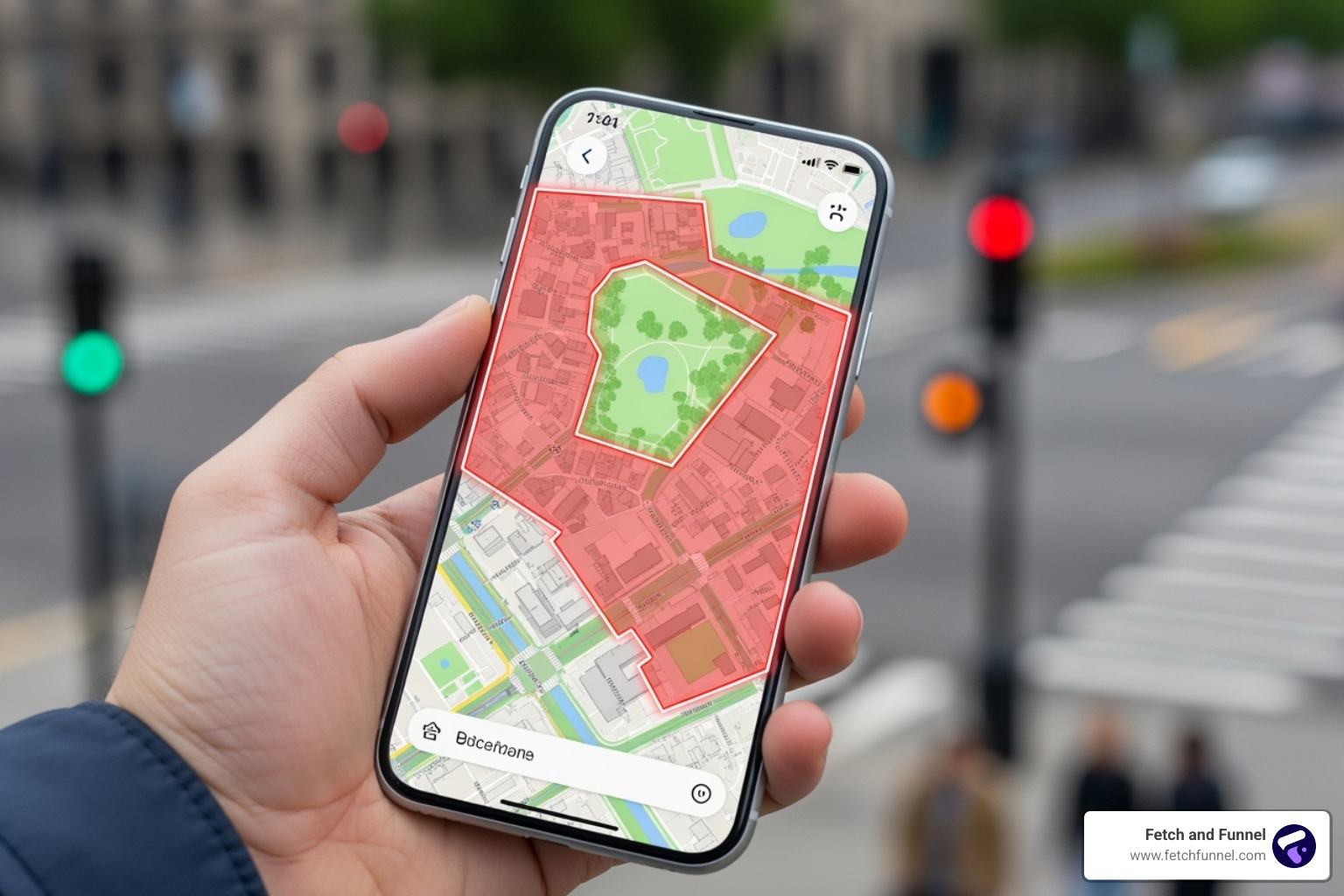
Picture this: you pass your favorite cafe and instantly get 20% off your usual latte. That’s what is geofencing marketing—precise, location-triggered messaging delivered at the perfect moment.
Instead of broadcasting broadly, geofencing lets you reach people near your store (or a competitor’s) with timely, relevant offers. The impact is compelling: geofencing campaigns often see roughly double the click-through rate of traditional digital ads, and 53% of shoppers visit a retailer after receiving a location-based message. With the market projected to grow from $2.65 billion in 2024 to $12.23 billion by 2032, now is the time to put proximity to work for your brand.
This guide explains how geofencing works and how to launch campaigns that drive foot traffic, boost local sales, and produce measurable ROI.
Why Geofencing Marketing is Revolutionizing Local Advertising
What is geofencing marketing? It’s setting virtual boundaries around locations and triggering ads or offers when someone’s device enters or exits. GPS-powered fences and real-time triggers make your messaging timely and highly relevant.
Why it works:
- Right place, right time: Reach customers when they’re close and ready to act.
- Better performance: Many campaigns see about 2x typical CTR; 53% of shoppers visited a retailer after receiving a location-based message.
- Actionable data: Track foot traffic, engagement, and conversions to refine offers.
Think of it as the sniper-rifle approach—precise, efficient, and focused on high-intent prospects.
What is Geofencing Marketing and How It Works?
What is geofencing marketing? It’s creating virtual perimeters around real-world places so a device crossing that boundary triggers a targeted message (push, SMS, in-app, or ad). It bridges online engagement with offline behavior and complements Geofencing in Location-Based Marketing.
The Technology Behind the Fence
- GPS for primary positioning.
- Cellular data for refinement.
- Wi‑Fi for indoor accuracy.
- Bluetooth technology via guides for hyper-local precision.
- RFID for short-range, contained areas.
- Mobile SDKs to monitor geofences and fire triggers.
The Step-by-Step Process
- Define geofences around stores, venues, or competitors using a specialized platform like Radar.
- Detect entry/exit on enabled devices.
- Capture an anonymous ID for targeting.
- Trigger the message.
- Deliver the ad and continue Advertising to Devices in a Geofence post-visit if desired.
- Measure results and optimize.
Geofencing vs. Geotargeting: What’s the Difference?
- Geofencing: reactive, precise, fence-based triggers.
- Geotargeting: proactive, broader areas using audience attributes.
Used together, they build awareness and then convert nearby, high-intent users.
Introduction
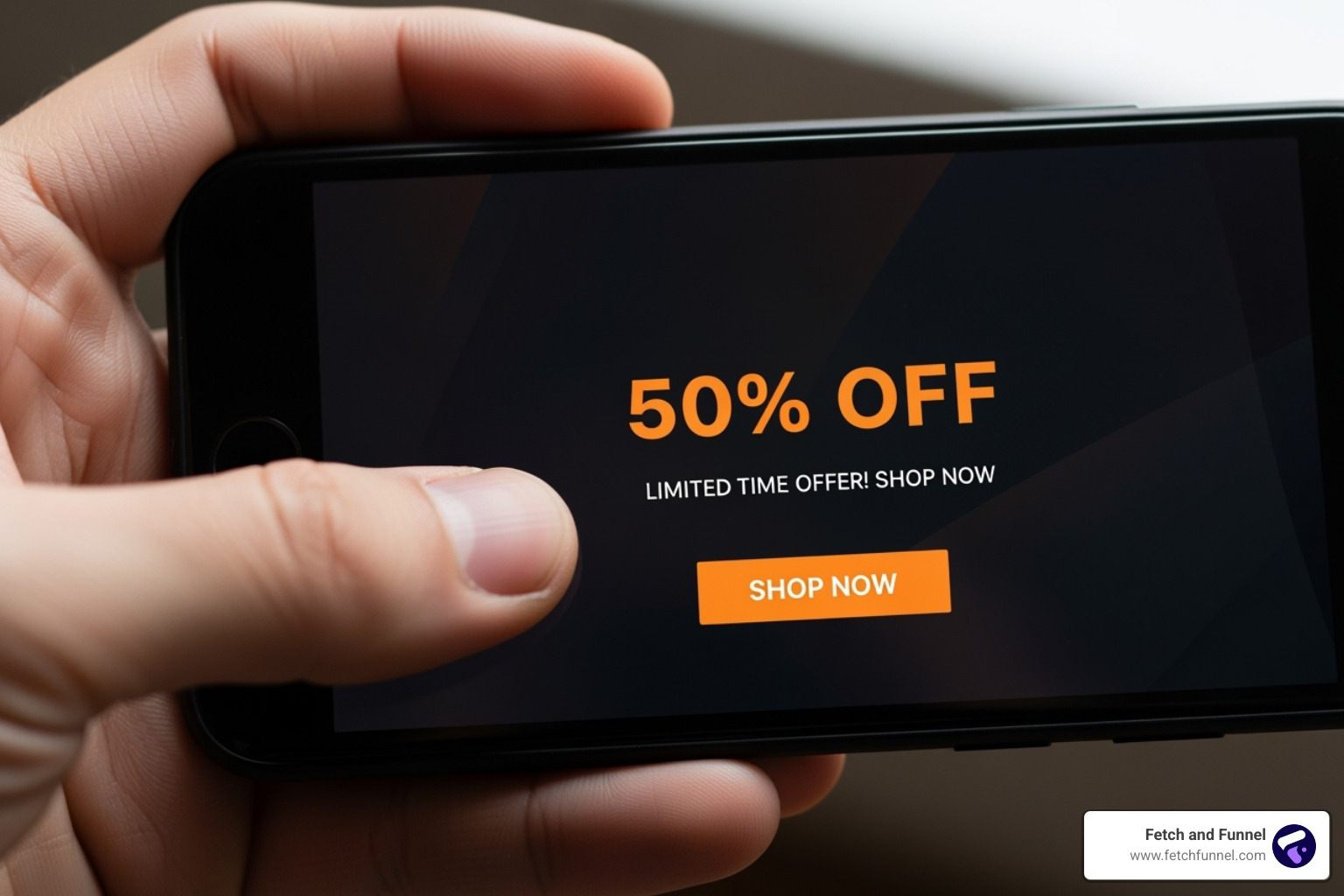
What is geofencing marketing? It’s the practice of creating virtual boundaries around locations so you can send timely, location-relevant messages the instant someone enters or exits.
By combining GPS, Wi‑Fi, and cellular data, geofencing turns proximity into performance—helping you reach people near your business or a competitor’s with personalized offers. It works: geofencing often delivers roughly 2x typical CTRs, and 53% of shoppers visit a retailer after receiving a location-based message. With the market projected to reach $12.23 billion by 2032 (up from $2.65 billion in 2024), momentum is only growing.
If you want to drive foot traffic and local sales, understanding what is geofencing marketing can open up your next stage of growth.
Why Geofencing Marketing is Revolutionizing Local Advertising
Geofencing draws virtual boundaries around places you care about and uses real-time triggers to deliver mobile ads and offers as people enter or exit those zones. Unlike broad targeting, it’s precise and timely—reaching customers on their smartphones when they’re close and primed to act.
Results speak for themselves: campaigns frequently see roughly double the click-through rate of traditional ads, and 53% of shoppers visit a retailer after receiving a location-based message. You also gain valuable insights—foot traffic, dwell time, and conversion data—to refine creative and offers.
Use it to promote limited-time deals, conquest competitor locations, support events, and retarget recent visitors with personalized incentives.
What is Geofencing Marketing and How It Works?
What is geofencing marketing? It’s a location-based tactic that sets digital perimeters around real places so that crossing the boundary triggers a message (push, in-app, SMS, or ad). It’s a practical evolution of Geofencing in Location-Based Marketing that connects online campaigns to offline behavior.
The Technology Behind the Fence
- GPS for outdoor accuracy
- Cellular data for refinement
- Wi‑Fi for indoor precision
- Bluetooth technology via guides for near-range targeting
- RFID for contained, short-range environments
- Mobile SDKs to monitor geofences and trigger actions
The Step-by-Step Process
- Define a geofence around a store, venue, or competitor with a platform like Plot Projects.
- Detect device entry/exit and capture an anonymous ID.
- Trigger and deliver the message.
- Continue Advertising to Devices in a Geofence after they leave, if desired.
- Measure impressions, clicks, visits, and conversions to optimize.
Geofencing vs. Geotargeting: What’s the Difference?
| Aspect | Geofencing | Geotargeting |
|---|---|---|
| Trigger | Real-time boundary crossing | Audience + broader location |
| Precision | High (specific perimeters) | Medium (ZIP/city/region) |
| Use Case | In-the-moment actions | Awareness and reach |
Smart marketers pair both: use geotargeting to build demand, and geofencing to convert nearby, high-intent users.


