

The Power of Location: Why Real Estate Pros Are Embracing Geofencing
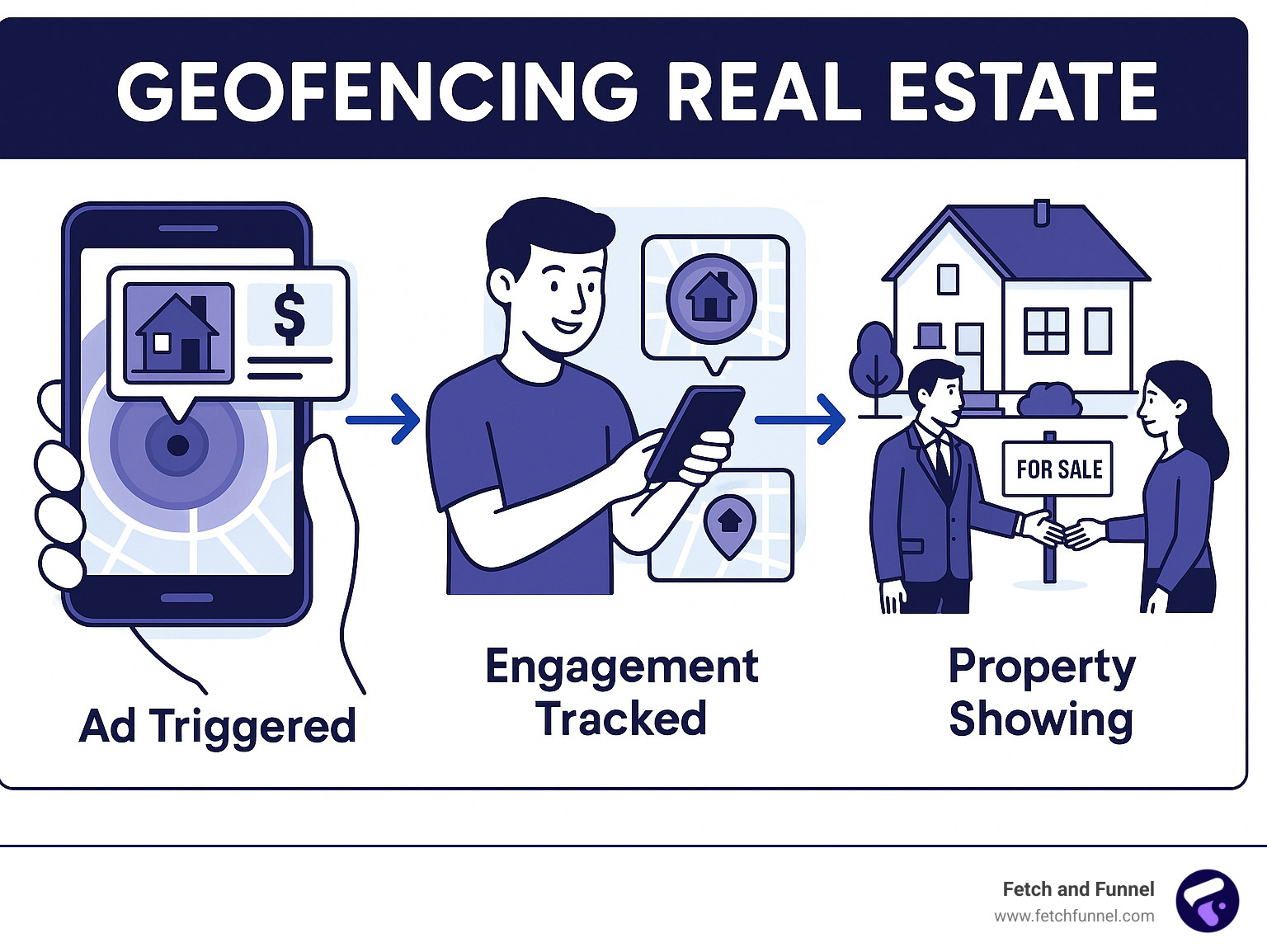
Geofencing real estate is a location-based marketing technology that creates virtual boundaries around specific physical areas to deliver targeted advertisements to potential buyers or sellers who enter those zones. It uses GPS, WiFi, or cellular data to trigger mobile notifications or ads when someone crosses these digital perimeters.
Here’s what you need to know about geofencing for real estate:
| Geofencing Basics | Application in Real Estate |
|---|---|
| Creates virtual boundaries around physical locations | Target open houses, competitor listings, neighborhoods |
| Uses GPS, WiFi, and cellular data | Reach prospects on their mobile devices in real-time |
| Triggers ads when someone enters/exits a zone | Deliver property listings when buyers are actively searching |
| Minimum effective radius: 1,500 sq ft | Maximum effective radius: 58,000 sq ft |
| Match rate up to 90% with addressable geofencing | Can target up to 1 million households per campaign |
Marketing in real estate depends on reaching the right people at the right time. As a real estate professional, imagine casually strolling into an open house when your phone pings with details about a similar but better-priced property nearby. That’s the power of geofencing.
With the global location intelligence market projected to reach $25.25 billion by 2025 and phone ads using geofencing showing click-through rates 2× higher than the industry average, this technology is rapidly becoming essential for agents who want to stay competitive.
Why are real estate professionals turning to geofencing?
- Precision targeting – Reach only the most relevant prospects
- Cost efficiency – Eliminate wasted ad spend on broad audiences
- Competitive edge – Intercept buyers at competitor listings
- Data insights – Track which properties generate the most interest
- Higher engagement – Deliver hyper-relevant content when it matters most
“By creating virtual boundaries around targeted areas, you can get more qualified leads with less marketing cost,” according to industry experts.
I’m Samir ElKamouny, founder of Fetch and Funnel, and I’ve helped countless real estate professionals leverage geofencing real estate strategies to transform their marketing efficiency and lead generation. My expertise in location-based advertising has consistently delivered measurable ROI for agents looking to stand out in competitive markets.
Quick geofencing real estate terms:
– geofencing in location-based marketing
– geofence marketing campaigns
– geofencing advertising platform
Geofencing Real Estate: Why Location Intelligence Matters
In today’s competitive real estate market, traditional marketing methods just don’t cut it anymore. When 66% of enterprises now consider location intelligence critical or very important to their revenue growth, real estate professionals can’t afford to be left behind.
Location intelligence does something powerful – it combines geographic data with business metrics to create actionable insights. For real estate agents, this means understanding not just where potential buyers are physically located, but also their behaviors, preferences, and how ready they are to make a purchase decision.
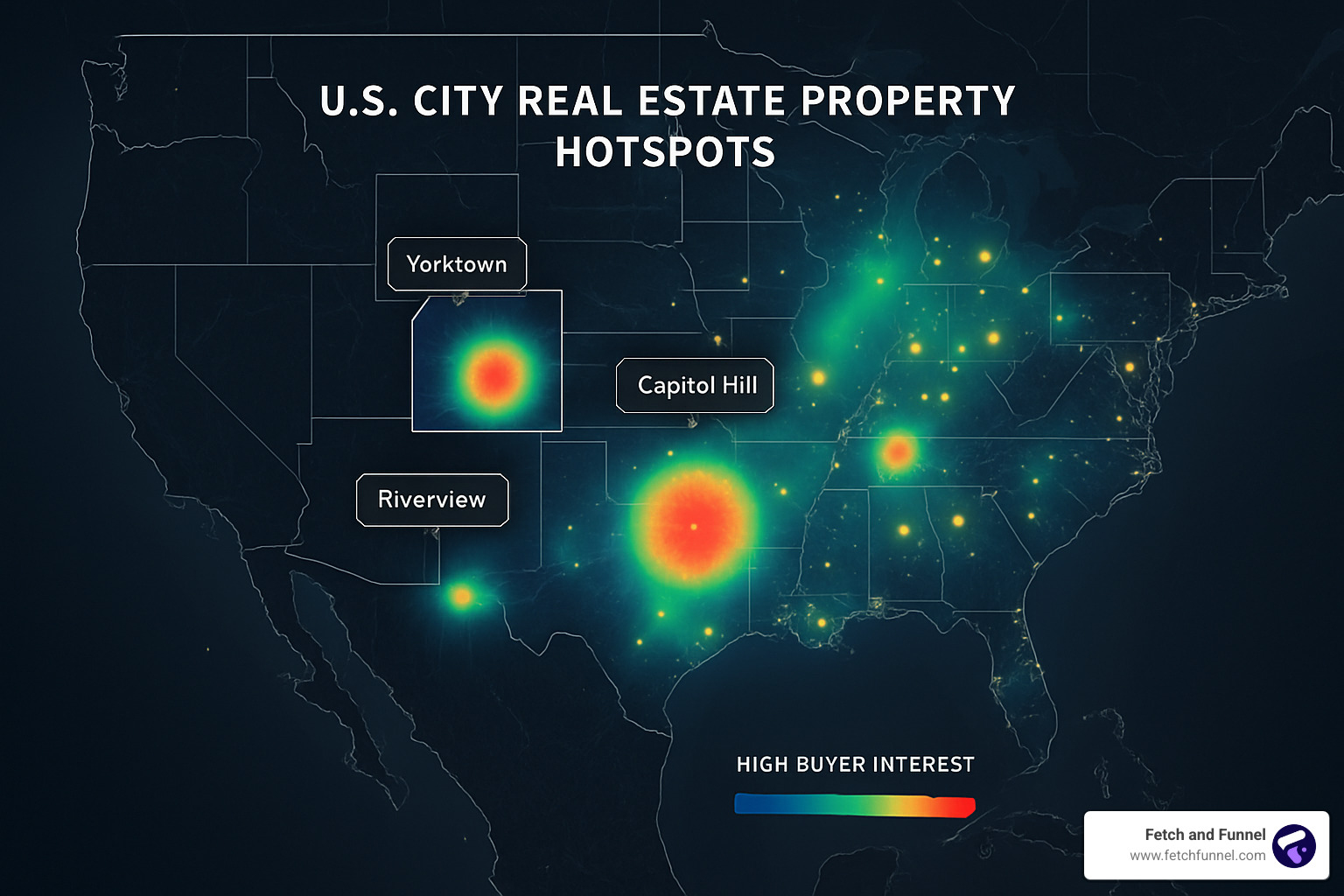
The location intelligence market is projected to reach a staggering $25.25 billion, and there’s good reason for this growth. This technology gives you superpowers to connect with prospects in ways that simply weren’t possible before.
What makes location intelligence so valuable in real estate is its ability to target prospects based on where they actually are, not just where they say they want to be. You can layer in demographic data, understand socioeconomic factors, and track when people physically visit properties – all while optimizing your ad spend on high-intent prospects.
As attention spans continue to shrink (and competition grows fiercer), delivering the right message at precisely the right moment – and in the right place – isn’t just smart marketing. It’s essential.
How Geofencing Works for Property Pros
Geofencing real estate isn’t rocket science, but it is pretty clever. Think of it as creating invisible force fields around physical locations that trigger your marketing when someone walks through them. Here’s how it actually works:
First, you define virtual boundaries around specific locations that matter – your open houses, target neighborhoods, or even competitor offices (yes, really!). When someone with location services enabled on their phone crosses that boundary, their device gets identified through GPS, Wi-Fi signals, or cellular data.
Once their device is recognized, your marketing platform can deliver targeted ads through various channels. This might be display ads while they browse websites, targeted social media content, or even video ads when they’re streaming their favorite shows later.
“It’s not ‘magic’ to make geofencing work,” as we often tell our clients at Fetch and Funnel. “The best strategy involves targeting your audience where you know they’re likely to be with a compelling offer that meets their needs at that moment.”
The technology does require user consent – people need to opt-in to location services. That’s why understanding the What is Geofencing in Digital Marketing? question is so important before diving in.
Core Components of Geofencing Real Estate Campaigns
Creating effective geofencing real estate campaigns requires several key components working together harmoniously:
Your fence size matters tremendously. Too small, and you’ll miss potential buyers; too large, and your messaging loses relevance. The sweet spot typically falls between 1,500 square feet (about the size of a small store) and 58,000 square feet (roughly a city block). The perfect size depends on your specific location’s density and foot traffic patterns.
Strategic fence types make all the difference. We typically work with two main categories: target zones (areas where you want to capture audience data, like competitor open houses or mortgage offices) and conversion zones (areas where you track campaign success, like your listings or office). This two-pronged approach helps measure real-world impact.
What truly lifts geofencing campaigns is data enrichment. By layering in crime statistics, school ratings, flood zones, demographic information, and walkability scores, you create a much richer targeting profile. At Fetch and Funnel, we’ve found this layered approach creates more persuasive property visualizations that drive higher engagement and better-qualified leads.
Perhaps the most powerful technique is addressable geofencing. This allows you to upload specific addresses (up to 1 million in a simple CSV file), match physical addresses to device IDs (with up to 90% match rates), and target specific households rather than just general areas. This precision is what separates good campaigns from great ones.
As the Geofencing in Digital Marketing landscape evolves, staying on top of these core components ensures your real estate business remains a step ahead of competitors who are still relying on traditional, less targeted marketing methods.
10 High-Impact Geofencing Strategies Every Agent Must Try
Looking to take your real estate business to the next level? These ten geofencing real estate strategies aren’t just theoretical—they’re battle-tested approaches that can help you generate quality leads, close more deals, and leave your competition wondering what hit them.
Strategy 1: Open House & Active Listing Fences
Open houses are golden opportunities for geofencing. Think about it—people are literally raising their hands to say “I’m interested in real estate right now!” By creating virtual boundaries around your listings during showings, you connect with buyers at the perfect moment.
When someone crosses your geofence, they can receive instant property details on their phone, complete with gorgeous photos that make them want to see more. Even better, you’ll capture their device ID for follow-up marketing after they leave.
At Fetch and Funnel, we’ve seen agents who geofence their open houses boost lead capture by about 30% compared to traditional methods alone. The secret? Set your fence to extend slightly beyond the property (around 300-500 feet) with a compelling call-to-action like “Tap for the virtual tour” or “See what’s not on the listing sheet!”
Strategy 2: Geoconquesting Competitor Listings
Why limit yourself to marketing just your own listings? One of my favorite strategies is what we call “geoconquesting”—placing geofences around competitors’ properties to intercept active buyers.
Remember Burger King’s brilliant “Whopper Detour” campaign? They geofenced McDonald’s locations to offer Whopper discounts, generating over 1.5 million app downloads. You can apply the same creative thinking to real estate.
Imagine a potential buyer touring a competitor’s listing when they receive your message: “Loving the neighborhood? Our similar listing on Oak Avenue has the same square footage plus a renovated kitchen for just $15k more!” This approach works because you’re reaching buyers who are already interested and actively looking—the warmest leads possible.
Strategy 3: Financial Hotspots & Mortgage Offices
Want to find buyers who are ready to purchase? Follow the money. By geofencing banks, credit unions, and mortgage offices, you can connect with prospects who are actively seeking financing—often the most qualified leads in the market.
The beauty of this approach is that it catches buyers at the beginning of their journey, before they’ve committed to another agent. You can tailor your messaging based on the institution—luxury property ads for private banking clients, first-time homebuyer content for credit unions—making your marketing more relevant and effective.
Strategy 4: Addressable Geofencing Real Estate Precision
When general area targeting isn’t precise enough, addressable geofencing comes to the rescue. This powerful approach lets you upload specific physical addresses (up to 1 million in a CSV file) and match them to device IDs with remarkable accuracy—up to 90% in most cases.
This precision targeting works wonders for reaching homeowners in neighborhoods with high turnover, marketing to expired listings, or connecting with residents in buildings similar to ones where you have current listings. Our clients at Fetch and Funnel have seen conversion rates up to three times higher using addressable geofencing ad targeting compared to standard geographic approaches.
Strategy 5: Field Team & Contractor Coordination
Geofencing real estate isn’t just for marketing—it’s also a powerful operational tool. By setting up geofences around properties under construction, renovation, or management, you create accountability and efficiency for your entire team.
Track agent arrival times at showings, automate check-ins for contractors, assign tasks to the nearest team member, and monitor time spent at job sites. As one of our clients puts it, “Geofencing works quietly in the background while my team focuses on closing deals.” This invisible assistant helps ensure nothing falls through the cracks.
Strategy 6: New Construction & Development Buzz
New developments offer unique geofencing opportunities that savvy agents are quick to leverage. By targeting visitors to model homes and sales centers, you can capture early interest in developing neighborhoods and promote pre-construction pricing before general availability.
For maximum impact, try progressive content delivery—send different messages based on how many times someone has visited the development. First-time visitors might receive basic information, while repeat visitors get more detailed floor plans or special incentives, gradually building interest and creating a sense of urgency.
Strategy 7: Retarget Past Visitors via CTV & OTT
The power of geofencing real estate extends beyond mobile devices. Connected TV (CTV) and Over-The-Top (OTT) platforms let you reach prospects during their evening Netflix binge with high-impact video showcasing your properties.
This strategy works by capturing device IDs from property visitors, then serving them engaging video content when they’re relaxing at home. You can even filter audiences based on dwell time—showing different ads to someone who spent 30 minutes at your open house versus someone who just drove by. This approach is particularly effective for luxury properties, where visual impact matters and the higher cost per impression is justified by property values.
Strategy 8: Hyperlocal Content + CRM Automations
Make your geofencing more effective by connecting it to hyperlocal content and your CRM. When someone visits your property, don’t just show them generic information—show them how close the property is to their favorite coffee shop, the highly-rated elementary school, or the dog park they visit every weekend.
By embedding walk-score widgets, creating dynamic landing pages highlighting neighborhood features, and triggering automated email sequences based on property visits, you create a personalized experience that resonates. Our data shows that combining geofencing with hyperlocal content increases engagement rates by up to 40% compared to generic property information.
Strategy 9: Event & Community Sponsorship Fencing
Community events provide excellent geofencing opportunities that many agents overlook. Local festivals, farmer’s markets, and neighborhood fairs attract people who are already invested in the area—prime candidates for buying or selling nearby.
By setting up geofences around these events, you can promote relevant listings, build brand awareness through sponsored content, and capture data for post-event follow-up. This strategy positions you as a neighborhood expert while connecting with potential clients in a positive, non-intrusive way.
Strategy 10: Renter Acquisition Around Multifamily Communities
With nearly half of multifamily marketers considering mobile advertising like geofencing in 2024, there’s a significant opportunity to target potential buyers who are currently renting. By geofencing apartment complexes near your listings, especially during lease renewal windows, you can showcase the benefits of ownership to people who may be on the fence.
Deliver FHA-compliant ads highlighting how monthly mortgage payments might compare favorably to their current rent, or how building equity creates long-term wealth. This approach helps convert renters to buyers by addressing their specific concerns and showing them a path to homeownership they might not have considered possible.
Each of these strategies can work independently, but the real magic happens when you combine them into a comprehensive geofencing real estate campaign that captures prospects at every stage of the buying journey.
Setting Up, Budgeting & Optimizing Your Geofencing Campaign
Ready to dive into geofencing real estate? Setting up your first campaign doesn’t have to be complicated, but it does require thoughtful planning. I’ve helped dozens of agents transform their marketing with geofencing, and I’m excited to share what really works.
Fence Sizing & Placement
Think of your geofence like a fishing net – too small and you’ll miss opportunities, too large and you’ll catch a lot of irrelevant prospects. Start with a modest 0.1-mile radius (about 500 feet) around high-value locations like your listings or competitor open houses.
One of my favorite strategies is to test different fence sizes through simple A/B testing. What works in a dense urban neighborhood might be completely different from what works in the suburbs. In walkable city areas, consider using walk-time boundaries instead of simple radius fences – this better reflects how people actually experience neighborhoods.
A common mistake I see? Placing fences too close together. When multiple fences overlap excessively, you risk bombarding potential clients with too many ads too quickly – a surefire way to create ad fatigue rather than interest.
Messaging & Creative
Your ad creative needs to do heavy lifting in a small space. Always include a crystal-clear call-to-action that tells people exactly what to do next. Something like “Tap to see interior photos” or “Schedule a showing today” works much better than vague messaging.
Make your ads location-relevant by acknowledging where your prospect is: “While you’re touring homes in Oakwood Heights…” This subtle touch shows prospects you understand their context and creates an immediate connection.
Adding a sense of urgency can significantly boost response rates. A message like “Open today only until 4pm” or “Just reduced this morning” gives people a reason to act now rather than later.
And please, use high-quality images! On small mobile screens, crisp, bright property photos make all the difference between someone stopping to look or scrolling right past your ad.
Timing Optimization
Not all hours are created equal in real estate marketing. Why spend precious budget at 3 AM when your target audience is sleeping? Instead, use day-parting to schedule your ads during peak hours when potential buyers are actively searching.
I always recommend increasing budgets during weekend open-house hours when buyer activity naturally peaks. And don’t forget to adjust your strategy seasonally – most markets have distinct buying seasons that should influence your approach.
Budget Considerations
Let’s talk money. Geofencing costs vary widely depending on your approach:
If you’re the DIY type, platform subscriptions typically run $200-$1,000 monthly, plus whatever you spend on actual ads. For most agents, though, managed services make more sense – expect to invest $1,500-$5,000 monthly for professional management that includes strategy and often ad spend.
Larger brokerages might consider enterprise solutions ranging from $5,000-$32,000 monthly for comprehensive campaigns across multiple locations or properties.
For context, many of our clients at Fetch and Funnel start with a test budget of $1,500-$3,000 for a 30-day campaign. This gives us enough data to establish what works before scaling up. As a benchmark, SmartTouch GEO packages start at $1,500/month with a guarantee of 50,000 impressions.
Key Metrics for Geofencing Real Estate Success
How do you know if your geofencing real estate campaign is working? Focus on these key performance indicators:
First, track your exposure metrics – impressions (how many times your ads appeared), reach (unique devices that saw your ads), and frequency (average impressions per device).
Next, monitor engagement metrics like Click-Through Rate (CTR) – aim for 0.9% or higher, which is the industry benchmark. Also track your Cost Per Click and how people engage with your landing pages after clicking.
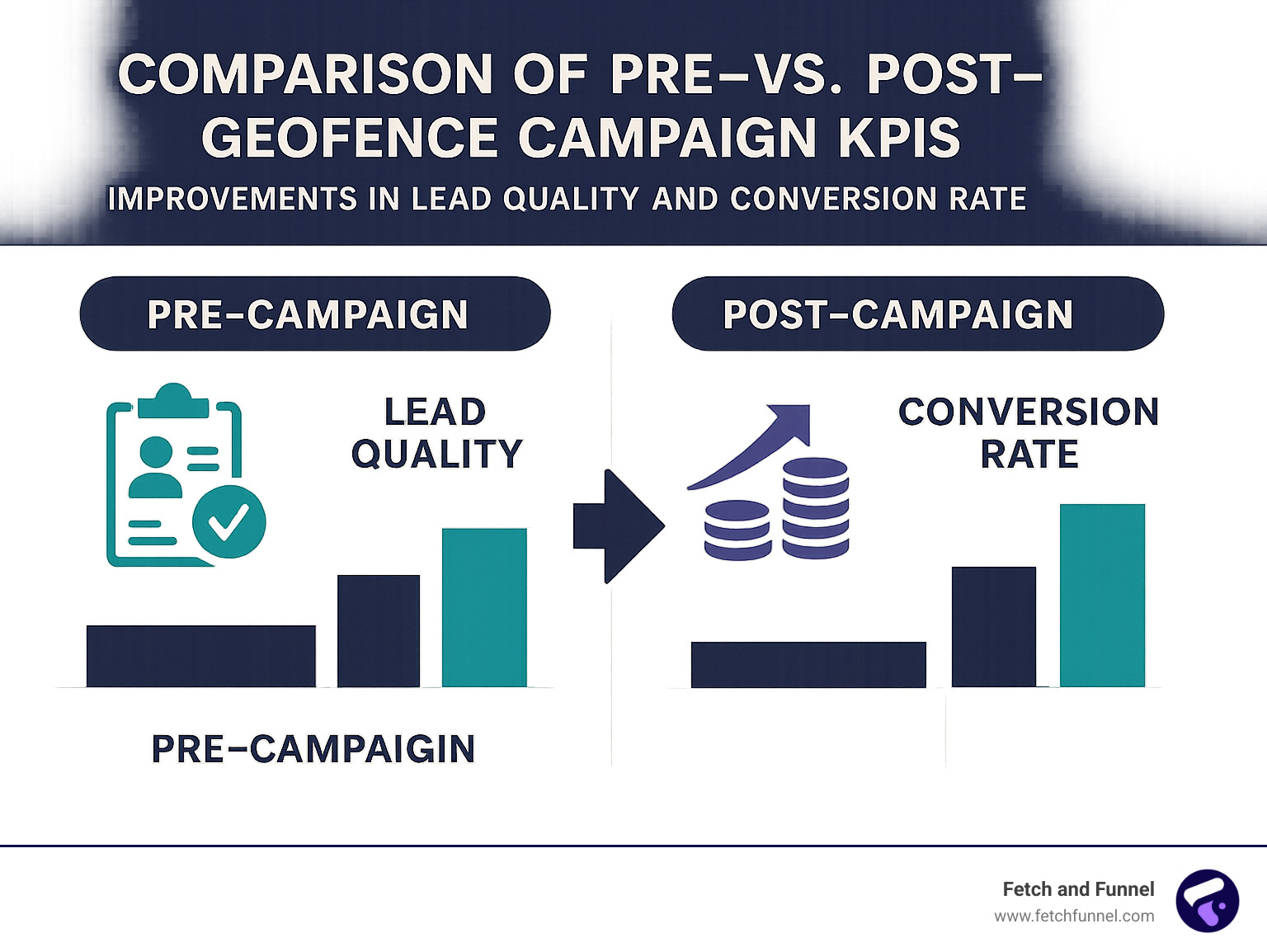
The real gold lies in your conversion metrics – actual visits to your properties (conversion zone visits), the percentage increase in property visits (foot traffic lift), completed lead forms, and showing requests.
Finally, calculate your ROI metrics – Cost Per Lead, Cost Per Acquisition, and Return On Ad Spend (ROAS). Your ROAS should be greater than 1.0, meaning you’re making more than you’re spending.
Privacy, Legal & Compliance Checklist
I can’t stress this enough: compliance matters in geofencing real estate. Cutting corners here can lead to serious problems down the road.
Be aware of privacy regulations like GDPR (European Union), CCPA (California), and various state-specific regulations. At least five states have enacted or proposed geofence-specific regulations, and this landscape is constantly evolving.
Fair housing compliance is non-negotiable. Avoid any geofencing strategy that could appear to target or exclude protected classes. Document your inclusive targeting strategies and ensure all ad creative complies with fair housing regulations.
On the technical side, always obtain explicit user consent for location tracking and provide clear opt-out mechanisms. Be aware that Android OS has limitations on nearby notifications, and always avoid sensitive locations like schools and places of worship.
Keep thorough records of consent, targeting parameters, and creative archives for compliance review. At Fetch and Funnel, we take compliance seriously and can help steer these requirements while maintaining effective campaigns.
Budgeting for Geofencing Real Estate Campaigns
When planning your budget, consider these common pricing models:
CPM (Cost Per Thousand Impressions) typically ranges from $4-$14 per thousand impressions. Expect to pay more for premium inventory like Connected TV/Over-The-Top platforms and less for standard display ads.
Some providers offer flat fee models with a monthly subscription plus management fee. For example, SmartTouch GEO charges $1,500/month for 50,000 guaranteed impressions.
An increasingly popular option is cost-per-visit models where you pay only when someone physically visits your property – typically $5-$15 per verified visit. This requires setting up conversion zones but can be very cost-effective.
For best results, I recommend allocating 70% of your budget to primary target zones, 20% for retargeting previous visitors, and keeping 10% for testing new approaches. And be patient – plan for at least 30 days of continuous campaigns to gather meaningful data before making major adjustments.
Ready to see how geofencing advertising works for your properties? We’d love to help you get started.
Future Trends & Tools Shaping Geofencing in Property Marketing
The geofencing real estate landscape continues to evolve rapidly. Here are the trends and innovations we’re watching at Fetch and Funnel:
5G Impact
– Ultra-low latency enables real-time ad delivery
– More precise location data (within 1 meter)
– Improved AR experiences for property visualization
AI-Powered Optimization
– Automated bid adjustments based on conversion likelihood
– Predictive analytics for fence placement
– Dynamic creative optimization based on user behavior
Advanced Geofencing Shapes
– Moving beyond simple radius to polygon fences
– Building-footprint precision targeting
– Isochrone (travel-time) boundaries instead of distance
Market Growth
– Global location-based advertising market projected to reach $312.23 billion by 2032
– Increasing adoption across all real estate segments
– Integration with other martech systems becoming standard
Platform Showdown: Choosing the Right Tech Stack
Several technology approaches are available for geofencing real estate campaigns:
1. Demand-Side Platforms (DSPs)
– Programmatic ad buying across multiple networks
– Advanced targeting and reporting
– Higher minimum spends ($1,000+/month)
2. Social Media Platforms
– Native geofencing in Facebook/Instagram Ads Manager
– Lower entry costs
– Limited to users of those platforms
3. Custom App Development
– Highest control and customization
– Push notification capabilities
– Significant development investment ($10,000+)
4. Managed Service Providers
– Full-service campaign management
– Access to premium inventory
– Expert optimization and reporting
At Fetch and Funnel, we typically recommend a multi-platform approach that combines the strengths of various systems while maintaining consistent messaging and measurement.
Innovations Elevating Geofencing Real Estate Campaigns
Several emerging technologies are enhancing geofencing capabilities:
IoT Integration
– Smart home sensors triggering relevant property ads
– Connected car targeting for commute-based property suggestions
– Guide technology for ultra-precise indoor location marketing
Advanced Audience Building
– Predictive move-score audiences (likely to relocate soon)
– Life-event targeting (marriage, new job, etc.)
– Behavioral segments based on property search patterns
Privacy-First Targeting
– Cohort-based targeting instead of individual tracking
– Contextual targeting as an alternative to IDFA
– Anonymous location patterns for trend analysis
These innovations allow for increasingly sophisticated campaigns while respecting evolving privacy standards.
Frequently Asked Questions about Geofencing Real Estate
What’s the difference between geofencing and geotargeting?
If you’re new to location-based marketing, you might wonder about these two similar-sounding terms. Here’s the simple breakdown:
Geofencing creates invisible boundaries around specific physical locations—like that charming Victorian on Maple Street or your competitor’s open house. When someone crosses this virtual line, it triggers ads on their mobile device. It’s like having a digital welcome mat that recognizes potential buyers the moment they step into an area you care about.
Geotargeting, on the other hand, casts a wider net. It focuses on general areas like neighborhoods, ZIP codes, or entire cities, and often factors in demographics and past behaviors. Think of it as targeting everyone who lives in or visits a certain part of town, rather than just the folks who walk past a specific property.
At Fetch and Funnel, we’ve found that combining both approaches works wonders—use geofencing for those “right place, right time” moments and geotargeting to build broader awareness in neighborhoods where you want to establish your brand.
How small can my geofence be around a listing?
“Can I just fence my exact property?” This is one of our most common questions from real estate clients.
Technically, the smallest effective geofence is about 1,500 square feet—roughly the footprint of a small house. But in practice, we recommend a minimum radius of 300-500 feet around a property to effectively capture approaching visitors without making the fence so tight that you miss opportunities.
For those seeking pinpoint precision, consider these options:
- Building-footprint polygons that follow the exact shape of structures instead of simple circles
- Guide technology for precise indoor targeting (great for multi-unit buildings)
- Addressable geofencing to target specific households rather than geographic areas
At Fetch and Funnel, our sweet spot for residential properties is typically a 0.1-mile radius (about 500 feet). This captures potential buyers as they approach while maintaining enough precision to avoid wasting impressions on uninterested passersby.
Is geofencing marketing legal in all states?
Yes, geofencing real estate marketing is generally legal throughout the United States—but with some important fine print you should know about.
The legal landscape has some nuances worth understanding:
Several states have enacted or proposed specific regulations around geofencing. Massachusetts, for example, restricts geofencing around healthcare facilities (something to consider if your listing happens to be near a medical center).
User consent requirements are increasingly important, especially for app-based geofencing. The days of tracking people without their knowledge are (thankfully) behind us.
Fair housing compliance is non-negotiable. Your geofencing strategy must never appear to target or exclude protected classes—even unintentionally. This means careful planning of fence locations and creative messaging.
Privacy regulations like California’s CCPA impact how you can collect, store, and use location data. These regulations continue to evolve as privacy concerns grow.
“The legal landscape keeps shifting,” notes our compliance team at Fetch and Funnel. “What was acceptable last year might not be this year.” We always recommend checking with a compliance specialist when implementing campaigns, especially if you’re targeting properties across multiple states.
Being legally compliant and being ethical often require the same approach: transparency with consumers and respect for their privacy preferences.
Conclusion
The rise of geofencing real estate isn’t just another marketing trend—it’s changing how savvy agents connect with prospects in our increasingly mobile world. Think about it: instead of casting wide nets and hoping for the best, you’re now able to deliver perfectly timed messages to people standing exactly where it matters most.
What makes geofencing so powerful is its ability to bridge the digital and physical worlds. When someone walks into your target area, your marketing springs into action—creating those “right place, right time” moments that turn curious browsers into serious buyers.
The benefits we’ve seen with our clients speak volumes:
Hyper-local reach means you’re connecting with people who are already demonstrating interest in specific neighborhoods or properties. These aren’t random internet users—they’re physically present in areas that matter to your business.
Higher-quality leads naturally flow from this approach. When someone receives your message while standing at a competitor’s open house or visiting a mortgage office, they’re already deep in the buying journey. Your perfectly timed outreach can be the deciding factor that brings them to your listing instead.
Measurable results take the guesswork out of marketing. By tracking physical visits to your properties after geofencing campaigns, you can see exactly how digital marketing translates to real-world actions. One of our clients saw a 32% increase in property showings after implementing targeted geofencing around competitor listings.
Competitive advantage comes from being present at critical decision points. While other agents rely on hope and chance, you’re strategically intercepting prospects when they’re actively engaged in property hunting.
As the location intelligence market continues its remarkable growth toward $25.25 billion by 2025, real estate professionals who master geofencing now will find themselves with a significant edge over competitors who lag behind.
At Fetch and Funnel, we’ve helped countless real estate professionals throughout Boston and beyond implement effective geofencing strategies that deliver real results. Our approach combines creative excellence with precise targeting—because even the most perfectly placed fence needs compelling content to drive action.
Ready to transform your real estate marketing with the power of geofencing? Learn more about our geofencing services or reach out to discuss how we can help you connect with the right prospects at exactly the right moment.
In real estate, location has always been everything. With geofencing real estate strategies, your marketing can finally be as location-focused as your properties—creating those magical moments of perfect timing that turn prospects into clients and clients into referrals.


