

Why Smart Segmentation Transforms Your Ad Performance
Retargeting audience segmentation is the practice of dividing your website visitors and past customers into specific groups based on their behavior, demographics, and engagement level to deliver more targeted and relevant ads.
Key Retargeting Audience Segments:
– Behavioral segments: Cart abandoners, product viewers, blog readers
– Funnel-stage segments: Top-funnel browsers, mid-funnel researchers, bottom-funnel converters
– Demographic segments: Age, gender, location, device type
– Recency segments: 0-3 days, 4-7 days, 8-30 days since last visit
– Custom segments: Based on specific pages visited, actions taken, or customer data
The numbers speak for themselves. Retargeted customers are 3x more likely to click on your ads compared to cold prospects. When done right, segmented retargeting campaigns can boost conversion rates by 147% and increase campaign ROI by up to 200%.
Most marketers make the same mistake – they lump all their website visitors into one giant retargeting bucket and blast them with generic ads. This wastes budget and annoys potential customers.
Smart segmentation lets you serve the right message to the right person at the right time. A cart abandoner needs urgency and incentives. A blog reader needs education and trust-building. A repeat customer needs new products and loyalty rewards.
I’m Samir ElKamouny, founder of Fetch and Funnel, where I’ve helped scale countless e-commerce brands using advanced retargeting audience segmentation strategies.

Handy Retargeting audience segmentation terms:
– Best retargeting practices
– Customer journey retargeting
– Creative retargeting ads
Why Segment? The Science Behind Higher Clicks & Conversions
When you segment your retargeting audiences properly, you’re looking at a 76% increase in click-through rates compared to regular display advertising. But here’s where it gets really exciting: segmented retargeting campaigns can deliver a 147% boost in conversions over standard display ads.
Think about the last time you saw an ad that felt like it was speaking directly to you. Maybe it showed you the exact product you were browsing yesterday, or it addressed a specific problem you’d been researching. That moment of recognition? That’s the power of segmentation at work.
The Psychology of Micro-Moments
We make split-second decisions about whether to engage with ads. When someone sees a generic “Shop Now!” ad, their brain barely registers it. But when they see an ad featuring the specific running shoes they spent ten minutes comparing on your site yesterday? That creates a moment of genuine relevance that cuts through the noise.
Why Segmentation Outperforms Generic Retargeting
The magic happens when you match your message to where people are in their journey. A first-time visitor browsing your blog is in a completely different headspace than someone who just abandoned their shopping cart.
Ad relevance increases dramatically when you speak to specific behaviors. Cart abandoners respond to urgency and incentives. Blog readers need education and trust-building. Product browsers want comparisons and social proof.
Frequency and fatigue control becomes much more sophisticated with segmentation. Instead of bombarding everyone with the same message until they tune out, you can adjust how often different segments see your ads. Research on ad frequency shows that optimal frequency varies significantly depending on where someone is in the buying process.
Budget efficiency skyrockets because you’re not wasting impressions on mismatched messages. When you show the right ad to the right person at the right time, every dollar works harder.
The bottom line? People respond to personalized experiences. When someone feels like you understand their specific needs and interests, they’re much more likely to click, engage, and ultimately convert.
Core Segment Types Every Marketer Should Master
Think of audience segments as different buckets for organizing your potential customers. Each bucket serves a unique purpose, and understanding when to use each one can make or break your retargeting audience segmentation strategy.

Let me walk you through the main segment types that actually matter, based on what we’ve learned from Google’s audience segments overview:
Affinity & Detailed Demographics
Affinity segments are like finding your tribe. These represent people’s long-term passions and interests – the golf enthusiasts, cooking aficionados, and fitness buffs.
These segments shine brightest in brand awareness campaigns because they help you reach people who already care about your category.
Detailed demographics take the basic age and gender data and add layers that actually matter for your business. Instead of just “women aged 25-34,” you can target homeowners who might need landscaping services, parents of toddlers who desperately need childproofing products, or college students looking for budget-friendly solutions.
In-Market & Life Events
In-market segments are your warm leads – people actively researching and comparing products in your category right now. They’re not just browsing; they’re shopping with intent.
Life events segments catch people during major life transitions when their buying patterns completely shift. Someone moving to a new home suddenly needs everything from cleaning services to internet providers. A couple getting married is in the market for photographers, caterers, and honeymoon destinations.
One storage company we worked with hit gold by retargeting people in-market for real estate purchases. The timing was perfect – people buying homes often need temporary storage during the moving process. The relevance was so strong that their cost per acquisition dropped by 40%.
Custom & Your Data (Remarketing)
This is where retargeting audience segmentation gets really sophisticated and personal. Custom segments let you get creative with your targeting by defining audiences based on specific behaviors like keywords they’ve searched for, URLs they’ve visited, or apps they’ve used.
Your data segments are pure gold because they’re built from actual interactions with your brand. This includes website visitors segmented by which pages they viewed, Customer Match lists from your CRM system, and app users based on specific actions they’ve taken inside your app.
Lookalike & Similar Seeds
Lookalike audiences are like having a crystal ball that finds new customers who look just like your best existing ones. The platform analyzes hundreds of data points from your high-value customers and finds new prospects who share similar characteristics.
The secret sauce is in your seed audience quality. Don’t just throw in everyone who visited your website – use your highest-value customers, your most engaged email subscribers, or your repeat purchasers.
These segments work beautifully in Demand Gen campaigns where you’re trying to expand your reach to qualified new prospects. The key is starting with a seed list of at least 100-1000 high-quality customers, then letting the platform’s machine learning do the heavy lifting.
Retargeting Audience Segmentation in Action: Behavior + Funnel Framework
Here’s where retargeting audience segmentation gets exciting. The most successful campaigns combine what people did on your site with where they are in their buying journey. Think of it as a two-dimensional map – behavior on one axis, funnel stage on the other.
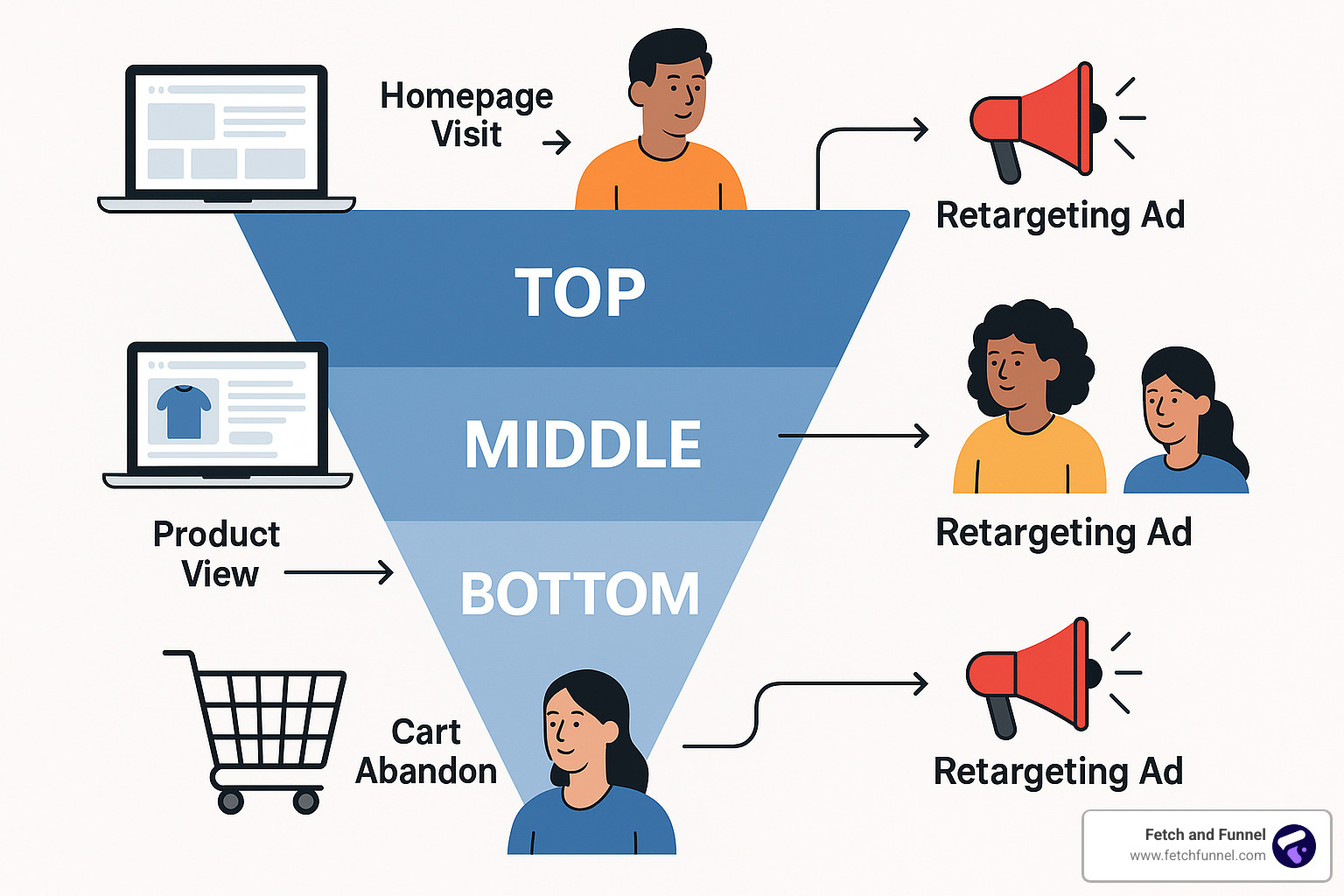
The key is matching your message to both their demonstrated interest level and their position in the buying process. Let’s break this down by funnel stage.
Top-Funnel Visitors — Inform & Nurture
Your top-funnel visitors are like people who just walked into your store and are looking around. They’re curious but not ready to buy.
Homepage bouncers are your biggest mystery. They showed up but didn’t stick around to learn more. These folks need gentle education about what you do and why it matters. Skip the “Buy Now” buttons and focus on soft CTAs like “See How It Works” or “Learn More.”
Blog readers are gold mines of intent. They consumed your content, which means they trust you enough to spend time with your ideas. Show them related articles, case studies, or educational resources that build on what they already read.
Category browsers peeked at your product range but didn’t dive deeper. They’re window shopping, trying to understand their options. Help them by highlighting your range or explaining what makes your approach different.
The golden rule for top-funnel segments? Build trust first, sell second.
Mid-Funnel Engagers — Compare & Persuade
Mid-funnel visitors have moved past curiosity into active evaluation. They’re not just browsing anymore – they’re comparing and considering.
Product viewers looked at specific items but didn’t add them to cart. They’re interested but something held them back. This is prime territory for showing social proof, customer testimonials, and detailed product benefits.
People who hit our time-on-site filters (usually 2+ minutes) deserve special attention. They invested significant time exploring your site, which signals genuine interest.
Multiple session visitors are your warm prospects who keep coming back. They might be comparison shopping or just need time to decide. Address common objections directly and consider offering consultation calls.
For deeper strategies on converting mid-funnel traffic, check out our best retargeting practices guide.
Bottom-Funnel Cart Abandoners — Convert NOW
Bottom-funnel visitors showed clear purchase intent. They’re not browsing or learning – they were ready to buy but something stopped them.
Cart abandoners are your hottest prospects. They picked out items, added them to cart, but didn’t complete the purchase. Hit them with urgency offers, limited-time discounts, or free shipping to push them over the finish line.
Checkout drops started the actual buying process but bailed before completing it. This often indicates specific friction points like complicated forms or unexpected fees. Address these concerns directly in your retargeting ads.
Time is critical with bottom-funnel segments. Use short membership durations (3-7 days) and higher frequency caps to maintain that sense of urgency. For platform-specific tactics, our Facebook retargeting funnel guide covers exactly how to structure these campaigns.
Retargeting Audience Segmentation by Recency
Recency might be the most underrated dimension in retargeting audience segmentation. People who visited recently are more likely to convert than people who visited weeks ago.
0-3 day visitors are in the heat zone. They just interacted with your brand and you’re still fresh in their minds. These people can handle more aggressive bidding and more frequent ads.
4-7 day visitors are cooling down but still warm. They might be comparison shopping or got busy with life. This is where social proof and gentle urgency work well.
8-30 day visitors need nurturing, not pushing. They might have forgotten about you or their needs might have shifted. Focus on brand reinforcement and value reminders rather than hard sales tactics.
Frequency caps should match recency. Recent visitors can see 3-5 ads per day without getting annoyed, while older segments should stick to 1-2 daily impressions to avoid fatigue.
Advanced Tactics & Optimization Loops
Ready to take your retargeting audience segmentation to the next level? These advanced strategies will help you create campaigns that feel less like advertising and more like helpful conversations with your customers.
Sequential Messaging & Storytelling
Think of your retargeting campaigns like chapters in a book rather than a broken record playing the same song. Sequential messaging lets you build a relationship over time instead of just shouting “Buy now!” repeatedly.
Video series work incredibly well for this approach. Start with a problem-awareness video, then follow up with solution education, and finally wrap up with a product demonstration.
Each video targets people who engaged with the previous one, creating a natural flow that feels intentional rather than random.
The magic happens with engagement triggers – people who watched 75% of your first video get a different follow-up message than those who watched only 25%. This level of personalization makes people feel like you’re paying attention to them as individuals.
We’ve seen sequential messaging increase engagement rates by 40-60% compared to static retargeting.
Cross-Channel & Competitor Conquesting
Don’t put all your retargeting eggs in one platform basket. The most sophisticated retargeting audience segmentation strategies work across multiple channels.
RLSA (Remarketing Lists for Search Ads) is one of our favorite advanced tactics. You can target your website visitors when they search for competitor terms on Google. If someone visited your site and then searches for your competitor, you can bid more aggressively to intercept them.
Social and display blending creates a web of touchpoints that surround your prospects with relevant messages. Someone who clicked your LinkedIn ad might see follow-up ads on YouTube and the Google Display Network.
Competitor search intercept takes this even further. With proper tracking, you can create audiences of people who clicked on competitor ads and retarget them with comparison messaging that highlights your unique advantages.
Testing & Measurement for Segments
Advanced segmentation without proper measurement is like driving with your eyes closed.
Lift tests are your best friend for proving the value of segmentation. Create holdout groups to measure the true incremental impact of your segmented campaigns versus generic retargeting.
Attribution models become crucial when you’re running sophisticated segmentation strategies. Move beyond last-click attribution to understand how different segments contribute to conversions across the entire customer journey.
KPI dashboards should track segment-specific metrics like cost per acquisition, lifetime value, and return on ad spend. This data helps you optimize budget allocation and identify which segments deserve more investment.
Privacy, Frequency, and Compliance Essentials
With privacy regulations tightening, responsible retargeting audience segmentation isn’t just good practice – it’s essential for staying in business.
Consent banners need to actually work properly, not just look pretty. Make sure your retargeting pixels fire only after users give proper consent.
Policy-safe categories are your guardrails for ethical targeting. Avoid targeting based on sensitive categories like health conditions or financial struggles. Stick to behavioral and demographic data that users reasonably expect you to have.
Frequency caps prevent you from becoming that annoying brand everyone wants to avoid. Research shows that 55% of consumers are put off by too-frequent retargeting ads. Set reasonable frequency caps – typically 3-5 impressions per day maximum.
Data retention policies should reflect common sense and legal requirements. Set appropriate lookback windows and regularly clean your audience lists.
Tools like Google’s Audience Manager help you configure these settings properly and maintain compliance.
For more advanced creative strategies that respect user privacy while driving results, check out our comprehensive guide on creative retargeting ads.
Frequently Asked Questions about Retargeting Audience Segmentation
Let’s tackle the most common questions I get about retargeting audience segmentation. These are the real-world concerns that keep marketers up at night.
How long should my membership duration be?
This is probably the question I hear most often, and here’s the truth: your sales cycle should drive your membership duration, not some arbitrary “best practice” number.
Most businesses do well with 30 days as a baseline, but that’s just your starting point. Think about how your customers actually buy.
Short sales cycles like impulse purchases or low-cost items work best with 7-14 day membership durations. Your audience is hot, they’re ready to buy, and waiting longer just means they’ve moved on.
Medium sales cycles – those considered purchases where people research and compare – typically work well with 30-45 days. This gives people time to think it over, maybe check their budget, or get approval.
Long sales cycles for high-value or complex purchases might need 60-90 days or even longer. A car dealership shouldn’t give up on someone after 30 days – that person might still be shopping around.
Start with that 30-day baseline, then test shorter and longer windows. The data will tell you what works for your specific audience and product.
How many impressions before users get annoyed?
Nobody wants to be that brand that stalks people across the internet. The research backs this up – 55% of consumers say too-frequent retargeting ads actually discouraged them from making a purchase.
The sweet spot varies by how recently someone visited your site. Recent visitors from 0-3 days are still hot and engaged, so they can handle 3-5 impressions per day maximum.
Warm prospects from 4-14 days need a gentler touch – 2-3 impressions per day maximum. They might be comparison shopping or got distracted by life.
Your nurture audience of 15+ days should see 1-2 impressions per day maximum. These folks have cooled off, and aggressive retargeting will just annoy them.
The key insight here is that frequency tolerance decreases as recency decreases. Monitor your frequency reports regularly – when you see your cost per result climbing or engagement dropping off, it’s time to dial back the frequency.
Can I retarget mobile app users differently?
Absolutely, and you should! Mobile app users behave completely differently than web users, so your retargeting audience segmentation strategy needs to account for this.
Mobile Measurement Partner (MMP) data is your secret weapon here. You can create incredibly precise segments based on in-app actions, how long people spend in your app, and exactly where they are in your user journey.
Deep links are game-changers for app retargeting. Instead of sending a cart abandoner to your app store page or homepage, deep link them directly to their abandoned cart.
Inactivity buckets work particularly well for apps. Someone who hasn’t opened your app in 3-7 days might just need a gentle reminder. But someone who’s been inactive for 15+ days probably needs a compelling reason to come back.
Don’t forget to coordinate your paid retargeting with push notifications. You don’t want to bombard someone with both simultaneously.
The bottom line? Mobile users often have different intent patterns and attention spans than web users, so test separate creative strategies and messaging for each platform.
Conclusion
You’ve just open uped the secret weapon that separates profitable brands from those burning through ad budgets with little to show for it. Retargeting audience segmentation isn’t just another marketing tactic – it’s your path to creating advertising that actually helps people while driving serious results for your business.
Every visitor to your website is telling you exactly what they’re interested in through their behavior. The person who spent ten minutes reading your blog post has completely different needs than someone who added three items to their cart and then disappeared. When you treat them the same way, you’re essentially throwing money at the wrong message.
The framework we’ve walked through together – behavioral signals, funnel positioning, recency windows, and those advanced tactics – gives you everything you need to build campaigns that feel personal rather than pushy.
Here’s what really matters: match your message to the micro-moment your audience is experiencing. Test relentlessly based on real data, not your best guess. Respect people’s time and attention with smart frequency limits and privacy-first approaches. Think bigger than single platforms by connecting your retargeting across channels where your customers actually spend time.
Most importantly, measure what actually moves the needle for your business, not just vanity metrics that look good in reports.
At Fetch and Funnel, we’ve seen these exact strategies transform struggling campaigns into profit-generating machines. The magic happens when precise targeting meets compelling creative and continuous optimization.
Your next step is refreshingly simple: pick one segment type from what we’ve covered, master it completely, then expand from there. Maybe start with cart abandoners since they’re already showing purchase intent, or dive into recency-based segments if you want quick wins.
The improvements compound faster than you might expect. Once you start speaking directly to what each visitor actually needs, everything else – click rates, conversions, customer satisfaction – follows naturally.
Ready to see how these principles work across different platforms? Check out our Facebook retargeting strategies guide for platform-specific tactics that’ll take your campaigns to the next level.


