Why Most Ads Get Ignored (And How Direct Response Creative Fixes That)
Direct response creative is advertising designed to get people to take an immediate, measurable action — like clicking a button, filling out a form, or making a purchase.
Here’s a quick breakdown of what it involves:
| Element | What It Means |
|---|---|
| Clear CTA | One specific action you want the viewer to take |
| Compelling offer | Something valuable enough to act on right now |
| Targeted messaging | Speaks directly to your audience’s pain points |
| Urgency | A reason to act today, not tomorrow |
| Trackable results | Every response is measured and attributed |
Think about this: the average American sees between 4,000 and 10,000 ads every single day. Most of those ads get completely ignored. The ones that don’t get ignored — the ones that actually drive clicks, leads, and sales — are built on direct response principles.
Unlike brand advertising, which builds awareness over time, direct response is about right now. Did they click? Did they buy? Did they sign up? If you can’t measure it, it doesn’t count.
For e-commerce brands struggling with high acquisition costs and low conversion rates, mastering direct response creative isn’t optional — it’s the difference between ads that drain your budget and ads that grow your business.
I’m Samir ElKamouny, founder of Fetch and Funnel, a performance-driven digital marketing agency where I’ve spent years helping top e-commerce and SaaS brands build direct response creative that drives real, measurable ROI. In this guide, I’ll walk you through everything — from the core principles to the exact tactics we use to turn ad spend into revenue.
Easy Direct response creative glossary:
Direct Response vs. Brand Marketing: The Battle for Attention
One of the biggest mistakes we see brands make is confusing brand marketing with direct response. While both are necessary for a healthy business, they play very different roles in your funnel.
Think of it this way: Brand marketing helps people choose you eventually; direct response helps people buy from you right now.
| Feature | Brand Marketing | Direct Response (Action Marketing) |
|---|---|---|
| Primary Goal | Awareness, affinity, and recognition | Immediate action and measurable ROI |
| Timeline | Long-term “slow burn” | Short-term “demand capture” |
| Metrics | Sentiment, reach, recall | Conversion rate, CPA, ROAS |
| Testing | Surveys and focus groups | A/B testing and performance data |
| Creative Style | Emotional storytelling, abstract | Rational, feature-driven, persuasive |
A foundational concept in branding is Dr. Jeffrey Lant’s Rule of 7, which suggests a consumer needs to see a brand seven times before it truly sticks. Brand marketing is the “pond builder”—it makes the pond bigger and fills it with fish. Direct response creative, on the other hand, is the fisherman. It’s designed to catch the fish that are already in the pond and ready to bite.
When we develop a creative strategy, we ensure that while your brand ads build trust, your direct response ads are fighting “brandification”—the tendency to make ads look “pretty” at the expense of conversion efficiency. Agencies like Common Thread Collective also emphasize this distinction, focusing on the intersection of brand and performance. If your ad is beautiful but doesn’t tell the user what to do next, it’s a branding piece, not a direct response piece.
The Anatomy of High-Performing Direct Response Creative
To create direct response creative that actually moves the needle, you have to stop talking about yourself and start talking about your customer. This is the shift from “Look how great we are” to “Look how we solve your problem.”
The core of every winning ad is customer centricity. Research shows that 80 percent of consumers are more likely to do business with a brand that offers personalized interactions. In direct response, personalization means speaking to the “WIIFM” (What’s In It For Me?).
Key Elements of a High-Converting Ad:
- Relatable Visuals: Use imagery that looks like your customer’s real life. In direct response, “ugly” or authentic often beats “over-produced” because it feels more trustworthy.
- Emotional Triggers: Tap into desires, frustrations, or fears. Are they tired of wasting money? Are they worried about their health? Speak to that.
- The Value Proposition: Clearly state the benefit. Don’t just list features; explain the transformation.
- Clear CTA: This is non-negotiable. Your audience shouldn’t have to guess where to click.
Effective ad creative optimization involves balancing information with simplicity. If you’re selling a well-known product like a phone case, you need less information. If you’re selling a complex SaaS solution, you need more “tell to sell” copy to overcome objections.
4 Essential Questions for Creating Powerful Direct Response Creative
Before we launch any campaign at Fetch and Funnel, we run our creative through four essential filters. These questions move your creative from a “pitch” to an “invitation.”
- What is the story we’re telling? This isn’t just a narrative; it’s an ambitious, authentic story grounded in your mission and the current urgency of the problem you solve.
- Whose story is it? Is it the founder’s journey? A customer’s transformation? Identifying the storyteller helps build a “from-to” journey that readers can see themselves in.
- How do we want our audience to feel? Connection without action is incomplete. We use design and imagery to evoke empathy or a sense of belonging, making the supporter feel like part of a community.
- How do we want our audience to react? Every emotional beat must lead to a natural next step. Whether it’s signing a petition or making a purchase, the CTA should feel like the logical conclusion of the story.
Writing Copy for Direct Response Creative That Converts
In direct response, the copy is the driving force. Graphics are there to support the words, not the other way around. To write copy that converts, you need to be a student of human psychology.
Our ad copy optimization guide 2025 emphasizes several “maxims” for conversion:
- The Rule of Three: Using three bullet points or three benefits creates a rhythm that feels complete to the human brain.
- Active Tense and Short Sentences: Don’t use ten words when three will do. Keep the momentum moving forward.
- Specifics Over Generalities: “Lose 12 pounds in 30 days” is infinitely more powerful than “Lose weight fast.”
- The Postscript (P.S.): In direct mail and email, the P.S. is one of the most-read sections. Always use it to restate your offer or add a final sense of urgency.
Don’t forget the power of scarcity and urgency. Phrases like “Only 5 spots left” or “Offer ends at midnight” trigger a fear of missing out (FOMO) that can dramatically lift response rates. Gary Bencivenga, often called the world’s greatest living copywriter, built his career on these “scientific” testing principles, often generating over $3 in revenue for every marketing dollar spent.
Design Principles and Best Practices for Direct Response Ads
If the copy is the engine, the design is the vehicle. A graphic design advertising agency focused on direct response knows that the goal isn’t to win design awards; it’s to win customers.
The Rules of Direct Response Design:
- Chunked Copy: Use subheads, underlines, and bullet points. Most people are “skimmers,” so your ad should deliver the full sales pitch even if they only read the bold text.
- Directional Cues: Use arrows or the eye-line of people in photos to point directly at your CTA or headline.
- High Contrast: Your CTA button should “pop” against the background. Don’t let your most important element blend in.
- Mobile Optimization: With most ads being viewed on phones, your text must be legible and your landing pages must load instantly.
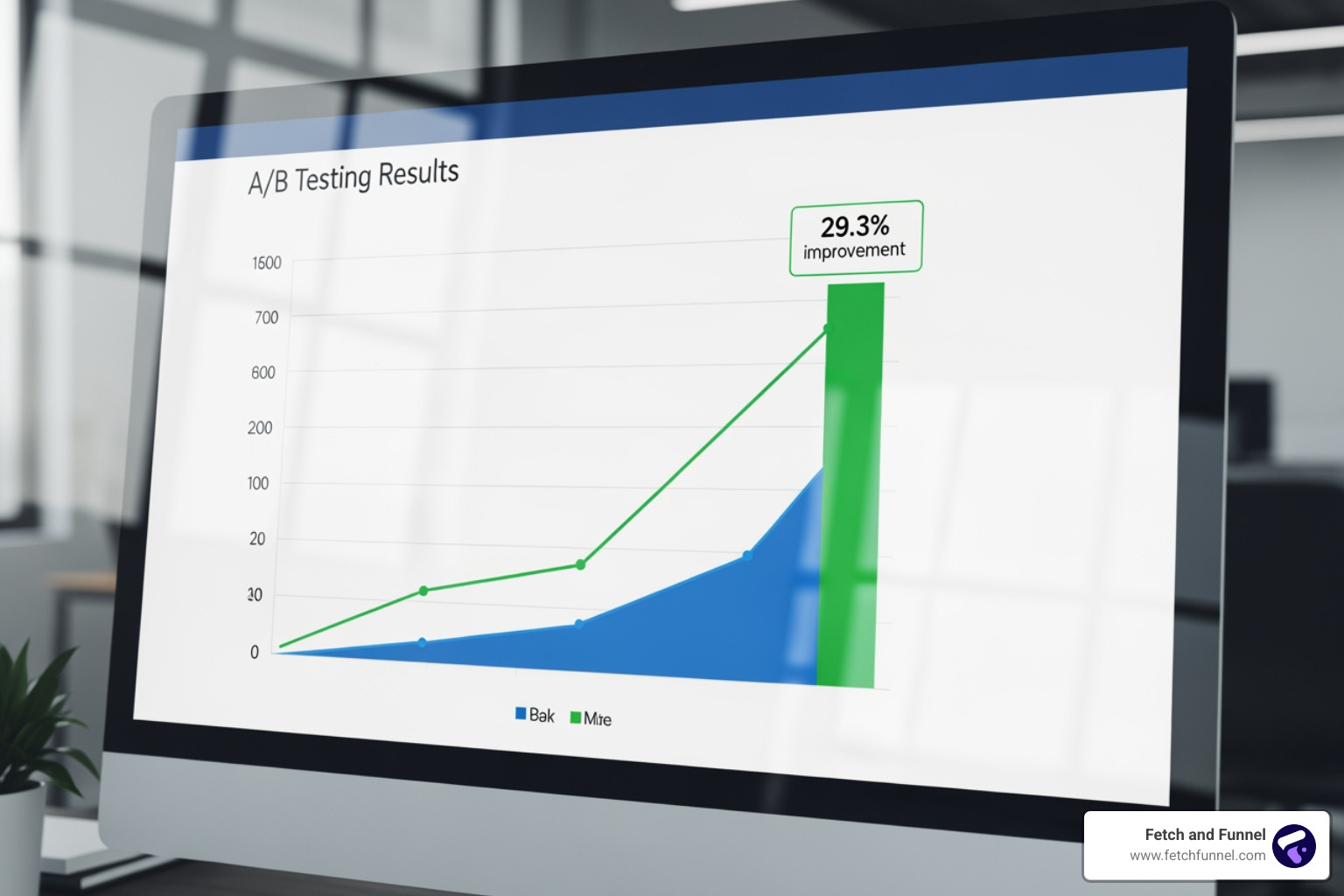
A measurable and actionable testing approach is the only way to know what truly works. Other performance agencies, such as KlientBoost, similarly advocate for aggressive A/B testing to lower CPAs. We’ve seen cases where a simple design tweak resulted in a 29.3% higher response rate than a competing version.
Optimizing Direct Response Creative Across Channels
Direct response isn’t limited to just one platform. It’s a philosophy that applies everywhere:
- Meta Advantage+ Shopping Campaigns (ASC): This is a game-changer for e-commerce. ASC uses AI to automate up to 150 creative combinations, finding the best-performing direct response creative for different audience segments. We recommend using 8-15 high-performing assets to let the machine learning optimize your ROAS.
- Video Ads: Your video should include all conversion info directly in the player. Don’t rely on the “description” or a banner. The brand name, the offer, and the CTA should be visible throughout the video.
- Email and SMS: These are your “warmest” channels. Use personalization and direct language. SMS, in particular, has much higher open rates than email, making it perfect for time-sensitive flash sales.
- Programmatic Direct Mail: Modern tech allows us to send a physical, personalized postcard to someone’s house within 12-24 hours of them abandoning their cart on your website. This bridges the gap between digital and physical with response rates often 10x higher than traditional mail.
Measuring Success and Avoiding Common Creative Pitfalls
The beauty of direct response is that the data doesn’t lie. If an ad isn’t converting, we don’t guess why—we look at the performance data. We track everything: Click-Through Rate (CTR), Cost Per Acquisition (CPA), and Lifetime Value (LTV).
To do this effectively, you need ad creative testing that uses unique tracking URLs, promo codes, or dedicated phone numbers. This ensures every dollar spent is attributed to a specific creative asset.
Common Mistakes to Avoid:
- Brandification: Making the ad too “vague” or “artistic” so the offer gets lost.
- Weak CTAs: Using generic buttons like “Learn More” when you really want them to “Shop the Sale.”
- Ignoring the “Fold”: Putting the most important information where users have to scroll to find it.
- Failing to Follow Up: Direct response gets the lead, but your nurture sequence keeps them.
Frequently Asked Questions about Direct Response Creative
What is the most important element of a direct response ad?
While everything matters, the offer is king. If your offer isn’t compelling (e.g., “Buy one, get one free” vs. “10% off”), no amount of great design or copy will save it. Your offer must solve a specific problem or fulfill a deep desire right now.
How long should direct response copy be?
There’s an old saying: “Copy should be as long as it needs to be to reach the floor.” For simple, low-cost products, short and punchy works best. For “considered purchases” (expensive or complex items), longer copy often outperforms short copy because it allows you to answer every objection and tell a complete sales story.
Can brand and direct response creative work together?
Absolutely. This is what we call a full-funnel strategy. Your brand ads “warm up” the audience and build trust, while your direct response ads move in for the conversion. This integrated approach is also championed by firms like AdQuadrant, who focus on scaling through holistic channel management. They are complementary forces that, when used together, create a sustainable scaling engine.
Conclusion
Mastering direct response creative is about more than just selling—it’s about connecting. It’s about finding the people who need your product, speaking to them in a language they understand, and giving them a clear, urgent reason to join your brand’s story.
At Fetch and Funnel, we specialize in this exact intersection of data and creativity. Based in Boston, MA, our team helps brands scale profitably by delivering high-converting creative and data-driven strategies that enhance customer experiences and drive massive ROI.
Ready to stop boring your audience and start driving results? Let’s build something that works. Explore our Ad Creative Agency services today and see how we can transform your performance marketing.