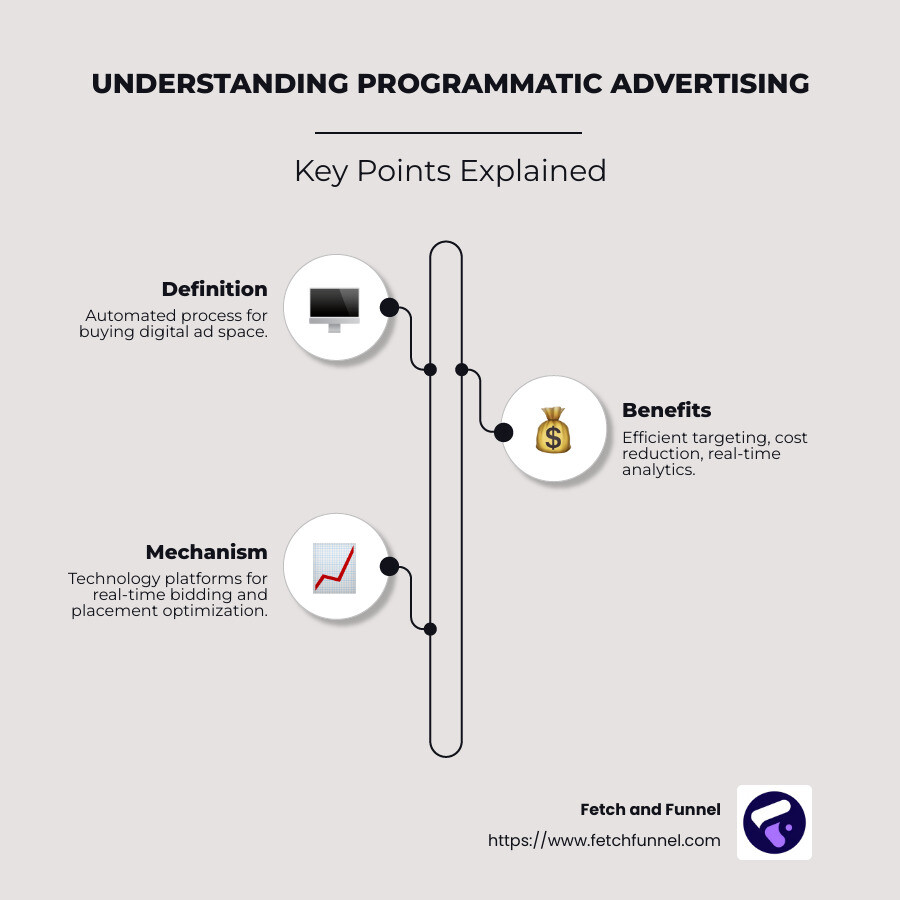
Programmatic advertising is redefining digital marketing by using automated technology to streamline the buying and selling of online ads. Imagine placing your ads in front of the right audience, on the right channels, without any manual intervention. This is the promise of programmatic advertising. Here are the key points:
- Definition: Programmatic advertising is an automated process for buying digital ad space.
- Benefits: It allows for efficient ad targeting, reduced costs, and real-time analytics.
- How it Works: Uses technology platforms to bid for ad space in real-time and optimize placement.
In the changing digital landscape, leveraging programmatic is essential for brands looking to optimize their advertising efforts and reach their desired audience more effectively.
I’m Samir ElKamouny, the founder of Fetch and Funnel, where we specialize in using the power of programmatic advertising to propel growth for e-commerce brands. With experience in paid media and conversion optimization, my focus is on providing data-driven strategies to maximize ROI.
What is Programmatic Advertising?
Key Components
Programmatic advertising is like a digital matchmaker, connecting advertisers with their ideal audience using the power of automation. It’s all about making ad buying smarter and more efficient. Let’s explore the key components that make this possible.
Automated Bidding and Real-Time Transactions
At the heart of programmatic advertising is automated bidding. This process allows advertisers to bid for ad space in real time, ensuring that their ads reach the right audience at the right moment. Imagine a busy auction house where bids are placed and accepted in milliseconds, all without human intervention. This speed and precision are what make programmatic advertising so powerful.
Ad Inventory: The Digital Marketplace
Ad inventory refers to the space available for advertisements on digital platforms. Think of it as the digital real estate where your ads can appear. Programmatic advertising taps into this vast inventory, giving advertisers access to a wide range of channels and formats, from display ads to video and beyond. This broad reach ensures that your message is seen by the most relevant audience.
Key Platforms: Sell-Side and Demand-Side
To understand programmatic advertising, know about the two main platforms involved:
Sell-Side Platform (SSP): This is where publishers (the ones with ad space) manage and sell their inventory. The SSP connects them to multiple ad exchanges, ensuring their space is filled efficiently.
Demand-Side Platform (DSP): This is the tool for advertisers. It helps them decide which impressions to buy and at what price. By analyzing data such as demographics and behavior, DSPs ensure that ads are shown to the right people.
Ad Exchanger: The Marketplace Hub
The ad exchanger acts like a digital marketplace where SSPs and DSPs interact. Here, bids are placed, and ad space is bought and sold. It’s a busy hub that ensures the seamless transaction of ad inventory between buyers and sellers.
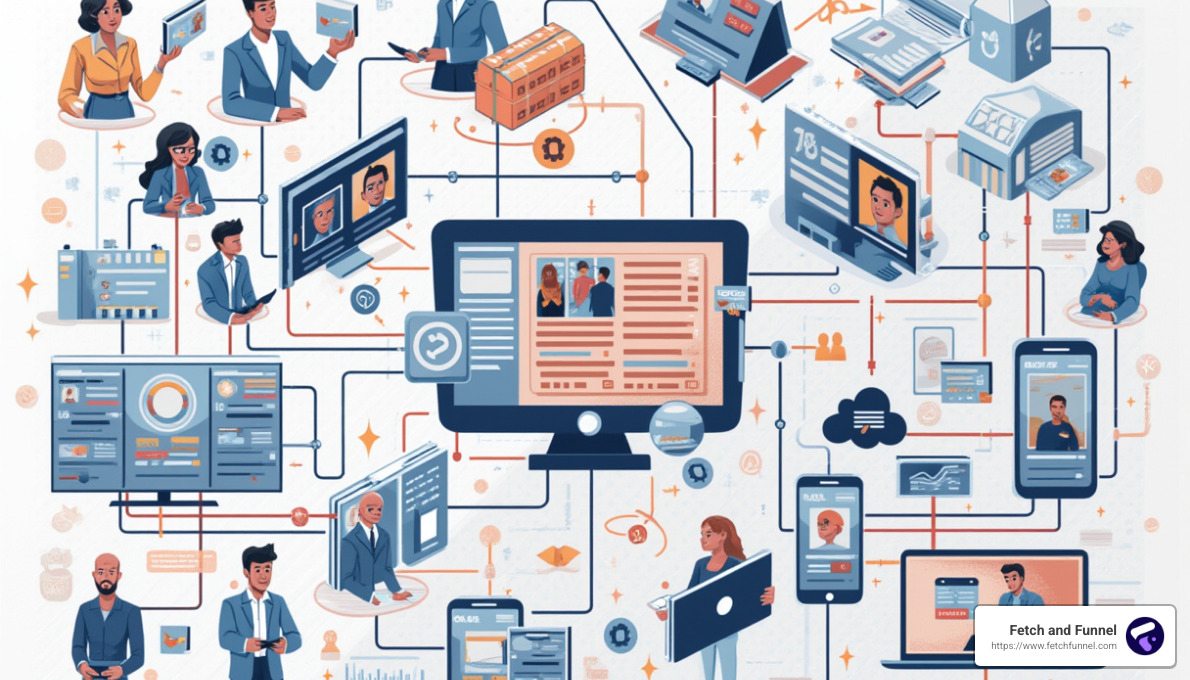
In programmatic advertising, these components work together to create a seamless and efficient process. By leveraging automated bidding, tapping into vast ad inventories, and utilizing sophisticated platforms, advertisers can reach their target audiences with precision and at scale.
Next, we’ll explore the different types of programmatic media buying, from real-time bidding to private marketplaces. Stay tuned to learn how these methods can lift your advertising strategy.
Types of Programmatic Media Buying
When it comes to programmatic advertising, understanding the different types of media buying is crucial. Each type offers unique advantages, and knowing which one to use can lift your advertising strategy. Let’s explore the three main types: Real-Time Bidding (RTB), Private Marketplace (PMP), and Programmatic Direct.
Real-Time Bidding (RTB)
Real-Time Bidding is the most common form of programmatic buying. It’s like an open auction where advertisers bid for ad space as it becomes available. This happens in real-time, meaning the entire process—from placing a bid to displaying the ad—occurs in milliseconds.
RTB is open to all advertisers, making it a highly competitive space. It’s also cost-effective, as you only pay for the impressions you win. This method is great for reaching a large audience quickly and efficiently.
Private Marketplace (PMP)
A Private Marketplace is a more exclusive environment. Here, publishers invite select advertisers to bid on their premium inventory. Think of it as a VIP auction where only a few are given access. This exclusivity often comes with higher pricing, but it also offers higher-quality ad placements.
PMPs are ideal for brands looking for specific, high-value audiences. They offer more control over where ads appear and often result in better brand safety and ad viewability.
Programmatic Direct
Programmatic Direct bypasses the auction process altogether. Instead, advertisers and publishers negotiate directly, agreeing on a fixed price for ad inventory. This method guarantees ad placement, providing advertisers with a set amount of impressions at a predetermined cost.
Programmatic Direct is perfect for advertisers who want certainty in their campaigns. It ensures that ads are delivered as planned, without the unpredictability of an auction. This method is often used for high-impact campaigns where brand safety and consistent reach are priorities.
In summary, each type of programmatic media buying offers distinct benefits:
- RTB for broad reach and cost efficiency.
- PMP for premium placements and brand safety.
- Programmatic Direct for guaranteed delivery and fixed pricing.
Understanding these types allows advertisers to choose the best strategy for their goals and budget. Next, we’ll dig into the benefits of programmatic advertising and how it can transform your marketing efforts.
Benefits of Programmatic Advertising
When it comes to programmatic advertising, the benefits are clear and impactful. Let’s explore the three key advantages: efficiency, transparency, and effectiveness.
Efficiency
Efficiency is one of the standout benefits of programmatic advertising. Traditional advertising methods require a lot of manual work—think requests for proposals, negotiations, and insertion orders. But with programmatic advertising, the process is streamlined.
Using Real-Time Bidding (RTB), advertisers can quickly buy and place ads, often within milliseconds. This automation saves time and resources, allowing marketers to focus on strategy rather than logistics. Plus, it means you can reach your audience faster, which is crucial in today’s digital world.
Transparency
Transparency in advertising is more important than ever. With programmatic advertising, you have a clear view of where your ads are being placed. Unlike traditional media buying, where ads are purchased in bulk, programmatic offers precise control over inventory and placement.
This transparency ensures that your ads appear in relevant environments that align with your brand values. It reduces the risk of your ads showing up in inappropriate or low-quality contexts. Knowing exactly where your ads will appear builds trust and confidence in your advertising strategy.
Effectiveness
Effectiveness is another major benefit of programmatic advertising. It allows for real-time measurement and optimization, ensuring that your campaigns are performing at their best. By analyzing data and adjusting strategies on the fly, you can maximize your return on investment.
Programmatic advertising also leverages advanced data insights and algorithms to target the right audience at the right time. This precision targeting means that your ads are more likely to reach interested consumers, increasing the chances of engagement and conversion.
Moreover, the ability to use first-party data allows advertisers to tailor messages to specific audience segments, further enhancing campaign effectiveness. This data-driven approach ensures that your advertising budget is spent wisely, delivering meaningful results.
In summary, programmatic advertising offers efficiency, transparency, and effectiveness. These benefits not only improve campaign performance but also provide a competitive edge in the changing digital landscape.
Next, we’ll explore how programmatic advertising works, including the data insights and algorithms that power this innovative approach.
How Programmatic Advertising Works
Programmatic Advertising is not just about automation; it’s about using data and technology to make smarter advertising decisions. Let’s break down the magic behind the scenes: data insights, algorithms, and targeting.
Data Insights
At the heart of programmatic advertising are rich data insights. These insights come from a variety of sources, such as website cookies, device IDs, and third-party data providers. They help advertisers understand user behavior, preferences, and demographics.
For example, if a user frequently searches for travel destinations, programmatic systems can identify this interest and serve relevant travel ads. This data-driven approach ensures that ads are not only reaching potential customers but also resonating with their interests.
Algorithms
Algorithms are the brains behind programmatic advertising. They analyze vast amounts of data to make real-time decisions about ad placements. These algorithms consider factors like user behavior, time of day, and device type to determine the best ad to show.
Imagine you’re browsing online for a new pair of shoes. An algorithm might notice your past interactions with shoe brands and decide to show you an ad for a sale on sneakers. This level of personalization is possible because algorithms are constantly learning and optimizing based on user interactions.
Targeting
Targeting in programmatic advertising is all about precision. By using data insights and algorithms, advertisers can target specific audience segments with pinpoint accuracy. This means ads are more likely to be relevant and engaging to the viewer.
There are several layers to targeting:
- Behavioral Targeting: Focuses on users’ past behavior, such as browsing history or purchase patterns.
- Demographic Targeting: Targets users based on age, gender, or income level.
- Contextual Targeting: Places ads in environments that are relevant to the content being consumed.
For instance, if a user is watching a cooking video, they might be served an ad for kitchen gadgets. This ensures that the ad is contextually relevant, increasing the likelihood of engagement.
In summary, programmatic advertising leverages data insights, sophisticated algorithms, and precise targeting to deliver ads that are not only efficient but also highly effective. This approach ensures that your advertising efforts are both strategic and impactful, reaching the right audience at the right moment.
Next, we’ll dive into some frequently asked questions about programmatic advertising, including examples and comparisons with other advertising platforms.
Frequently Asked Questions about Programmatic Advertising
What exactly is programmatic advertising?
Programmatic Advertising is a method of buying and selling ad space using automated technology. Unlike traditional methods, where deals are made manually, programmatic uses automated bidding to purchase ad impressions in real-time. This means advertisers can reach their target audience more efficiently and effectively.
Instead of negotiating placements on specific websites, programmatic advertising allows advertisers to bid on audiences across multiple platforms. This automation leads to better targeting, as ads are served to the right people at the right time based on data insights.
What is an example of programmatic advertising?
A great example of programmatic advertising in action is how companies like IHG (InterContinental Hotels Group) use it to deliver customized ads. When IHG wanted to reach potential travelers, they used programmatic advertising to create personalized ads that resonated with individual users. By analyzing data such as browsing history and travel interests, IHG was able to serve ads that were more likely to engage their audience. This strategy not only improved ad performance but also improved the user experience by showing relevant content.
Is programmatic the same as Google Ads?
While programmatic advertising and Google Ads both involve digital advertising, they are not the same. Google Ads is a platform where advertisers can place ads on Google’s network. It’s excellent for targeting users searching for specific keywords or using Google’s services.
Programmatic advertising, on the other hand, encompasses a broader scope. It involves multiple platforms and allows advertisers to buy ad space across a vast network of websites, apps, and even TV channels. This broader reach is made possible through demand-side platforms (DSPs) that bid on ad spaces in real-time.
In summary, while Google Ads focuses on the Google ecosystem, programmatic advertising offers a more extensive and automated approach, reaching audiences wherever they are online.
Conclusion
At Fetch and Funnel, we believe in the power of Programmatic Advertising to transform digital marketing efforts. Our approach revolves around delivering high-converting creative and leveraging data-driven strategies to maximize our clients’ return on investment.
By focusing on creative strategies, we ensure that our clients’ ads not only reach the right audience but also resonate with them. This is crucial because the right message at the right time can significantly improve user engagement and conversion rates. Our creative team is dedicated to crafting compelling ads that capture attention and drive action.
Moreover, our expertise in data-driven strategies allows us to use real-time insights to optimize campaigns continuously. We analyze user behavior, preferences, and interactions to refine targeting and messaging. This ensures that every advertising dollar is spent wisely, reaching potential customers who are most likely to convert.
Our commitment to efficiency and effectiveness is what sets us apart. We aim to provide our clients with the tools and strategies they need to scale profitably. Whether you’re a small business or a large corporation, our custom programmatic solutions can help you achieve your marketing goals.
Programmatic Advertising with Fetch and Funnel is not just about placing ads; it’s about creating meaningful connections with your audience. Through our innovative strategies, we help brands not only reach their target audience but also engage them in a way that fosters loyalty and drives growth. We are here to guide you through the complexities of programmatic advertising and ensure you reap its full benefits.
As we continue to innovate and adapt to the ever-changing digital landscape, we invite you to partner with us on your journey to marketing success. Together, we can open up the full potential of programmatic advertising and take your brand to new heights.