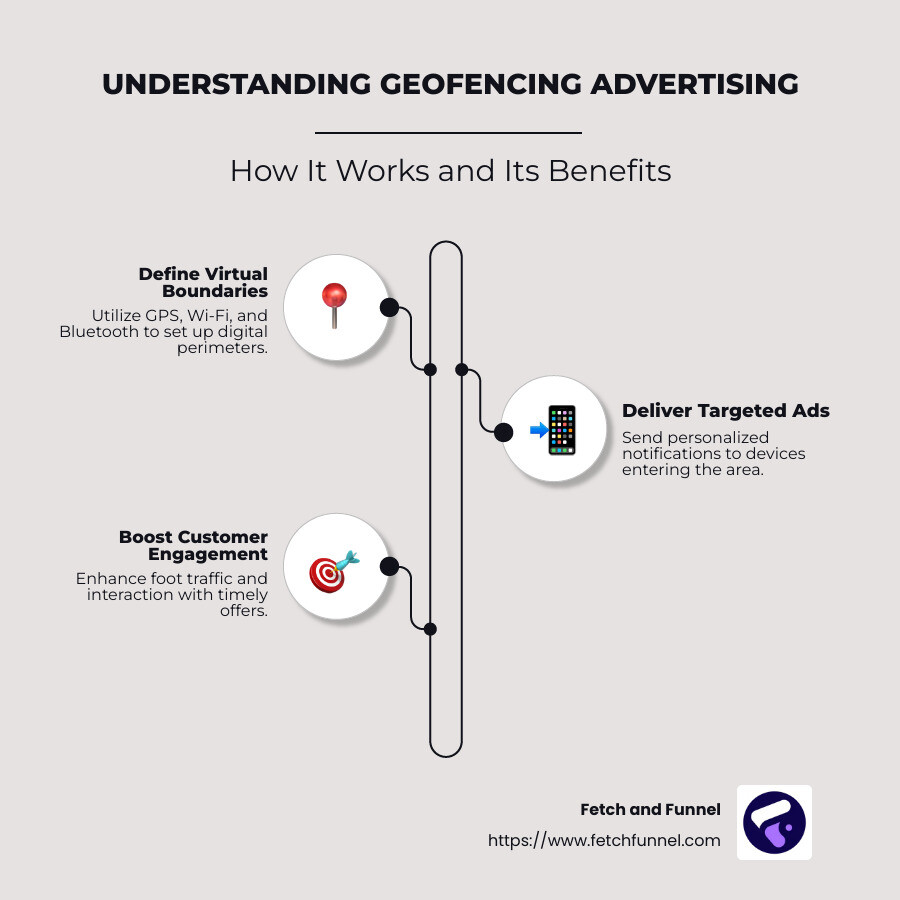
What is geofencing advertising? In simple terms, it’s a location-based marketing strategy that uses technologies like GPS, Wi-Fi, and Bluetooth to create virtual boundaries around a geographical area. When a mobile device enters this defined area, targeted ads or notifications are sent directly to the user’s phone. This method allows businesses to reach potential customers nearby with personalized, relevant messages directly to their mobile devices.
Geofencing advertising is a powerful tool for brands aiming to boost foot traffic and enhance engagement by tapping into the mobile nature of today’s consumers. By setting up virtual perimeters around areas such as competitors’ locations or major public venues, businesses can drive more traffic to their stores, optimize their advertising investment, and ultimately increase sales.
I am Samir ElKamouny, the founder of Fetch and Funnel, and an experienced expert in digital marketing strategies like what is geofencing advertising. With a passion for bringing innovative approaches to the table, I have helped numerous brands leverage geofencing to improve their marketing efforts. Join me as we explore this exciting tactic further.
What is geofencing advertising terms explained:
What is Geofencing Advertising?
Geofencing advertising is a cutting-edge marketing strategy that uses virtual boundaries to target potential customers based on their location. Imagine drawing an invisible line around a specific area—like a store, a competitor’s location, or a busy event venue. When someone with a mobile device crosses this line, they receive targeted ads or notifications on their phone.
This technique is made possible through technologies like GPS, Wi-Fi, and Bluetooth. These tools enable marketers to define precise geographical zones where their ads will be most effective.
How It Works
Virtual Boundaries: These are the invisible lines that define a geofenced area. They can be drawn around any location of interest, from a small store to an entire city block.
Mobile Devices: As people move around with their smartphones, these devices act as guides. When they enter a geofenced area, the technology kicks in to deliver ads or notifications directly to them.
Why It Matters
Geofencing advertising is a game-changer for businesses. It allows for precise targeting, ensuring that marketing messages reach the right people at the right time. This approach not only improves the efficiency of advertising campaigns but also improves customer engagement by delivering highly relevant content.
Consider this: A local coffee shop can set up a geofence around a nearby office building. When employees step out for a break, they receive a notification about a special discount at the coffee shop. This kind of targeted marketing can significantly increase foot traffic and boost sales.
In today’s world, capturing the attention of potential customers when they are most likely to engage is crucial. Geofencing advertising provides businesses with the tools to do just that, making it an invaluable component of modern marketing strategies.
How Geofencing Advertising Works
So, how does geofencing advertising actually work? It’s all about using technology to reach potential customers in specific locations. Let’s break it down.
The Role of GPS and Wi-Fi
GPS and Wi-Fi are the backbone of geofencing advertising. They help determine a user’s precise location. GPS is great for outdoor areas, while Wi-Fi is often more accurate indoors.
When a mobile device enters a geofenced area, these technologies detect the location change. This triggers the delivery of ads or notifications.
Imagine you’re walking past a store. Your phone might buzz with an alert: “20% off on all items today!” That’s geofencing in action.
Notifications and Targeted Ads
Notifications are a key part of geofencing advertising. They can be as simple as a text message or a more interactive push notification.
These notifications are designed to grab attention. They often include offers, discounts, or information relevant to the user’s location.
Targeted ads are another tool in the geofencing toolkit. These ads are displayed on apps or websites when users are within the geofenced area. They’re custom to the user’s interests and location, making them more effective.
A Real-World Example
Picture this: Burger King uses geofencing to target McDonald’s customers. When someone enters a McDonald’s parking lot, their phone buzzes with a Burger King ad offering a discount if they switch restaurants. It’s a clever use of geofencing to lure customers away from competitors.
Why It Works
Geofencing advertising is powerful because it reaches people when they’re most likely to act. By sending timely and relevant messages, businesses can drive foot traffic, increase sales, and boost brand awareness.
With the ability to target specific locations and tailor messages to individual preferences, geofencing advertising is a must-have tool for modern marketers.
In the next section, we’ll dive into the benefits of geofencing advertising and why it’s becoming an essential part of digital marketing strategies.
Benefits of Geofencing Advertising
Geofencing advertising offers a range of benefits that can transform how businesses connect with their customers. Let’s explore some key advantages: precise targeting, personalization, and customer engagement.
Precise Targeting
One of the standout benefits of geofencing advertising is its ability to precisely target potential customers. Unlike traditional advertising, which casts a wide net, geofencing zeroes in on specific locations. This means businesses can focus their efforts on areas with the most potential customers.
For example, a local coffee shop can set up a geofence around a nearby college campus. When students enter the area, they receive a notification about a special student discount. This targeted approach ensures that marketing efforts are not wasted on people unlikely to visit the shop.
Personalization
Geofencing also allows for personalized marketing experiences. By gathering data about customer preferences and behaviors, businesses can tailor their messages to resonate more with individuals.
Imagine a scenario where a fashion retailer notices that a particular product is popular among young adults. They can then customize their advertising to highlight that product when people from that age group enter the geofenced area. This level of personalization makes customers feel understood and valued.
Customer Engagement
Engaging with customers in real-time is another powerful aspect of geofencing advertising. By sending timely notifications, businesses can capture attention and encourage immediate action.
Consider this: A restaurant uses geofencing to send a lunchtime special offer to nearby office workers. The notification includes a limited-time discount, prompting recipients to visit during their lunch break. This strategy not only drives foot traffic but also increases the likelihood of repeat visits.
A Quick Recap
Geofencing advertising is all about reaching the right people at the right time with the right message. Its ability to target specific locations, personalize experiences, and engage customers in real-time makes it an invaluable tool for modern marketers.
In the next section, we’ll explore the different types of geofencing advertising and how they can be used effectively in various scenarios.
Types of Geofencing Advertising
Geofencing advertising isn’t a one-size-fits-all approach. There are several ways businesses can use this technology to reach their audience effectively. Let’s explore some popular types: push notifications, location-based offers, and proximity targeting.
Push Notifications
Push notifications are a powerful tool in geofencing advertising. They allow businesses to send messages directly to a user’s mobile device when they enter a geofenced area. This can be anything from a friendly welcome message to a special offer.
For instance, a retail store can set up a geofence around its location. When potential customers walk by, they receive a notification about a flash sale happening inside. This immediate interaction can entice people to visit the store, increasing foot traffic and potential sales.
Location-Based Offers
Location-based offers take personalization to the next level. By using geofencing, businesses can deliver special promotions or discounts to customers based on their current location.
Imagine you’re near your favorite coffee shop, and suddenly, you receive an offer for a free pastry with your next purchase. This is location-based advertising at work. It uses the power of proximity to create a sense of urgency and relevance, encouraging customers to take advantage of the offer while they are nearby.
Proximity Targeting
Proximity targeting is a strategic approach where businesses set up geofences around specific areas to attract potential customers by offering them something appealing.
For example, a restaurant might set up geofences around popular shopping areas and send notifications about special menu items or discounts to people in those locations. This tactic can drive increased foot traffic and engagement, showcasing how effective proximity targeting can be.
These types of geofencing advertising demonstrate the versatility and potential of this technology. By leveraging push notifications, location-based offers, and proximity targeting, businesses can craft highly targeted campaigns that resonate with their audience and drive real results.
In the next section, we’ll explore real-world examples of geofencing advertising to see these strategies in action.
Real-World Examples of Geofencing Advertising
Geofencing advertising has proven its worth across various industries, from retail to healthcare. Let’s explore some standout examples that highlight how different businesses have successfully used this technology.
Local Coffee Shop
A local coffee shop used geofencing to send promotional notifications to potential customers who were nearby. By setting up a geofence around their shop and nearby areas, they were able to send timely offers for morning coffee or lunch deals, effectively increasing their foot traffic during peak hours.
Health Clinic
A health clinic implemented geofencing to improve patient communications and services. They set up geofences around their clinics and sent health tips and reminders for appointments to patients’ mobile devices as they entered the area. This not only improved patient engagement but also helped in managing patient visits more efficiently.
Retail Chain
A large retail chain used geofencing to enhance customer experience and increase sales. By setting up geofences around their stores, they sent personalized offers and discounts to customers who entered these zones. This strategy helped in driving more in-store traffic and boosted promotional campaign effectiveness.
These examples illustrate the diverse applications of geofencing advertising. Whether it’s enhancing customer service, increasing sales, or improving operational efficiency, geofencing offers a dynamic way to achieve business goals.
Frequently Asked Questions about Geofencing Advertising
What is an example of geofencing advertising?
Starbucks is a standout example of geofencing advertising in action. Using their mobile app, Starbucks sends push notifications to customers who are near their stores. These notifications often contain personalized offers or promotions, encouraging app users to stop by for a coffee. This approach not only drives foot traffic but also improves customer engagement by making the shopping experience feel more personal and timely.
Dunkin’ also leverages geofencing to boost sales and engagement. When customers with the Dunkin’ app enter a geofenced area near a Dunkin’ location, they might receive a notification about special deals or new menu items. This strategy helps keep Dunkin’ top-of-mind for coffee drinkers on the go.
Uber uses geofencing to improve rider experience and service efficiency. For example, Uber sets up geofences around airports and large events to manage driver availability and reduce wait times for passengers. When a user opens the Uber app within these geofenced areas, they receive notifications about ride availability and estimated wait times, ensuring a smoother experience.
What is the purpose of geofencing?
The primary purpose of geofencing is to serve as a marketing tactic that improves customer engagement. By creating virtual boundaries around specific locations, businesses can send targeted ads or notifications to potential customers who enter these areas. This allows for precise targeting and personalization, ensuring that marketing messages are relevant and timely. Geofencing helps businesses reach their audience at the right place and moment, increasing the likelihood of conversion and fostering a stronger connection between the brand and its customers.
Is geofencing marketing legal?
Geofencing marketing is generally legal, but it raises certain privacy concerns that businesses must address. The use of geofence technology involves collecting location data from mobile devices, which can be sensitive information. To comply with geofence technology laws, businesses must ensure they have user consent before collecting this data. Transparency is key; companies should inform users about how their location data will be used and provide options to opt out. By adhering to these privacy standards, businesses can use geofencing effectively while respecting user privacy.
Conclusion
At Fetch and Funnel, we understand that digital marketing is more than just reaching a wide audience—it’s about creating meaningful connections with your customers. Geofencing advertising is a powerful tool in this endeavor, offering a way to engage with your audience at the right time and place.
Our approach to digital marketing focuses on enhancing customer experiences through precise targeting and personalization. By leveraging geofencing, we help brands deliver messages that resonate, driving foot traffic and increasing customer loyalty.
Whether you’re looking to boost sales or improve brand awareness, geofencing can provide the edge you need. By setting up virtual boundaries around key locations, you can ensure your marketing efforts are both relevant and timely. This not only improves conversion rates but also strengthens the relationship between your brand and your customers.
We invite you to explore how Fetch and Funnel can help you implement geofencing into your marketing strategy. Our expertise in full funnel advertising, creative strategy, and conversion rate optimization ensures that your campaigns are not only effective but also cost-efficient.
Ready to take your digital marketing to the next level? Find our geofencing services and see how we can help you connect with your ideal audience today.