

What is Geofencing in Digital Marketing — A Simple Explanation
What is geofencing in digital marketing? Geofencing is a digital marketing technique that creates virtual boundaries around specific areas using GPS, Bluetooth, Wi-Fi, or RFID technology. When a user’s smartphone enters this predefined zone, it triggers targeted ads, notifications, or promotions.
Here’s the quick breakdown:
- Virtual boundaries are set up around physical locations (stores, events, competitor businesses).
- Smartphones trigger ads when they enter or exit these boundaries.
- Notifications or promotions are delivered instantly to encourage nearby customers to take action.
Geofencing isn’t new—it was initially used to track livestock—but it’s revolutionizing digital marketing by allowing businesses to deliver highly personalized, real-time messaging based on a customer’s location. Whether you’re aiming to increase foot traffic, improve local engagement, or steal customers from competitors, geofencing might be your new best friend.
I’m Samir ElKamouny, founder of FetchFunnel.com, a digital marketing agency that has helped Fortune 500 companies leverage cutting-edge strategies, including answering precisely “what is geofencing in digital marketing” to drive growth. Let’s dive deeper into how it can boost your business.

Important what is geofencing in digital marketing terms:
– geofencing advertising platform
– geofencing in location-based marketing
– geofencing mobile ads
What is Geofencing in Digital Marketing?
Geofencing in digital marketing is essentially creating a virtual “fence” around a specific geographic area. Imagine drawing an invisible circle around your store, event, or even your competitor’s location. When someone carrying a smartphone steps into this area, it can automatically trigger targeted ads, special promotions, or timely notifications right on their device.
At its heart, what is geofencing in digital marketing boils down to delivering precise, relevant, and timely experiences to potential customers, bridging the gap between the physical and digital worlds.
The magic behind geofencing is rooted in several clever technologies. GPS (Global Positioning System) helps pinpoint devices’ outdoor locations using satellites. RFID (Radio Frequency Identification) uses tiny tags and radio waves to track items precisely, often within stores or warehouses. Wi-Fi networks are excellent for indoor geolocation, especially in malls or large buildings. Lastly, Bluetooth—particularly Bluetooth guides or guides—enable incredibly accurate indoor tracking, sometimes pinpointing you down to the very aisle you’re wandering in a store. (Yes, spooky—but also seriously handy!)
According to location-based marketing experts, geofencing is “perhaps one of the most effective digital marketing strategies to actually bring customers through the door of a physical location.” Why? Because you’re reaching customers exactly when they’re most likely to convert—right as they’re walking by your door or browsing your aisles.
And here’s even better news: geofencing is compatible with a whopping 92% of smartphones. So the chances are excellent that your carefully crafted message will reach nearly all of your target audience.
Unlike traditional advertising—which tends to cast a wide net and hope for the best—geofencing lets you send a precise message to someone nearby. These messages can come in various forms, such as push notifications, SMS texts, in-app alerts, display ads in mobile browsers, or even targeted social media ads.
This real-time interaction capability makes geofencing especially powerful for businesses with physical locations or those who want to attract customers in specific areas.
How Geofencing Technology Works
So, let’s peek behind the curtain and explore the nuts and bolts of what is geofencing in digital marketing.
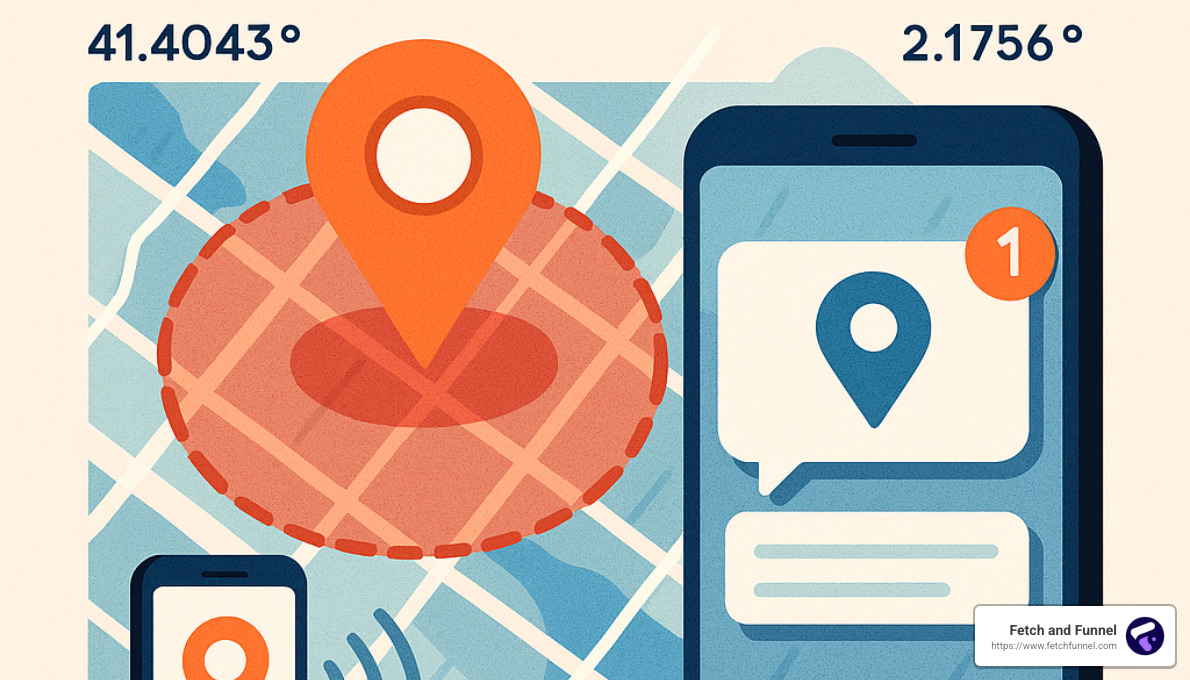
First, marketers define the virtual boundaries of their “fence” using GPS coordinates—usually via a dedicated geofencing advertising platform or mapping software. This can range from a tiny radius of just a few dozen feet (think: capturing foot traffic near your coffee shop) to a few miles if you’re hosting a larger event.
Next, it’s all about user consent. To stay on the right side of privacy laws (and good manners!), users typically need to opt-in to location tracking. This usually happens when they install your app or agree to location permissions.
Once permission is granted, the system monitors device location through various signals, including GPS, Wi-Fi networks, cellular data, or Bluetooth. Geofencing systems continuously watch for specific “trigger events”: when someone enters, exits, or dwells within the defined area.
The minute one of these triggers occurs—say, a customer enters your store’s geofenced zone—the system immediately acts. It could send out a welcoming push notification, offer a time-sensitive coupon, or log the data for later marketing campaigns.
As one geofencing expert put it simply, “Once the geofence is set up, the app can instantly spring into action whenever a customer’s device crosses the invisible boundary, initiating a message or sequence of messages.”
While geofencing is powerful, it’s not without its quirks. GPS signals, for example, struggle indoors or in heavily obstructed urban areas. That’s why sophisticated marketers use multiple technologies—combining GPS outdoors with Wi-Fi and Bluetooth indoors for maximum accuracy.
Battery life is another consideration. Constant location tracking can quickly drain smartphone batteries, so most geofencing apps use smart algorithms to minimize battery use without sacrificing effectiveness.
Yet despite these small hiccups, technology keeps improving, making geofencing accessible, affordable, and effective for businesses of every size.
Geofencing vs. Other Location-Based Marketing Techniques
When diving into what is geofencing in digital marketing, you might stumble upon several similar-sounding terms. Let’s clear up the confusion and see how geofencing stacks up against other location-based marketing techniques.
First, let’s talk geotargeting. Geotargeting is often mixed up with geofencing, but they’re quite different. Geotargeting sends ads based on broader geographic regions (like cities, states, or countries), often combined with user demographics or behaviors. Geofencing, on the other hand, triggers actions when a user crosses a specific virtual boundary in real-time. Geotargeting might say, “Hey, Boston residents—check this out!” Geofencing says, “Hey, you’re right outside our Boston store! Come get your discount!”
Next up: geolocation. Geolocation is about identifying exactly where a user is right now, often with precise latitude and longitude coordinates. Geofencing uses this geolocation data to trigger an action when users enter or leave a predefined area.
Then we have hyperlocal targeting. Think of it as geofencing’s extremely precise cousin. Standard geofencing might target an entire mall; hyperlocal targeting zooms in even closer, maybe just to that shoe aisle in a department store. As one location-based marketing pro said, “Hyperlocal geofencing allows marketers to pinpoint customers literally aisle-by-aisle—it’s incredibly precise.”
Finally, there’s proximity marketing. This approach usually relies on short-range Bluetooth guides (around 100 feet or less). Geofencing, in contrast, tends to use GPS and can cover much larger areas—perfect if you’re promoting events or storefronts at a wider radius.
Each method has its strengths, and none is “better” than the others. At Fetch and Funnel, we typically recommend an integrated approach, mixing multiple location-based strategies to maximize your marketing’s effectiveness. To explore this further, check out our guide on Geofencing in Location-Based Marketing.
The best choice depends on your business goals, target audience, and the locations you’re hoping to engage. Understanding these subtle differences will help you pick the right tools to connect meaningfully with your customers.
Benefits of Geofencing Marketing for Businesses
Geofencing isn’t just a fancy tech buzzword—it’s a powerful tool that can deliver real, measurable benefits for your business. If you’re wondering what is geofencing in digital marketing and whether it’s worth your time, let me show you exactly how it can help your business thrive.
One of the most exciting advantages of geofencing is highly targeted advertising. Instead of sending your message to everyone, everywhere, geofencing lets you zero in on consumers who are already physically close to your business. Imagine being able to say, “Hey, we’re right down the block, and we’ve got exactly what you’re looking for.” That’s precisely what geofencing lets you do.
Because you’re sending relevant messages at just the right moment, you’ll see increased engagement rates compared to traditional ads. In fact, location-based notifications often see click-through rates up to twice as high as standard mobile advertisements. After all, timing is everything—catching customers right when they’re nearby and ready to take action is a game-changer.
Geofencing also opens the door to improved data collection. Each time a customer interacts with your geofenced promotion, you’ll gain valuable insights about their behavior—like how often they visit, how long they stay, and what types of offers they respond to most. This data helps you build detailed customer profiles and continually refine your marketing approach.
Another powerful benefit of geofencing is the competitive edge it provides. Known as “geoconquesting,” you can use geofencing to target customers who are visiting your competitors’ locations. Imagine someone browsing your competitor’s store suddenly receiving an enticing deal to visit your location instead. Sneaky? Maybe a little—but definitely effective.
And if you’re worried about your marketing budget, here’s good news—geofencing delivers impressive cost efficiency. By putting your advertising dollars toward prospects already near your business, you’re not wasting money on audiences unlikely to visit. This means your marketing spend goes further, delivering a higher return on investment (ROI).
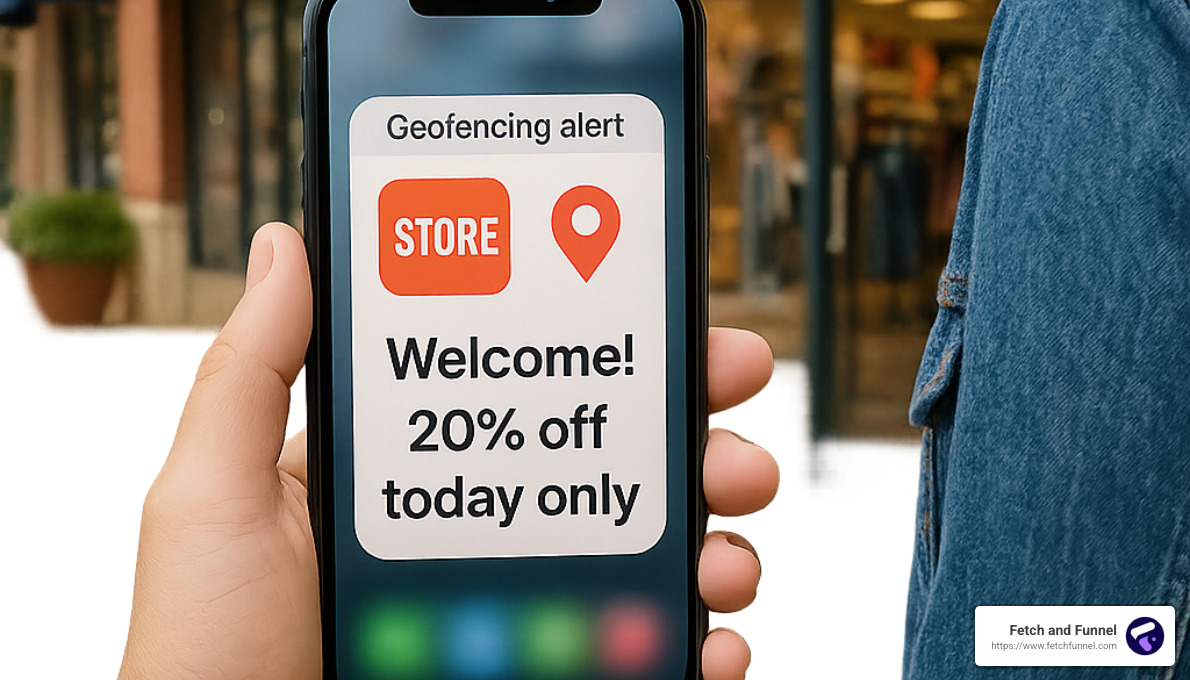
Geofencing also creates real-time marketing opportunities, allowing you to run timely promotions like flash sales or special events. These instant, location-specific offers align perfectly with customers’ immediate desires, driving quick action and in-store visits.
Another great aspect of geofencing is the seamless online-to-offline experience it enables. It bridges digital marketing with physical store visits, creating a smooth customer journey. Your customers experience your brand consistently—whether they’re browsing online or stepping through your door.
As one marketing pro puts it, “Geofencing marketing is a powerful tool that allows marketing teams to deliver their brand’s messages to the right customers at the right times.”
Enhancing Customer Experience Through Personalization
Geofencing isn’t just effective because it’s timely—it’s also deeply personal. With thoughtful execution, geofencing can build genuine connections between your business and your customers.
One of the most powerful ways geofencing improves customer experience is through contextual relevance. You can personalize messages based on a customer’s exact situation. Are they browsing leisurely or passing by in a hurry? Is it early morning or late afternoon? Are they a first-timer or a loyal regular? Geofencing allows you to deliver messages that feel relevant and thoughtful, rather than intrusive.
With geofencing, you can also send highly effective timely offers. For example, imagine you’re running a local cafe. You notice someone walking nearby during their usual coffee break and send them a quick mobile coupon for 20% off their favorite drink. Perfect timing—they can’t resist!
Additionally, geofencing lets you craft location-specific messaging. If you’re a department store, you can tailor your promotions based on which entrance a customer uses, guiding them directly to relevant departments with special offers. This thoughtful approach makes your customers feel understood and valued.
Using geofencing strategically also significantly improves the overall customer journey. You can engage customers the moment they enter your vicinity, guide them through your store, and even follow up with a friendly “Thanks for visiting!” offer when they leave. Around 71% of consumers say they prefer personalized ads like these, proving that relevant messaging truly resonates.
“When implemented properly,” says one digital marketer, “a geofencing strategy can offer a unique user experience that makes a lasting impression.”
At Fetch and Funnel, we’ve seen How Does Geofencing Advertising Work? to deliver personalized experiences that not only boost immediate sales but also build long-lasting customer loyalty.
Driving Foot Traffic and Increasing Sales
One of the biggest reasons brands accept geofencing is its ability to directly increase foot traffic and sales. After all, having customers walk through your front door is the ultimate marketing victory.
Local promotions become dramatically more effective with geofencing because customers receive custom messages exactly when they’re nearby and ready to act. Imagine you’re running a restaurant: sending a notification for a lunch special precisely when people in the area are getting hungry is hugely effective.
A well-timed push notification can turn browsers into buyers almost instantly. A powerful statistic proves this: “Over 50% of people visited a retailer after receiving a location-specific message.” When you deliver highly relevant offers at the right moment, people take notice—and take action.
Geofencing also ensures your special offers carry a sense of urgency—like “Get 20% off if you visit within the next hour.” This urgency motivates customers to act immediately, significantly boosting conversion rates.
Mobile coupons triggered by geofencing are another star performer. Customers love the convenience of having the right offer appear at just the right time, leading to much higher redemption rates compared to standard coupons.
Geofencing doesn’t just promise results—it lets you measure them clearly. You can track exactly how many people visit your store after receiving your promotions, making ROI measurement straightforward. Many businesses find it easier to justify their ad budgets when they can directly connect marketing spend with increased foot traffic and sales.
Major brands have proven the effectiveness of geofencing through spectacular results. Taco Bell’s geofencing campaign alone boosted annual profits by 6%, generating roughly $600 million in additional revenue. Similarly, American Eagle tripled their in-store sales after using geofencing advertising. Now, that’s a strategy worth noticing.
Data Collection and Analytics Opportunities
Geofencing doesn’t just drive sales—it also provides incredible insights about your customers. If you’re curious about how customers behave in and around your venue, geofencing is your new best friend.
By implementing geofencing, you can track key metrics like dwell time (how long customers stay), visit frequency (how often they return), and even how customers move through your store. This detailed information helps you optimize your retail space, staffing levels, and future marketing campaigns.
Want to get ahead of the competition? Geofencing can help with that, too. By placing virtual boundaries around competitor locations, you gain valuable competitive intelligence. You can see how customers behave at competitor stores, then craft smart strategies to pull those customers toward your own business.
Geofencing also makes audience segmentation easier than ever. With detailed location data, you can quickly identify distinct customer groups, then tailor your messaging to each segment’s preferences and behaviors. This targeted approach boosts conversions and customer satisfaction.
Another great aspect is the opportunity for continual campaign optimization. Geofencing analytics help you pinpoint which locations perform best, what times of day are most effective, and which types of promotions resonate most with your audience. You’re no longer guessing—you’re optimizing based on real-world data.
Finally, geofencing lets you implement sophisticated attribution modeling. You can actually track which digital ads lead to real-world store visits, giving you clear visibility into your entire marketing funnel. Understanding this customer journey helps you invest in the right marketing channels, maximizing your overall ROI.
A geofencing expert sums it up nicely: “Geofencing not only drives location-based promotions but also offers insights into in-store behaviors (like dwell time and visit frequency) that can enrich local analytics.”
At Fetch and Funnel, we leverage these analytics through our Geofencing Ad Targeting services, helping clients not just execute campaigns, but continually refine their strategies based on real data and customer insights.
How to Implement Geofencing in Your Marketing Strategy
Geofencing might sound high-tech and complicated, but don’t worry—it’s easier to implement than you might think! Understanding what is geofencing in digital marketing means seeing exactly how you can put it to work for your business. Let’s break down the practical steps you’ll need to take to smoothly integrate geofencing into your broader marketing strategy.

To start, you’ll want to focus on clear campaign planning. Before diving in, think carefully about your goals. Are you looking to get more customers through your doors? Boost sales of a specific product? Or maybe even win over your competitors’ customers? Having clear goals is key to choosing the best geofencing approach.
Next, do a bit of audience research. Understand exactly who you’re looking to attract within your geofenced area. Ask yourself questions like: What do your ideal customers care about? What offers will grab their attention? What’s their daily routine like? These details will help you craft relevant, irresistible messages.
Now, let’s talk about boundary selection. Picking the right size and location for your geofence can make or break your campaign. The sweet spot is usually within a 4-5 minute travel radius from your business—close enough to encourage immediate action, without overwhelming people outside your immediate area. Consider high-traffic locations, competitor spots (for conquesting), relevant events, or places your ideal customers often visit.
When it comes to message creation, aim for something short, sharp, and compelling. Your messages should clearly offer immediate value (think discounts or limited-time deals), have a sense of urgency (“today only!”), and always include a strong call-to-action.
You’ll also need to make important choices around platform selection. You have several options here, from mobile advertising platforms like Google Ads and Facebook Ads to custom-built apps or partnering with specialized agencies like ourselves at Fetch and Funnel. Each option has strengths, so pick one that matches your specific goals, budget, and tech comfort level.
Don’t skip the testing phase—it’s crucial! Do a quick, smaller-scale test run before launching your campaign broadly to spot any glitches or weak points early. Once you’re up and running, ongoing optimization based on performance data will help refine your strategies, tweak boundaries, improve messaging, and boost your return on investment.
And please, don’t forget about privacy compliance. Respecting your customers’ privacy isn’t just good manners—it’s required by various regulations like GDPR and CCPA. This means always gaining proper consent, being transparent about your data policies, and providing clear options for users to opt-out.
“Geofencing marketing is about delivering location-based messages right when potential customers are most likely to take action,” explains a digital marketing specialist. Following these practical steps will make sure your geofencing campaign feels helpful, timely, and never intrusive.
Setting Up Your First Geofencing Campaign
Setting up your very first geofencing campaign might feel a bit intimidating—but fear not! We’ll walk you through each step, keeping it simple, clear, and actionable.
First things first, decide on your geofence radius. A cafe or boutique might stick to around a quarter-mile radius (that’s roughly a five-minute walk, perfect for foot traffic). Businesses that mostly attract drivers—like car dealerships or large retailers—might consider a one to five-mile radius, covering roughly a 5-10 minute drive. Hosting or sponsoring a special event? Keep the geofence tightly focused right around the event venue and immediate surroundings.
Next, carefully pick your strategic locations. Your own business location is a no-brainer, but consider setting geofences around nearby complementary businesses, local events, or high-traffic areas your ideal customers frequent. If you’re feeling particularly bold (and we like bold moves!), you can also set boundaries around your competitors’ locations to run “geoconquesting” campaigns.
Speaking of competitor targeting, approach it wisely. Always keep your messaging positive, avoid negative comparisons, and double-check that your offer is strong enough to sway customers your way. Remember: the goal isn’t to bash competitors but to clearly and positively highlight your own value.
Then, make your platform selection. You might go with Google Ads or Meta’s built-in geofencing tools, develop a custom mobile app, or partner with a specialized agency (like Fetch and Funnel!) to help manage your campaign. Whatever route you choose, ensure it’s a good fit for your technical comfort level and marketing goals.
Finally, set clear campaign goals and KPIs (key performance indicators). Track metrics like increased foot traffic, sales uplift, coupon redemptions, or customer engagement. For more practical details, you can check out our complete guide on How to Set Up Geofencing Marketing to make your setup process seamless.
As one mobile marketing expert says, “Geofencing brings mobile marketing to a whole new level, helping businesses grab nearby customers’ attention exactly when it counts most.”
Best Practices for What is Geofencing in Digital Marketing
So now you know the basics of getting started. But how can you make sure your geofencing marketing is truly effective? Here are some tried-and-true best practices to help you master what is geofencing in digital marketing at its most powerful.
First, keep your boundaries small and focused. Smaller geofences give you laser-focused targeting, higher relevance, and better return on your ad spend. Big doesn’t always equal better—smaller, precise geofences typically outperform broad, vague areas.
Next, make sure your messages include a clear, compelling call-to-action (CTA). People are far more likely to act if your messaging is straightforward, specific, and includes a genuine benefit they can grab immediately (“Come in now for 10% off your latte!”).
Always strive for contextually relevant messaging. Tailor messages based on time of day, location, or even local weather and events. The more relevant your messaging, the more likely customers are to respond positively.
Timing is everything. Avoid sending notifications at awkward hours or when your business is closed. Instead, target ideal moments when your audience is most receptive—like lunchtime deals around noon or promotions for events during peak foot traffic hours.
Make sure you’re not overwhelming your customers. Implement frequency caps to limit how often someone receives your messages. After all, you want to inspire action—not annoy your customers right into the arms of your competitors!
Don’t forget the value of continuous improvement. Regularly perform A/B testing on your messaging, offers, and timing to learn what truly resonates. Geofencing is flexible, so use that advantage to keep improving your campaigns.
Finally, always balance marketing goals with customer privacy. Keep things transparent, provide clear opt-out options, and ensure your offers justify the permission customers grant you.
| Effective Geofencing Practices | Ineffective Geofencing Practices |
|---|---|
| Small, precise boundaries (4-5 minute radius) | Overly large geofences that dilute relevance |
| Clear, compelling CTAs with specific offers | Vague messages without clear value proposition |
| Contextually relevant messaging | Generic, one-size-fits-all content |
| Appropriate timing and frequency caps | Over-notification leading to user fatigue |
| Transparent privacy practices | Unclear data usage policies |
| Regular testing and optimization | Static campaigns without performance analysis |
| Integration with other marketing channels | Isolated geofencing without broader strategy |
Measuring Success and Optimizing Performance
Finally, knowing how to measure and optimize your success is crucial to making the most of your geofencing budget. Here’s your friendly guide to tracking performance and tweaking things as you go.
When assessing what is geofencing in digital marketing success, watch metrics like impressions, click-through rate (CTR), conversion rates, store visits, dwell time, and return on ad spend (ROAS). These key figures will tell you exactly how well your campaign is doing.
Use effective attribution modeling to accurately connect digital ad exposure to real-world store visits and sales. Multi-touch or location-based attribution usually provides the clearest picture of how geofencing contributes to conversions.
Based on your metrics, don’t shy away from making adjustments! Regularly analyze performance and tweak geofence sizes and locations, messaging, timing, and offers. Constantly learning and adapting ensures your strategy stays relevant and profitable.
For more specifics using Google’s ecosystem, take a look at What is Geofencing Marketing on Google?. At Fetch and Funnel, we rely on data-driven insights, continuous monitoring, and strategic adjustments to help our clients drive impressive results.
Geofencing isn’t “set it and forget it.” The magic happens when you stay responsive, refine your approach, and keep your customers’ needs at the heart of everything you do.
Real-World Applications and Success Stories
Geofencing may sound futuristic, but it’s already delivering powerful results across industries. Seeing what is geofencing in digital marketing in action helps you understand just how versatile and effective it can be. From boosting retail sales to enhancing event experiences, businesses are tapping into geofencing and reaping real-world success.
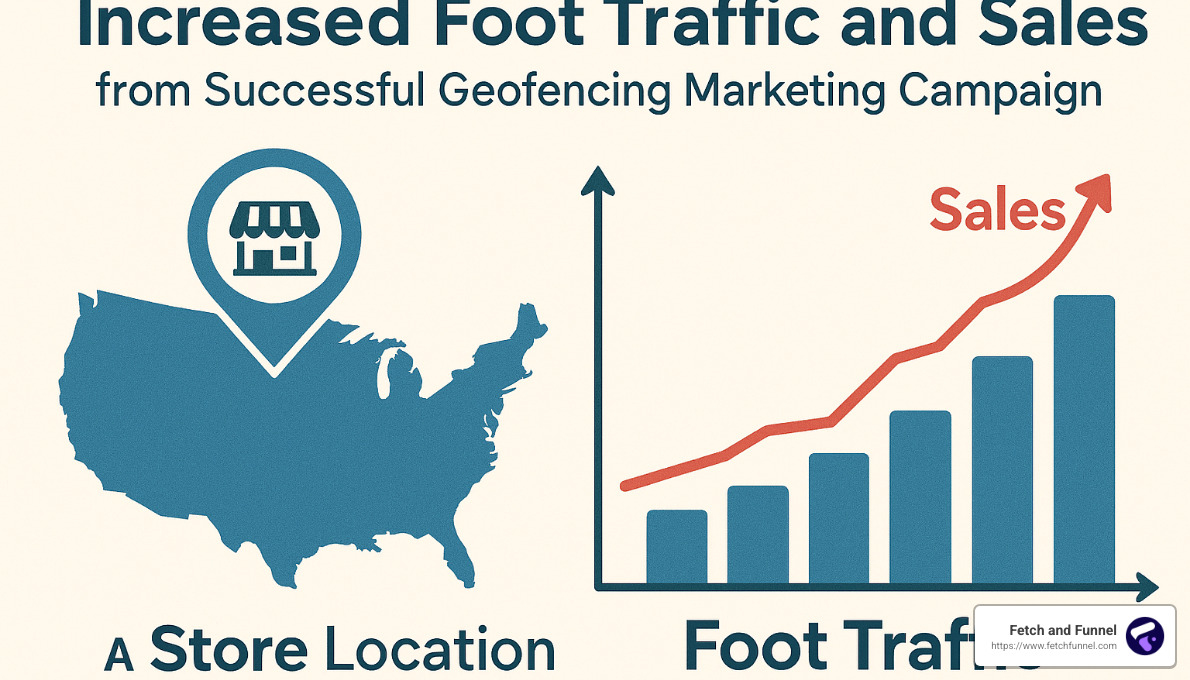
Retailers, restaurants, events, real estate companies, automotive dealers, healthcare providers, and hospitality businesses—just to name a few—have finded the immense benefits geofencing offers. What’s their secret to success? They pinpoint precise locations, craft compelling offers, send relevant messages, and make the experience seamless and simple for customers. Plus, they carefully track each campaign to measure its impact and continuously improve.
You’ll find plenty of inspiration by exploring some of our favorite success stories in our Geofencing Case Studies. But let’s dive into some of the most exciting examples right here.
Retail and Restaurant Applications
Retail and restaurants are among the most enthusiastic adopters of geofencing. Why? Because these businesses depend heavily on foot traffic—and geofencing is a foot traffic magnet.
Take American Eagle, for instance. They implemented geofencing around mall locations and offered targeted promotions to nearby shoppers. The result? They reportedly tripled their in-store sales. Similarly, Whole Foods used geofencing to target customers within a 25-mile radius, delivering personalized offers based on past purchases, significantly boosting customer visits and basket sizes.
Beauty giant Sephora also leverages geofencing to activate their app as soon as customers walk into their stores. Customers instantly see their past purchases and personalized recommendations—creating a convenient, personalized shopping experience that keeps them coming back.
On the restaurant side, Burger King’s Whopper Detour campaign shows geofencing at its creative best. Burger King set up geofences around McDonald’s locations nationwide. Any customer who opened the Burger King app near a McDonald’s could snag a 1-cent Whopper. This playful “geoconquesting” strategy drove more than 1 million app downloads in just a few days.
Then there’s Taco Bell, whose savvy geofencing campaign boosted annual profits by six percent, equating to roughly $600 million in additional sales. And Starbucks? They use geofencing to send push notifications about afternoon “happy hour” deals to customers walking nearby, encouraging impulse buys during quieter periods. Smart and effective!
Retailers and restaurants are also creatively integrating geofencing into their loyalty programs. Customers who approach a store might get special offers, learn about bonus points opportunities, or receive personalized reminders of rewards waiting for them.
Competitive conquesting is another winning tactic—think of a grocery chain targeting mobile ads to customers near competitor stores. One campaign saw a post-click conversion rate of 4.69%, triple the industry average. Talk about stealing the spotlight!
Event Marketing and Venue-Based Strategies
Events and venues benefit tremendously from geofencing because engagement is all about timing and location. Geofencing boosts attendee satisfaction, encourages interaction, and gathers valuable data.
Conferences and trade shows leverage geofencing by welcoming attendees with personalized messages, reminding them of upcoming sessions, highlighting exhibitors, guiding visitors to booths, and even facilitating networking among participants.
Sports stadiums and entertainment venues alike use geofencing to improve fan experiences—offering seat upgrades, merchandise deals, concession discounts, and even helpful tips on the quickest exit or nearest ride-share pickup.
Museums and cultural attractions get creative too, delivering audio guides or exhibit details that automatically appear as visitors approach specific displays. The History Channel, for example, cleverly partnered with a location-based check-in app to provide intriguing historical content to users checking in at historical landmarks. Visitors loved the added context, and the brand enjoyed a significant boost in engagement.
Geofencing also flourishes in busy transportation hubs like airports. Travelers waiting between flights receive targeted offers from retail shops, quick-service restaurants, and hotels with last-minute availability. One tourism campaign using venue-based geofencing achieved a click-through rate of 0.30%, more than 3X the tourism industry average.
Real Estate and Service-Based Business Applications
Real estate and service-based businesses have unique needs, and geofencing meets those needs brilliantly by delivering timely messages exactly when prospects are most interested.
Real estate agents and brokers are using geofencing to reach potential buyers touring neighborhoods or attending open houses. Imagine receiving neighborhood-specific information, property details, or follow-up messages instantly as you explore your dream location. This instant, relevant engagement increases interest and conversions significantly.
For detailed tips on leveraging geofencing specifically in real estate marketing, check out our dedicated guide on How Can I Use Geofencing to Market Real Estate?.
Service-based businesses such as home services, healthcare providers, legal firms, and financial advisors equally benefit from geofencing. Home service companies might target neighborhoods with seasonal offers or send emergency service promotions ahead of extreme weather. Healthcare providers can notify emergency room visitors about urgent care alternatives nearby, driving patient volume and reducing costs.
Legal firms strategically place geofences around courthouses or police stations, offering immediate consultations or relevant practice information. Financial institutions engage potential customers near competitor branches with attractive offers. One auto dealer even increased landing page engagement by 120% using geofencing strategies—proof that this technology truly drives results.
Appointment-based businesses can also creatively use geofencing to remind clients of upcoming visits or inform them of last-minute openings as they pass nearby.
Across industries, the results speak volumes. An urgent care facility saw a 33% jump in new patient acquisition by implementing geofences around hospital ERs. A home service company increased appointment density by 28%, significantly cutting travel costs. And a law firm targeting courthouse locations saw engagement rates 45% higher than traditional digital advertising.
These real-world examples showcase the impressive power of geofencing. With careful planning, creative messaging, and smart execution, geofencing can dramatically improve customer experiences, boost business results, and set your brand apart from the competition.
Challenges and Considerations for Geofencing Marketing
Geofencing offers powerful opportunities to engage customers at precisely the right place and time, but like any marketing strategy, it comes with a few problems. Understanding the challenges upfront can set you up for greater success in your campaigns.
Let’s explore some common roadblocks businesses face when implementing what is geofencing in digital marketing, and how you can address them proactively.
Privacy and Regulatory Compliance
One of the biggest concerns around geofencing marketing revolves around privacy. Since you’re dealing with users’ location data—which is sensitive information—you need to be mindful of how you handle, store, and secure it.
Major privacy regulations, like the General Data Protection Regulation (GDPR) in Europe and the California Consumer Privacy Act (CCPA) in the U.S., have strict guidelines for collecting and managing users’ location data. GDPR requires explicit consent from users before you collect their location information and mandates clear communication about how you plan to use that data. CCPA similarly puts the power in consumers’ hands, allowing them to easily opt out of data tracking and have their data deleted upon request.
To stay compliant and maintain trust, clearly communicate your data practice in a straightforward way. Provide transparent privacy policies, offer easy-to-use opt-out options, and always respect user consent. Be upfront about exactly why you’re collecting their data and how it benefits them. People are more likely to share their location if they see genuine value and trust your brand.
It’s not just about avoiding fines—it’s about building lasting relationships and a reputation for integrity.
Technical Limitations and How to Overcome Them
Geofencing technology is impressive, but it’s not flawless. Understanding its technical limitations can help you build smarter, more effective campaigns.
One common limitation is GPS accuracy. GPS signals can be less reliable in dense urban areas, where tall buildings create what’s called an “urban canyon” effect, disrupting signals and leading to inaccuracies. Rural areas can face similar challenges, with fewer cell towers meaning less precise location data. To address this, consider blending GPS with other location-tracking methods like Bluetooth guides or Wi-Fi signals, especially indoors, where GPS struggles to penetrate walls effectively.
Speaking of indoors, GPS doesn’t always play nicely with enclosed spaces. For retailers looking to create indoor experiences, using Bluetooth guides or Wi-Fi triangulation can significantly boost accuracy. Positioning these alternative technologies throughout key indoor areas can overcome the indoor limitations of traditional GPS.
Another technical consideration is the impact on battery life. Continually tracking location can quickly drain a user’s smartphone battery, potentially causing frustration or leading users to disable location services altogether. To minimize battery drain, use smart geofencing platforms that intelligently track location only when needed, rather than continuously. Clearly communicate the benefit users get from enabling location tracking, and they’ll likely accept a slight battery trade-off in exchange for valuable offers or convenience.
Connectivity issues can also challenge geofencing’s reliability. Poor cellular reception or Wi-Fi connectivity may delay real-time notifications—something particularly problematic in crowded event venues or remote locations. You can mitigate this by designing campaigns with slightly larger geofences or using multiple technologies simultaneously to ensure reliable triggers.
Lastly, many geofencing campaigns require app installation. Low app adoption can limit your reach. To overcome this, consider web-based alternatives, cross-platform solutions, or ensure your app provides value beyond geofencing alone.
A combination of smart technology choices, clear communication, and thoughtful implementation can help you overcome most technical problems.
Future Trends in Geofencing Technology
Geofencing is continually evolving, and exciting trends are shaping its future. Understanding what’s coming next can give your brand a clear competitive advantage.
The rollout of 5G networks will dramatically improve geofencing’s precision and responsiveness. With 5G, you can expect location accuracy down to just a few feet, near-instantaneous response times, and better indoor positioning. This means even more relevant messaging, superior customer experiences, and increased conversion rates. 5G will be a game-changer for businesses looking to leverage precise location data.
Another exciting development is the integration of augmented reality (AR) with geofencing. Imagine customers entering your store and instantly receiving AR content on their smartphone, guiding them through personalized promotions or virtual product demos. AR adds an entirely new dimension to location-based marketing, boosting customer engagement and satisfaction.
Machine learning (ML) is also enhancing geofencing’s capabilities. Soon, predictive analytics will let you anticipate where customers are headed next, what offers they’ll likely need, and when they’ll be most receptive. ML enables more intelligent, data-driven marketing decisions—resulting in higher ROI and better customer outcomes.
Voice activation technology is becoming increasingly relevant, too. As voice assistants grow more common, expect geofencing to integrate seamlessly with voice-powered functionality. Customers might soon ask their phones for location-based recommendations or interact hands-free with your geofencing offers.
Wearable technology, like smartwatches, presents another exciting avenue. Wearables open possibilities for subtle, convenient notifications triggered by location. Imagine your smartwatch gently reminding you of a discount when you pass by your favorite coffee shop. The minimal intrusion and contextual relevance could significantly boost customer response.
Finally, the explosion of connected devices known as the Internet of Things (IoT) expands geofencing beyond smartphones. Smart cars, home devices, and city infrastructure can interact seamlessly with your geofencing campaigns, offering endless opportunities for creative marketing and service offerings.
As geofencing technology becomes more sophisticated, privacy-first approaches will also become standard. On-device processing, user-controlled data sharing, and transparent privacy policies will ensure customers feel comfortable sharing their location data.
The future of geofencing isn’t just about technology—it’s about creating meaningful, personalized experiences that delight your customers without compromising trust or privacy. At Fetch and Funnel, we stay ahead of these evolving trends to help you harness geofencing’s full potential, keeping your marketing effective and your customers happy.
Frequently Asked Questions about Geofencing in Digital Marketing
How Much Does Geofencing Marketing Cost?
Geofencing marketing costs vary widely based on several factors, but understanding the pricing structure helps businesses budget effectively for this location-based strategy.
CPM Pricing Models
Most geofencing campaigns operate on a Cost Per Thousand Impressions (CPM) model:
– Average CPM ranges from $4 to $15
– Premium audience segments or high-competition areas may command higher rates
– Larger campaigns often benefit from volume discounts
“On average, the cost of geofencing marketing varies between $4-$14 CPM (cost per thousand impressions),” reports an industry analysis.
Campaign Size Considerations
Total campaign costs are influenced by:
– Number and size of geofences
– Campaign duration
– Impression volume
– Audience targeting specificity
For example, on Snapchat, geofencing costs approximately $5 for targeting 20,000 square feet.
Targeting Options Impact
More sophisticated targeting increases costs:
– Basic location targeting is most affordable
– Adding demographic filters increases CPM
– Behavioral targeting layers add premium costs
– Retargeting capabilities add to overall costs
Platform Fees
Different platforms have varying fee structures:
– Self-service platforms like Google Ads may have lower management costs
– Social media platforms each have their own pricing models
– Specialized geofencing platforms may charge setup or monthly fees
Implementation Costs
Beyond media spend, consider:
– Creative development for location-specific messaging
– Technical integration costs if building custom solutions
– Analytics tools for performance measurement
– A/B testing expenses for campaign optimization
Agency Services
Working with agencies like Fetch and Funnel adds expertise but affects budgeting:
– Strategy development and campaign planning
– Creative services and message optimization
– Technical implementation and troubleshooting
– Performance monitoring and reporting
– Ongoing optimization and refinement
ROI Considerations
When evaluating costs, consider potential returns:
– Store visit lift attributable to geofencing
– Increased average purchase value
– Customer acquisition costs compared to other channels
– Long-term value of customers acquired through geofencing
A digital marketing expert advises: “Rather than focusing solely on the CPM, businesses should evaluate the cost per acquisition or cost per store visit to truly understand the value of their geofencing investment.”
For small businesses testing geofencing, starting with a focused campaign in a limited area can provide valuable insights before scaling to larger investments.
Can Small Businesses Benefit from Geofencing?
Geofencing isn’t just for major brands with big budgets—small businesses can leverage this technology effectively to compete locally and maximize their marketing resources.
Local Targeting Advantages
Small businesses often have a natural advantage in local marketing:
– Deep understanding of neighborhood demographics
– Strong community connections and reputation
– Ability to quickly adapt to local events and conditions
– Authentic local messaging that resonates with nearby customers
“Establishing a strong brand presence in a smaller location is more valuable than building a mediocre presence across a wider area,” notes a small business marketing expert.
Budget-Friendly Approaches
Cost-effective geofencing strategies for small businesses include:
– Focusing on very specific, high-value locations
– Targeting during peak business hours to maximize ROI
– Using free or low-cost platform features like Google Business Profile
– Implementing geofencing through existing social media advertising
– Starting with competitor conquesting for immediate impact
Competitive Advantages
Geofencing helps level the playing field against larger competitors:
– Intercepting customers near big-box stores with personalized offers
– Highlighting unique local benefits that chains can’t match
– Building community loyalty through location-specific engagement
– Responding quickly to local conditions and opportunities
Customer Loyalty Applications
Small businesses can use geofencing to improve loyalty:
– Welcoming repeat customers with special recognition
– Offering loyal customer perks when they’re nearby
– Creating location-based loyalty programs with special check-in rewards
– Reconnecting with past customers when they’re in the neighborhood
Community Engagement
Local businesses can strengthen community connections:
– Supporting local events with geofenced promotions
– Creating neighborhood-specific offers and messages
– Participating in local shopping initiatives with location-based components
– Collaborating with complementary local businesses on geofencing campaigns
Scalable Solutions
Small businesses can start small and scale up:
– Begin with a single geofence around your business
– Expand to competitor locations once you’ve refined your approach
– Add event-based geofencing for local happenings
– Gradually increase sophistication with retargeting and advanced analytics
A small business owner who implemented geofencing around their coffee shop reported: “We saw a 22% increase in foot traffic after implementing a simple geofencing campaign offering a free pastry with coffee purchase to people walking within two blocks of our store.”
The key for small businesses is focusing on highly specific, relevant locations where their target customers are likely to be, and crafting compelling offers that drive immediate action.
How Accurate is Geofencing Technology?
Understanding the accuracy of geofencing technology helps marketers set realistic expectations and design campaigns that work within technical limitations while still delivering effective results.
GPS Precision Factors
Standard GPS accuracy varies based on several factors:
– Typical accuracy ranges from 16-50 feet (5-15 meters) under ideal conditions
– Urban environments with tall buildings may reduce accuracy to 50-100 feet
– Rural areas with clear sky view typically offer better accuracy
– Weather conditions can impact satellite signal strength
Urban vs. Rural Accuracy
Location affects geofencing precision:
– Urban areas benefit from more reference points (cell towers, Wi-Fi networks)
– Rural locations may have fewer reference points but clearer GPS signals
– Suburban areas typically offer the most consistent accuracy
Indoor Limitations
Indoor geofencing presents specific challenges:
– GPS signals are significantly weakened by building materials
– Accuracy indoors may drop to 100+ feet without supplemental technology
– Bluetooth guides can improve indoor accuracy to 3-10 feet
– Wi-Fi positioning systems offer 10-15 foot accuracy indoors
Technological Advancements
Recent improvements have improved geofencing accuracy:
– Multi-constellation GPS receivers using multiple satellite systems
– Advanced algorithms that filter location noise
– Fusion of multiple location technologies (GPS, Wi-Fi, cellular, Bluetooth)
– Machine learning systems that improve accuracy over time
Error Margins and Considerations
Practical accuracy considerations include:
– Setting minimum geofence sizes (typically 100 meter radius) to account for GPS drift
– Building in time delays to confirm location before triggering actions
– Using “dwell time” requirements to filter out passing traffic
– Implementing confirmation mechanisms for high-value actions
Improvement Techniques
Marketers can improve geofencing accuracy through:
– Combining multiple location technologies for redundancy
– Implementing proper geofence buffer zones
– Using polygon geofences instead of simple radius boundaries for complex areas
– Regularly updating location databases and reference points
– Testing across different devices and conditions
A location technology expert explains: “While perfect accuracy isn’t possible with current technology, well-designed geofencing campaigns can achieve 80-90% accuracy in identifying when users truly enter a defined area. The key is designing campaigns that remain valuable even with this margin of error.”
For businesses implementing geofencing, understanding these accuracy limitations allows for campaign designs that remain effective despite technical constraints—focusing on areas large enough to accommodate potential location drift while still delivering relevant, timely messaging.
Conclusion
Now that we’ve explored what is geofencing in digital marketing, it’s clear this technology is a game-changer for businesses looking to connect their online marketing with real-world results. Geofencing gives you the power to engage your customers exactly where and when it matters most—with targeted, personalized messages that hit home (sometimes even literally!).
By using geofencing, your business gains an incredible strategic advantage. You can reach customers when they’re physically nearby and ready to act, deliver timely and relevant messages custom to their real-world context, and gather invaluable insights into their behaviors and preferences. This combination of precise targeting and personalized messaging helps your marketing budget go further, improving your ROI by reaching high-intent consumers right at the decision-making moment.
Implementing geofencing doesn’t need to be complicated. Start by clearly defining your campaign goals and deciding what success looks like for your business—whether that’s increased foot traffic, boosted conversions, or richer customer insights. Next, spend some time researching your audience’s behavior: when and where are they most likely to engage with your brand? Once you know this, select the best locations and sizes for your geofences (typically within a 4-5 minute radius).
Then comes the fun part—crafting your message! Create compelling, clear, location-specific offers and make sure your call-to-action is irresistible. Choose a platform that matches your needs, run a small test, and closely monitor performance. Continuous optimization is key, so be ready to tweak your boundaries, test different messages, and analyze your data regularly.
As you dive into geofencing, a privacy-first approach isn’t just good ethics—it’s also good business. Always be transparent with your customers about how you use their data, give them clear ways to opt-in or opt-out, and make sure your campaigns provide real value that makes sharing their location worthwhile. Staying compliant with privacy regulations such as GDPR and CCPA will help you build lasting trust (plus, you won’t have lawyers knocking at your door!).
Looking ahead, geofencing technology is only becoming more powerful. With the rollout of 5G, expect even greater precision and faster, real-time engagement. Exciting integrations with augmented reality, voice activation, and artificial intelligence will open up new creative possibilities, allowing your brand to deliver personalized experiences that feel genuinely helpful—rather than intrusive. The future is bright (and pretty cool!) for location-based marketing.
At Fetch and Funnel, we’ve seen the amazing results geofencing can deliver for brands of all sizes—from small local businesses right here in Boston to national Fortune 500 companies. Our approach blends cutting-edge technical know-how with creative thinking to craft geofencing campaigns that truly resonate. We specialize in combining high-converting creative with data-driven strategies to improve customer experiences and drive measurable business growth.
If you’re considering diving deeper into what is geofencing in digital marketing, you’re in the right place. Our team would love to guide you through the process, answer your questions, and help you harness the power of place to achieve your marketing goals.
For more information about geofencing, check out our detailed resources or simply get in touch with our friendly team of location-based marketing specialists. We’re excited to help your business succeed—one geofence at a time!


