Why Geofencing for Real Estate is Revolutionizing Property Marketing
Geofencing for real estate is a location-based advertising technology that allows agents and developers to deliver targeted ads to potential clients when they enter specific geographic areas—like competitor open houses or neighborhoods with high buyer activity.
Quick Answer: What You Need to Know
- What it is: Virtual boundaries around physical locations that trigger ads to mobile devices
- Why it works: 2x higher click-through rates than standard ads, 30% boost in lead capture
- Best use cases: Targeting open houses, competitor listings, renters near apartments, financial institutions, transitioning neighborhoods
- Typical costs: $4-14 CPM, $1,500-$5,000/month for managed services
- Key benefit: Reach buyers and sellers at the exact moment they’re thinking about real estate
The real estate mantra has always been location, location, location—and now that applies to your marketing. Instead of casting a wide, traditional advertising net, geofencing puts your message directly in front of people who are already in the market.
When someone walks into a competitor’s open house, you can serve them an ad for your comparable listing. When a potential buyer visits a bank to discuss mortgages, your ad can appear on their phone. This powerful, context-aware approach is backed by data: the global location-based advertising market is projected to reach $312.23 billion by 2032, and geofenced ads have click-through rates 2x higher than industry averages. Real estate professionals using this tech report conversion rates up to three times higher than traditional targeting.
Beyond marketing, agents use geofencing to coordinate field teams, track showings, and measure foot traffic, making it a valuable operational tool.
In this guide, I’ll show you how to leverage geofencing to generate qualified leads, outmaneuver competitors, and build a dominant local presence—all while spending your marketing budget more efficiently.
I’m Samir ElKamouny, founder of Fetch and Funnel, a performance-driven digital marketing agency. We’ve helped countless real estate professionals scale their businesses with strategic geofencing campaigns. Let’s explore the strategies that will transform your real estate marketing.
Basic Geofencing for real estate terms:
Understanding Geofencing for Real Estate: The Fundamentals
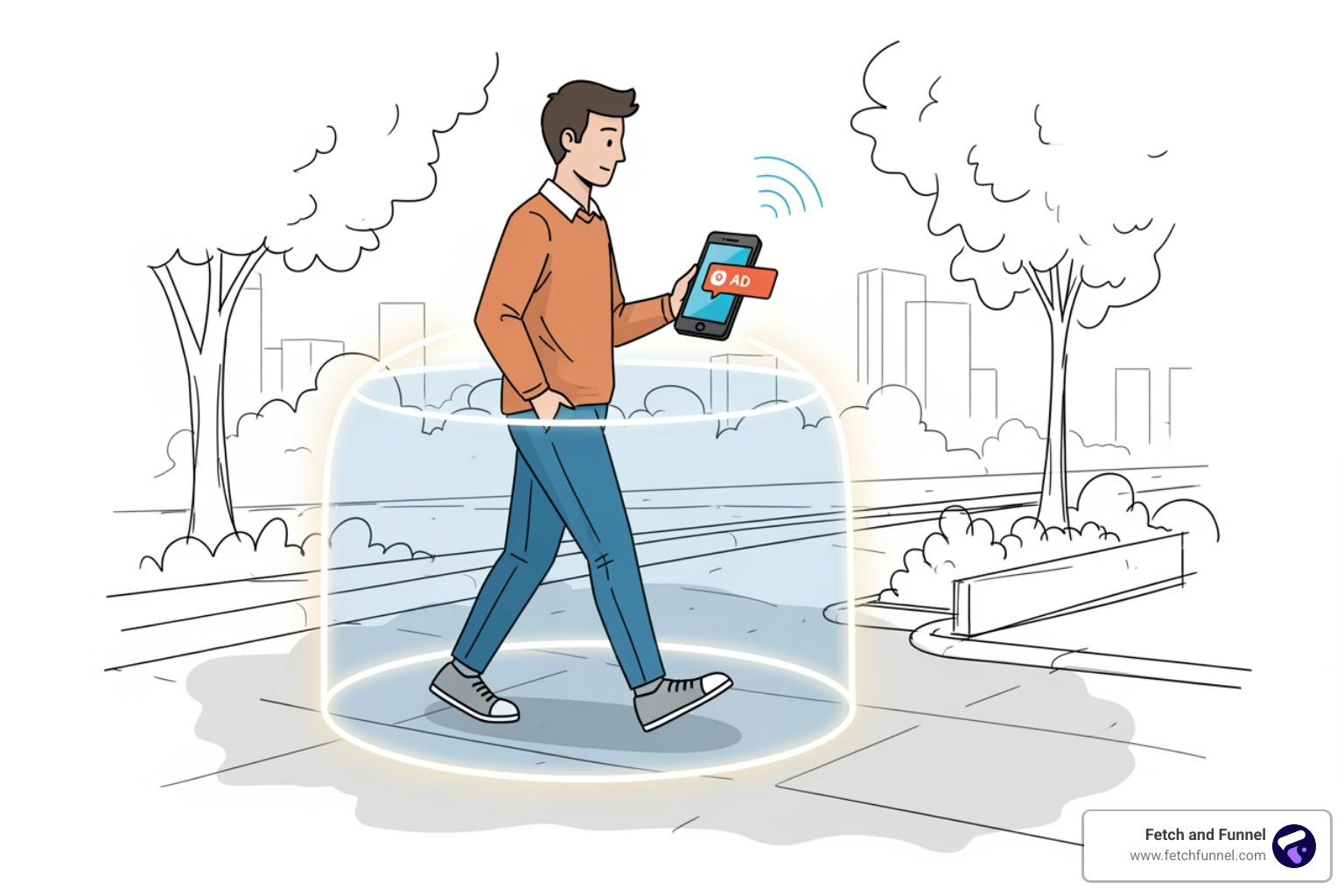
At its core, geofencing creates virtual boundaries around real-world locations. Imagine drawing an invisible fence around a property or a competitor’s office. When a mobile device with location services enabled enters this area, it triggers an action, usually a targeted ad. This is how Geofencing for real estate works.
The technology uses GPS, Wi-Fi, and cellular data to pinpoint a user’s location. Mobile apps with location permissions can detect when a device crosses a geofence, adding the user to a target audience. Ads can then be served to their device in real-time or shortly after. For a deeper dive, you can explore resources from various providers like Fetch and Funnel or GroundTruth. User consent is crucial; users must opt-in to location services for geofencing to function.
Why Geofencing is a Game-Changer for Real Estate Marketing
Geofencing offers a strategic advantage over traditional methods:
- Precision Targeting: Unlike broad ads, geofencing targets individuals based on their physical presence. This hyper-local precision ensures your message reaches people actively in the market, like those at an open house, significantly reducing ad waste.
- Cost-Effectiveness: By focusing your ad spend on highly relevant audiences, you avoid waste and improve your return on ad spend (ROAS).
- Higher Engagement: Geofenced ads are contextually relevant to a user’s location, leading to higher engagement. These ads boast a click-through rate (CTR) 2x higher than the industry average.
- Increased Lead Capture: Our clients have seen geofencing open houses boost lead capture by about 30% compared to traditional methods. Reaching people at peak moments of interest generates more qualified leads.
- Real-Time Relevance: When a potential buyer visits a competitor’s listing, you can immediately serve them an ad for your comparable property. This real-time interaction is invaluable.
The growing importance of location data is underscored by the global location intelligence market, projected to reach $25.25 billion by 2025. For more insights, check out More on Geofencing Mobile Ads.
Geofencing vs. Geotargeting: What’s the Difference?
Though often confused, these are distinct strategies. Understanding the difference is key to choosing the right approach.
| Feature | Geofencing | Geotargeting |
|---|---|---|
| Precision | Highly precise, virtual boundaries (e.g., specific property, block) | Broader, general areas (e.g., ZIP codes, cities, neighborhoods) |
| Trigger | Action-triggered (user enters/exits defined area) | Rule-based (user is in a general area) |
| Timing | Real-time or near real-time | Can be real-time or based on historical data |
| Data Used | GPS, Wi-Fi, cellular data for current location | IP address, device settings, demographics, past behavior |
| Goal | Drive immediate action, capture in-the-moment interest | Reach a relevant audience within a larger region |
| Example | Ad for your open house appears as someone drives past a competitor’s open house | Ad for new homes in Boston shows to people living in Boston |
In short, geofencing is about drawing a tight boundary around a specific location to trigger an ad based on real-time entry. Geotargeting casts a wider net over a general area, often using demographics and past behavior.
When to use each strategy:
- Use geofencing to capture immediate interest at highly relevant locations like open houses or competitor listings.
- Use geotargeting for broader brand awareness campaigns within a specific region, like a Boston neighborhood.
Often, the most powerful strategies combine both. For more on broader campaigns, see Geo Targeted Ad Campaigns.
10 High-Impact Geofencing Strategies to Dominate Your Market
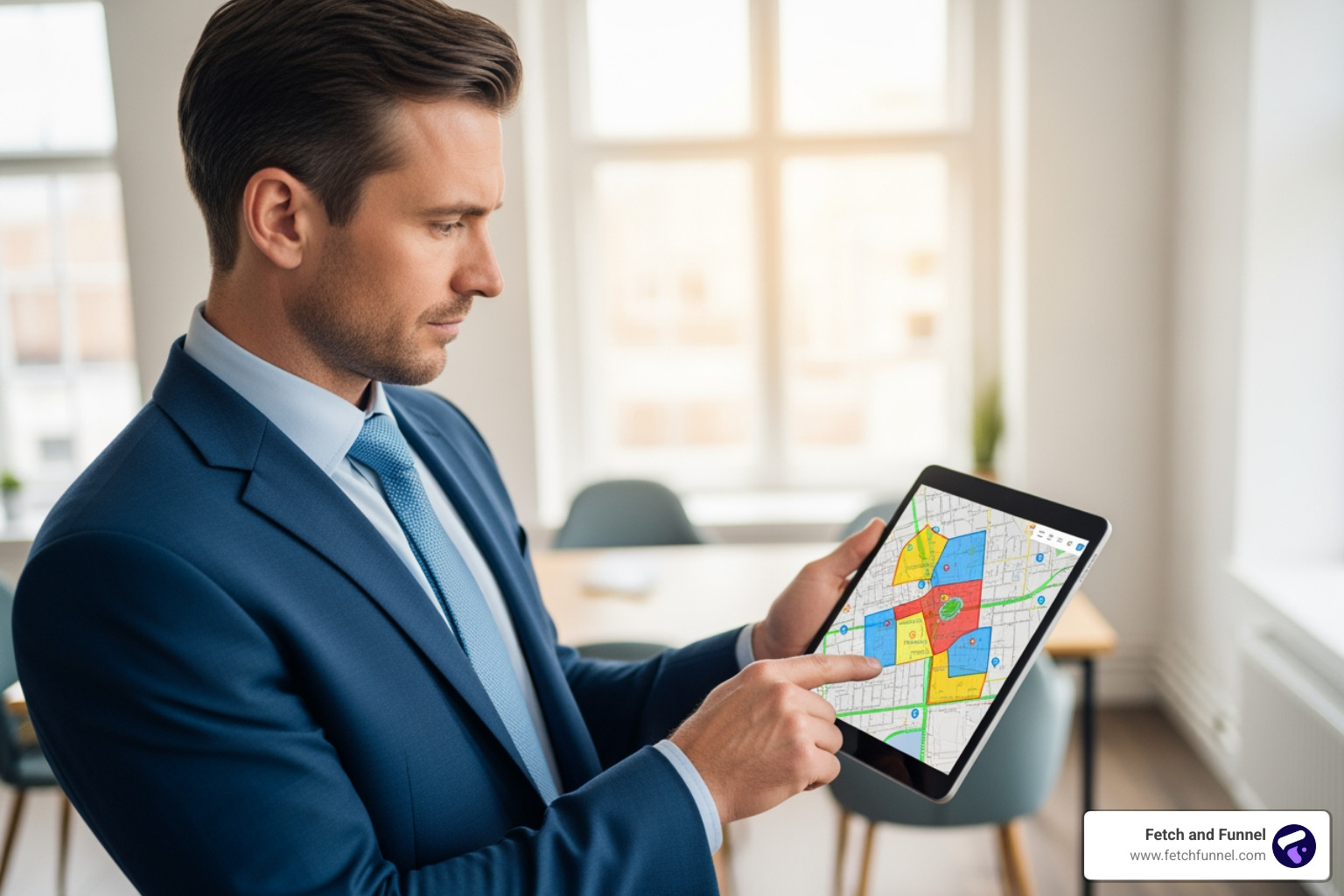
Now that we understand the fundamentals, let’s dive into actionable strategies that our clients in Boston and beyond use to generate leads and close more deals.
1. Target Open Houses and Active Listings
This is the most direct application of geofencing for real estate.
- Geofence your own open houses: Reinforce your brand and share key property details with visitors as they arrive.
- Target competitor open houses: Show your comparable listings to active, motivated buyers who are visiting a competitor’s property. This intercepts buyers when their interest is highest.
- Capture unrepresented buyers: Offer a free home valuation or a buyer’s guide to those attending open houses without an agent. This is a prime opportunity to capture new leads. Targeting ongoing showing and open house traffic has major upside.
2. Leverage Addressable Geofencing for Real Estate Precision
Addressable geofencing targets specific households with unparalleled precision by drawing virtual boundaries around individual property addresses, achieving match rates up to 90%.
- Target specific household addresses: Upload a list of property addresses (e.g., expired listings, FSBOs, or ‘feeder’ neighborhoods) to deliver ads to mobile devices within those homes.
- Reinforce direct mail campaigns: Combine direct mail with digital ads. After sending a mailer, serve ads to the same household to increase recall and impact. This multi-channel approach can triple conversion rates.
- Target expired listings or FSBOs: Identify properties that recently expired or are For Sale By Owner, upload their addresses, and serve targeted ads offering your services at a critical decision point.
Learn more about this powerful tool from specialists like Fetch and Funnel or other platforms such as Simpli.fi.
3. Geoconquest Competitor Brokerages and New Developments
Geoconquesting allows you to strategically target your competitors’ locations.
- Draw fences around rival offices: Present your unique value proposition to potential clients who are visiting a competitor’s office.
- Target visitors to new construction sales centers: Intercept early-stage buyers by showing them comparable resale properties in established Boston neighborhoods.
- Highlight your unique value proposition: Use your ads to communicate what makes you different, whether it’s local knowledge, exceptional service, or a unique marketing plan. One client saw a 32% increase in showings after geoconquesting competitor listings.
4. Focus on High-Intent Locations
Target locations that indicate a strong intent to buy or sell real estate.
- Financial institutions: Reach people seeking home financing at local banks, credit unions, and mortgage broker offices.
- Home improvement stores: Target homeowners at stores like Home Depot or Lowe’s with ads for a free home valuation.
- Moving companies: Present your services to people who are clearly planning a move.
- Wedding venues: Capture the future-homeowner demographic by targeting popular wedding venues in Boston.
- Local employers: Reach new employees moving to the area by geofencing major employers, especially if you specialize in relocation.
5. Integrate Geofencing with Your Broader Marketing Mix
Geofencing is most powerful when integrated into a holistic marketing strategy.
- CRM integration: Use geofencing data to trigger automated, relevant follow-ups (e.g., emails with similar listings) for prospects who visit a geofenced area.
- Retargeting campaigns: Follow up with ads across various platforms, like Facebook Ads for Real Estate, to stay top-of-mind with people who visited key locations.
- Hyperlocal content marketing: Direct prospects to landing pages with neighborhood-specific content, which can increase engagement by up to 40%.
- Social media advertising synergy: Build custom audiences from geofence visitors for targeted campaigns on platforms like social media.
- Create a holistic customer journey: Bridge online and offline behavior for a seamless brand message across all touchpoints.
From Strategy to Success: Launching and Measuring Your Campaigns
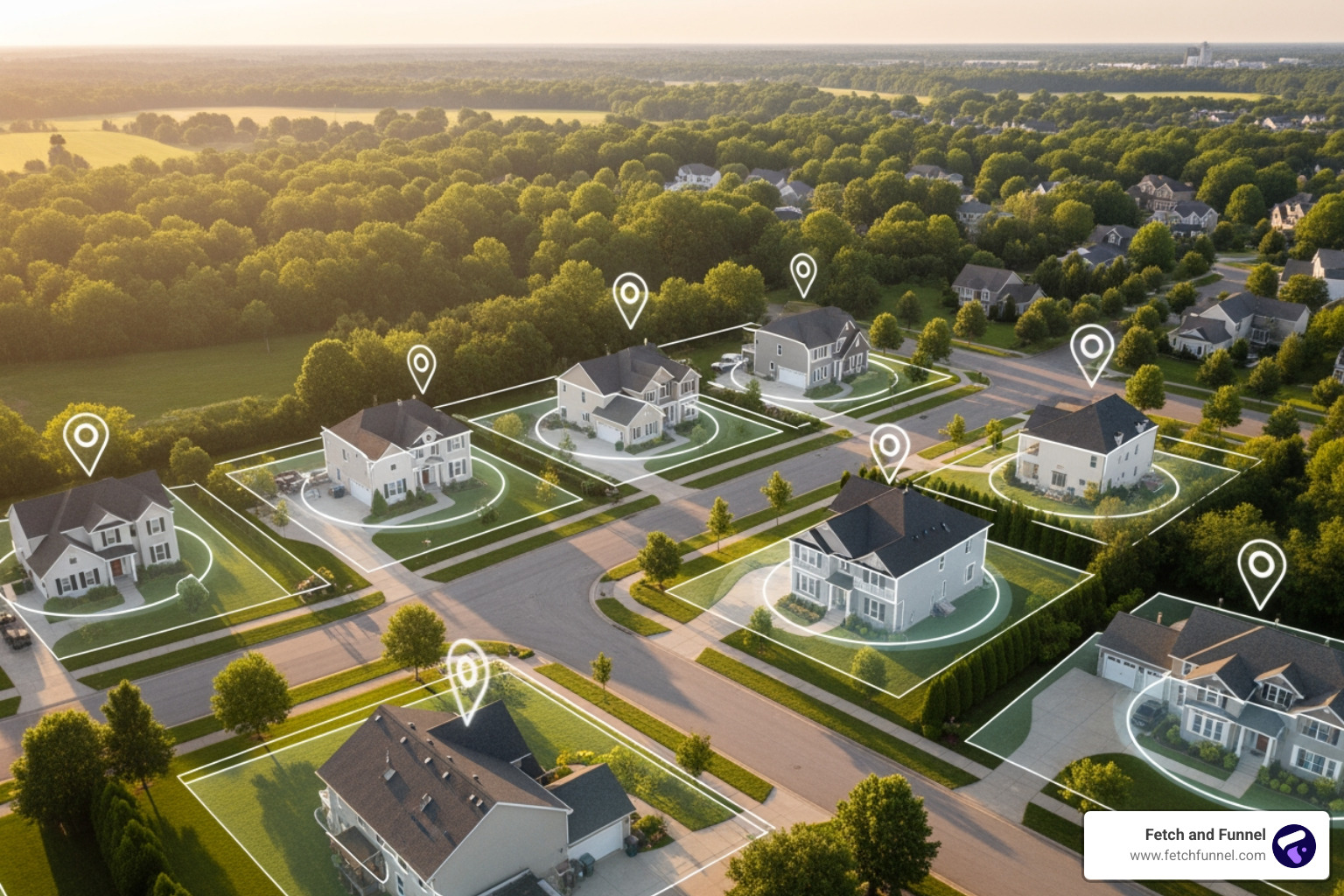
Implementing geofencing for real estate successfully requires careful planning, execution, and continuous optimization.
Best Practices for Effective Geofencing for Real Estate
To maximize your impact, follow these guidelines:
- Fence size and shape: Use a minimum radius of 300-500 feet. In dense urban areas like Boston, use polygon fencing to match building footprints for better precision. Avoid overly large fences that dilute targeting.
- Ad creative and messaging: Create compelling, relevant ads that acknowledge the user’s location. Use strong visuals and a clear value proposition (e.g., “Looking in Back Bay? See our new listing nearby!”).
- Compelling Call-to-Action (CTA): Every ad needs a clear next step. Use an engaging CTA like “View Listing,” “Schedule a Showing,” or “Get a Free Home Valuation.”
- Timing and day-parting: Schedule ads during peak hours (evenings, weekends) when your audience is most active. Adjust based on seasonal market activity and avoid ad fatigue by respecting user privacy.
- Avoiding common mistakes: Avoid setting fences too large, using weak ad creative, or failing to monitor and optimize campaigns.
For more detailed guidance, check out our Geofencing Best Practices guide.
Budgeting and Understanding the Costs
Geofencing CPM (Cost Per Thousand Impressions) typically ranges from $4-$14. The overall cost varies based on the platform, targeting precision, and service model.
- Pricing models:
- CPM (Cost Per Mille/Thousand): You pay for every 1,000 times your ad is shown. This is the most common model.
- Cost-per-visit: Some platforms let you pay for verified physical visits to a location (e.g., your office) attributed to your ad. This typically costs $5-$15 per visit.
- Monthly budget examples:
- DIY platform subscriptions: $200-$1,000 monthly, plus ad spend.
- Managed services: Agencies like Fetch and Funnel or Propellant Media often start around $1,500-$5,000 monthly, which includes platform costs, expert management, and ad spend. A test budget of $1,500-$3,000 is often recommended for a 30-day campaign.
- Maximizing return on ad spend (ROAS): The goal is to achieve a high ROAS (revenue divided by ad cost). A ROAS over 1.0 indicates profit. Allocate your budget strategically, dedicating most to primary targets and reserving some for retargeting and testing.
For a comprehensive breakdown, visit our Cost of Geofencing article.
Measuring Your Campaign’s Success: Key Metrics and KPIs
Tracking your campaigns is crucial for optimization. Here are the key metrics to monitor:
- Impressions and Reach: The number of times your ad was shown and the number of unique people who saw it.
- Click-Through Rate (CTR): The percentage of viewers who clicked your ad. A high CTR (benchmark is 0.9%+) indicates relevant messaging.
- Cost Per Click (CPC): The average cost you pay for each click.
- Conversion Rate: The percentage of people who took a desired action (e.g., filled out a lead form) after clicking.
- Foot traffic attribution (store visits): Tracks how many people who saw your ad subsequently visited a physical location, like an open house.
- Lead Forms and Showing Requests: Direct indicators of interest.
- Cost Per Lead (CPL): The total cost divided by the number of leads generated.
- Return on Ad Spend (ROAS): Measures the revenue generated for every dollar spent on advertising.
Analyzing these KPIs allows for data-driven decisions. For more on this, refer to Analyzing KPIs.
The Legal Landscape and Future of Geofencing
As powerful as geofencing for real estate is, it operates within an evolving legal and technological landscape. Navigating privacy regulations and future trends is crucial for success.
Navigating Privacy and Legal Considerations
Prioritizing user privacy and adhering to legal guidelines is non-negotiable.
- User consent and transparency: Secure explicit user consent for location tracking and be transparent in your privacy policy about how data is collected and used.
- Fair Housing Act compliance: This is paramount in real estate. You must not use geofencing to target or exclude protected classes. Ads must be non-discriminatory and universally available.
- GDPR and CCPA: While specific to Europe and California, the principles of these regulations are becoming global standards. Adopt a privacy-first approach.
- Avoiding sensitive locations: Do not geofence sensitive locations like hospitals, schools, places of worship, or polling stations.
- State-specific regulations: The legal landscape is shifting, with new state laws emerging. Stay updated on local regulations in Boston, MA.
- Updating privacy policies: Regularly review and update your privacy policy to reflect your current data practices.
Future Trends in Geofencing for Real Estate
The future of geofencing for real estate is bright, with several exciting trends on the horizon:
- AI-powered campaign optimization: AI will increasingly refine campaigns by analyzing data to predict the best ad timing and personalize messages for better ROI.
- Integration with IoT and smart homes: The Internet of Things (IoT) will create new context-aware marketing opportunities, like triggering ads based on smart home events.
- Advanced geofencing shapes (polygons, isochrones): Advanced shapes like polygons and isochrones (areas based on travel time) will allow for more precise and realistic targeting than simple circles.
- The growing location intelligence market: This market’s projected growth to $25.25 billion by 2025 signifies the increasing value of location data.
- Privacy-first targeting methods: Expect a shift towards cohort-based and contextual targeting, which allow for precision without compromising individual privacy.
The impact of 5G technology will also bring location data precision down to within 1 meter, opening up even more granular targeting possibilities. The global location-based advertising market, projected to reach $312.23 billion by 2032, shows the immense potential and continued evolution of this field.
Frequently Asked Questions about Geofencing in Real Estate
How small can a geofence be for a property?
The smallest effective geofence is about 1,500 square feet, but a minimum radius of 300-500 feet is recommended for properties to account for GPS inaccuracies. In dense areas like Boston, we use polygon fencing to precisely outline property boundaries for greater accuracy. For more details on defining boundaries, see More on Geo Fence.
Is geofencing marketing legal for real estate?
Yes, geofencing is legal but requires strict compliance with privacy and fair housing laws. You must obtain user consent, be transparent about data use, and avoid sensitive locations. Crucially, campaigns must adhere to the Fair Housing Act and not discriminate against protected classes based on race, religion, gender, or familial status. Stay informed on evolving state and local regulations in Boston, MA.
Can geofencing be used for more than just marketing?
Absolutely. Beyond marketing, geofencing for real estate offers significant operational benefits:
- Field Team Coordination: Use geofences around properties to trigger automated check-ins and track agents or contractors.
- Job Site Management: Verify when contractors arrive and leave renovation sites for accurate project management.
- Automated Showing Alerts: Notify agents when an opted-in buyer approaches a listing.
- Property Security: Trigger alerts for unauthorized entry at vacant properties or construction sites.
These uses streamline workflows, improve accountability, and improve overall business efficiency.
Conclusion
Geofencing for real estate is a fundamental shift in how professionals connect with their audience. Its precision, cost-effectiveness, and high engagement make it an indispensable tool. It can boost lead capture by 30%, double click-through rates, and triple conversion rates compared to traditional methods.
The strategies in this guide—from targeting competitor open houses to integrating with your CRM—empower you to reach clients at the perfect moment. As the global location-based advertising market continues its rapid growth, embracing geofencing provides a significant competitive edge.
At Fetch and Funnel, we specialize in crafting and executing these high-impact geofencing campaigns, custom to your specific needs in the Boston market. We leverage location intelligence to deliver measurable results.
Don’t cast a wide net when you know exactly where the fish are biting. Take the next step in your marketing strategy and find how geofencing can revolutionize your real estate business.